Written in Pencil
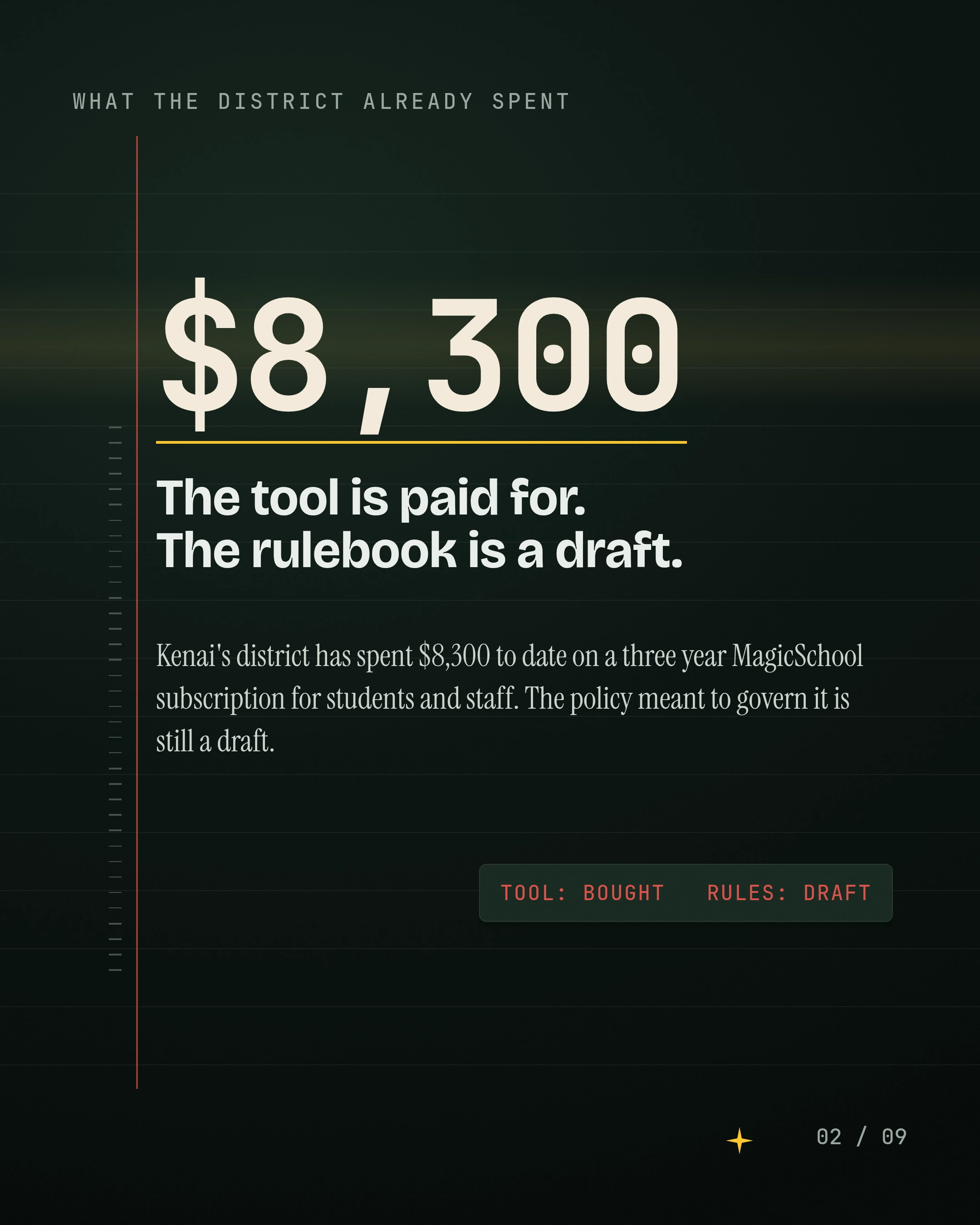
A Kenai school district bought an $8,300 AI tool for its classrooms, then started writing the rules to govern it.
The deck
SWIPE, SCROLL OR CLICK A SLIDE TO GO FULLSCREEN · 9 SLIDES

The story
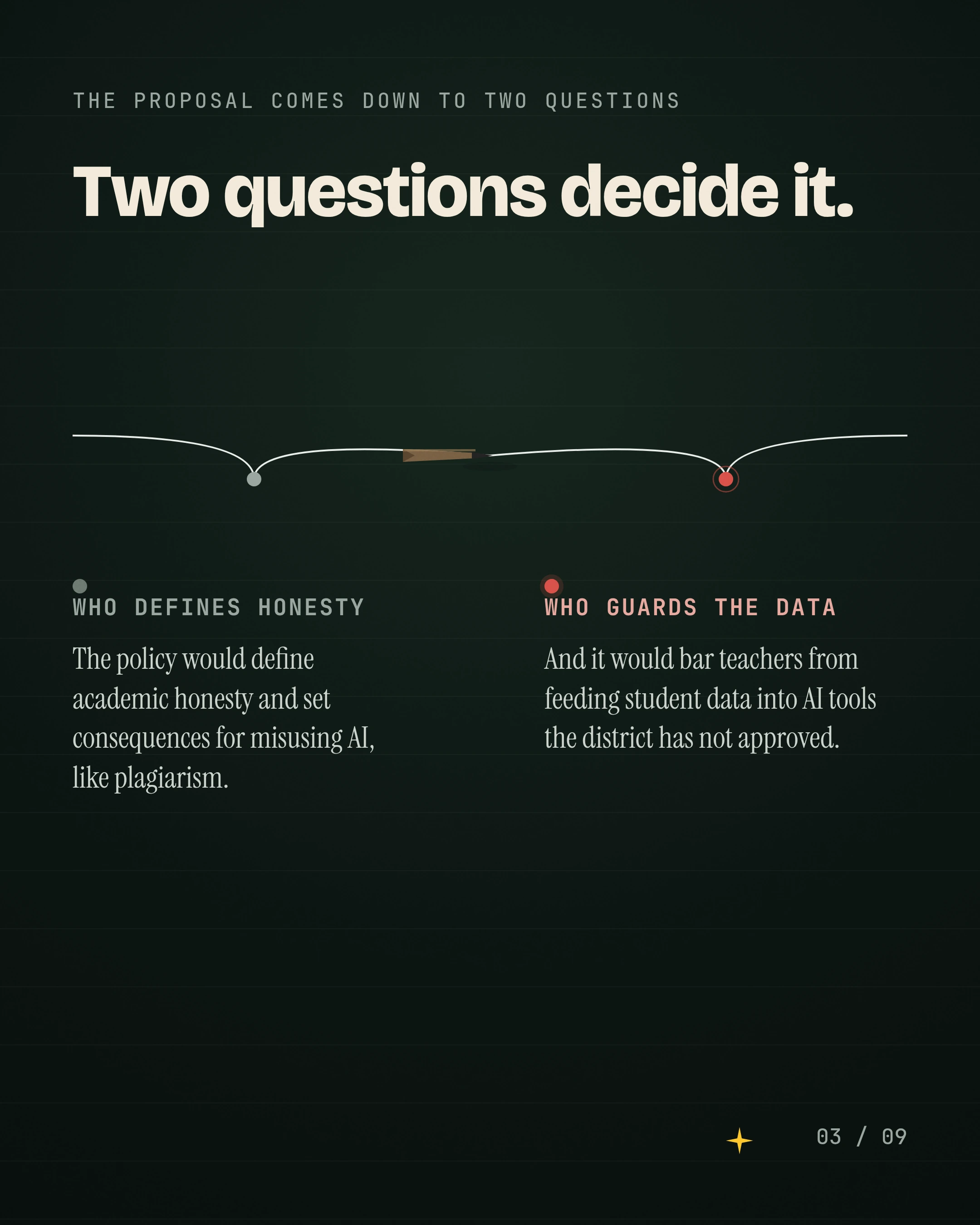
The tools reached Alaska schools before the policy did. The Kenai Peninsula proposal turns on two questions. Who guards student data, and who defines academic honesty when a chatbot can write the essay.
The 9 slides walk through the data guardrail, Alaska's statewide K-12 AI framework from 2025, and where the school board actually disagrees.
Who should define honesty in your kid's classroom, the district or the teacher?
What we verified
17 CLAIMS, EACH RE-FETCHED FROM ITS SOURCE BEFORE THIS DECK SHIPPED
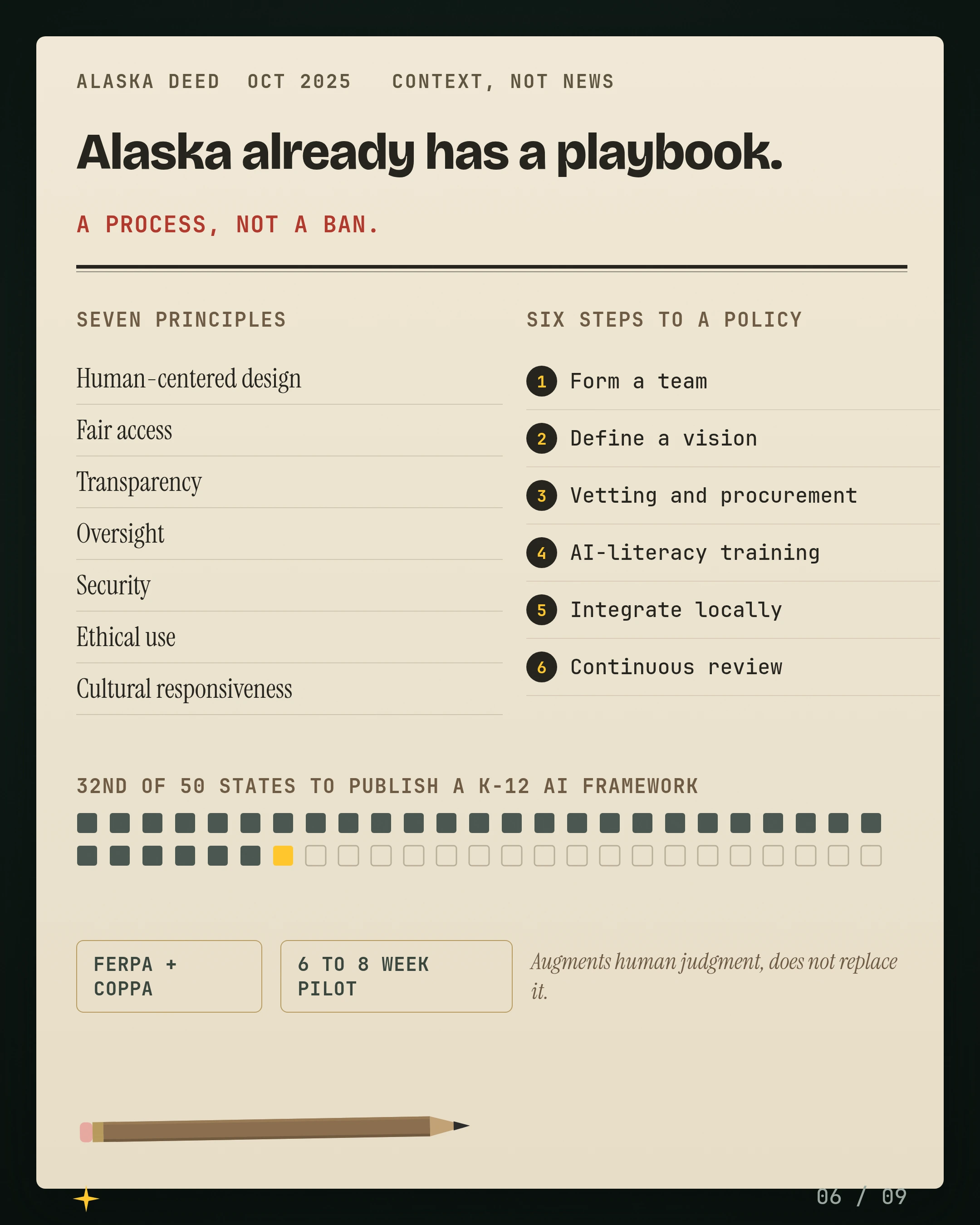
The Alaska DEED district guidance lays out a 6-step policy development process.
The DEED guidance urges a balanced, human-centered approach that augments human capabilities without replacing essential judgment or interaction.
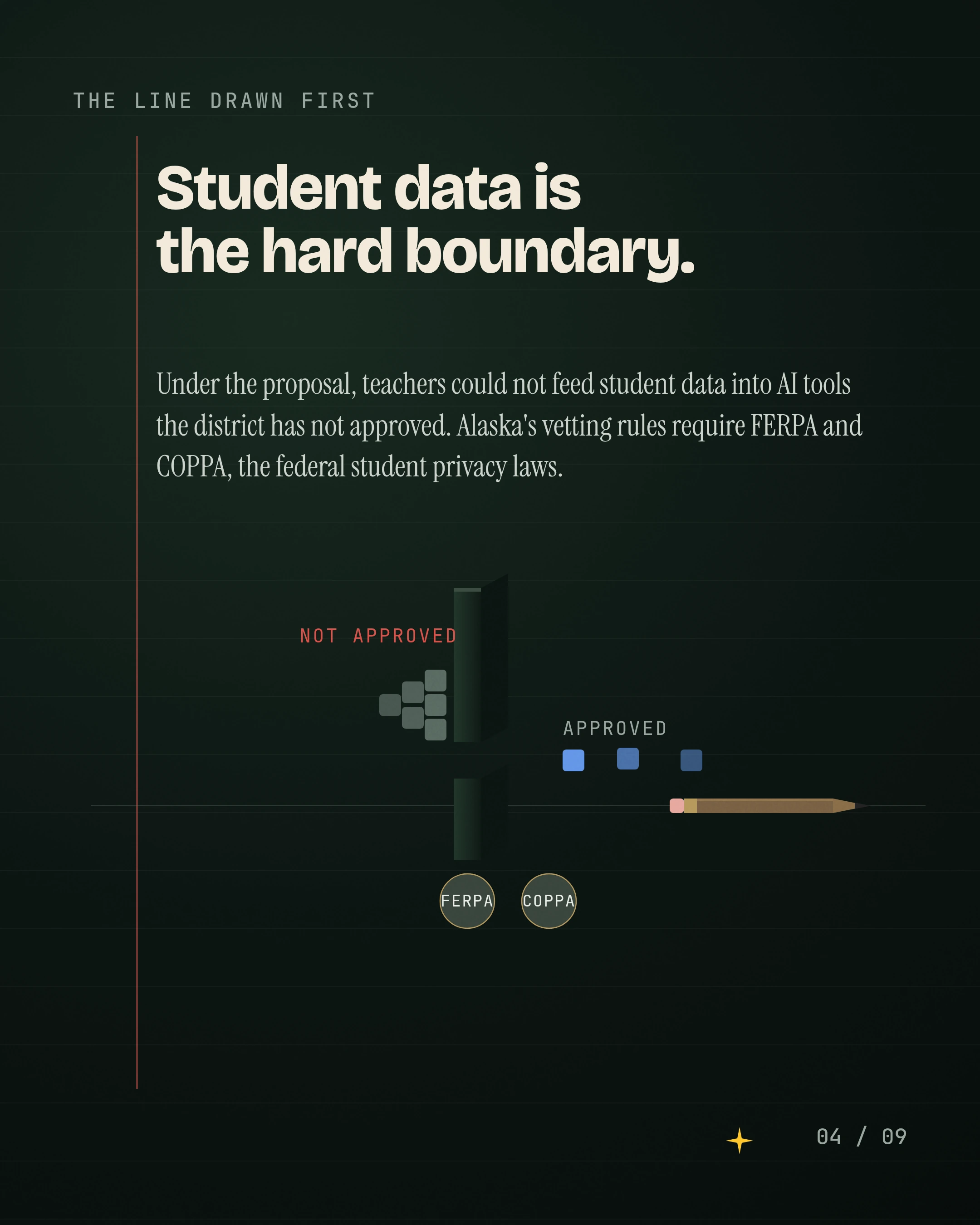
The DEED vetting checklist explicitly mandates federal student-privacy compliance (FERPA and COPPA).
The DEED guidance cites that approximately 15% of students are aware of AI-generated explicit images depicting their classmates (a cited rationale for guardrails).
DEED recommends allowing at least 6-8 weeks for a meaningful AI pilot evaluation.
The Kenai Peninsula Borough School District is proposing comprehensive AI policies addressing academic honesty and student data protection.
The Alaska DEED framework centers on seven guiding principles, human-centered design, fair access, transparency, oversight, security, ethical use, and cultural responsiveness.
Alaska districts named as engaged in AI-policy work include Fairbanks, Mat-Su, Wrangell, and Anchorage.
The district has spent $8,300 to date on a three-year MagicSchool subscription for students and staff (an education-specific AI platform).
Under the proposal, teachers would be barred from feeding student data into AI platforms not approved by the district.
The proposed academic-honesty change defines academic honesty, outlines how AI tools can be used responsibly, and sets consequences for inappropriate use like plagiarism.
The district's AI-specific committee was established in 2025 and reviewed Alaska DEED guidelines in fall 2025.
District administrators aim to implement the new AI policies by the beginning of the new school year.
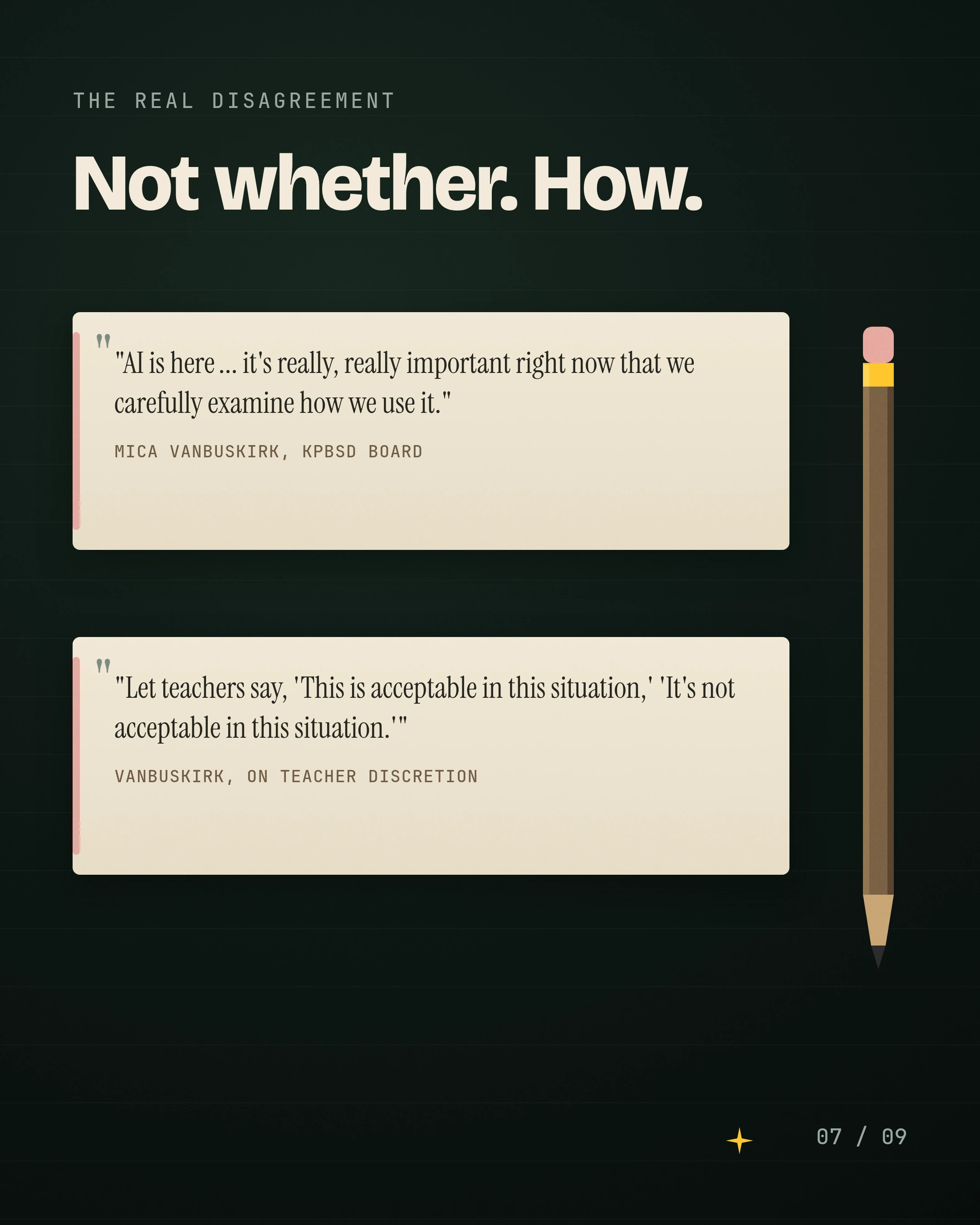
Board member Mica VanBuskirk urged that teachers keep discretion over acceptable AI use case by case.
VanBuskirk framed the urgency of getting AI rules right now.
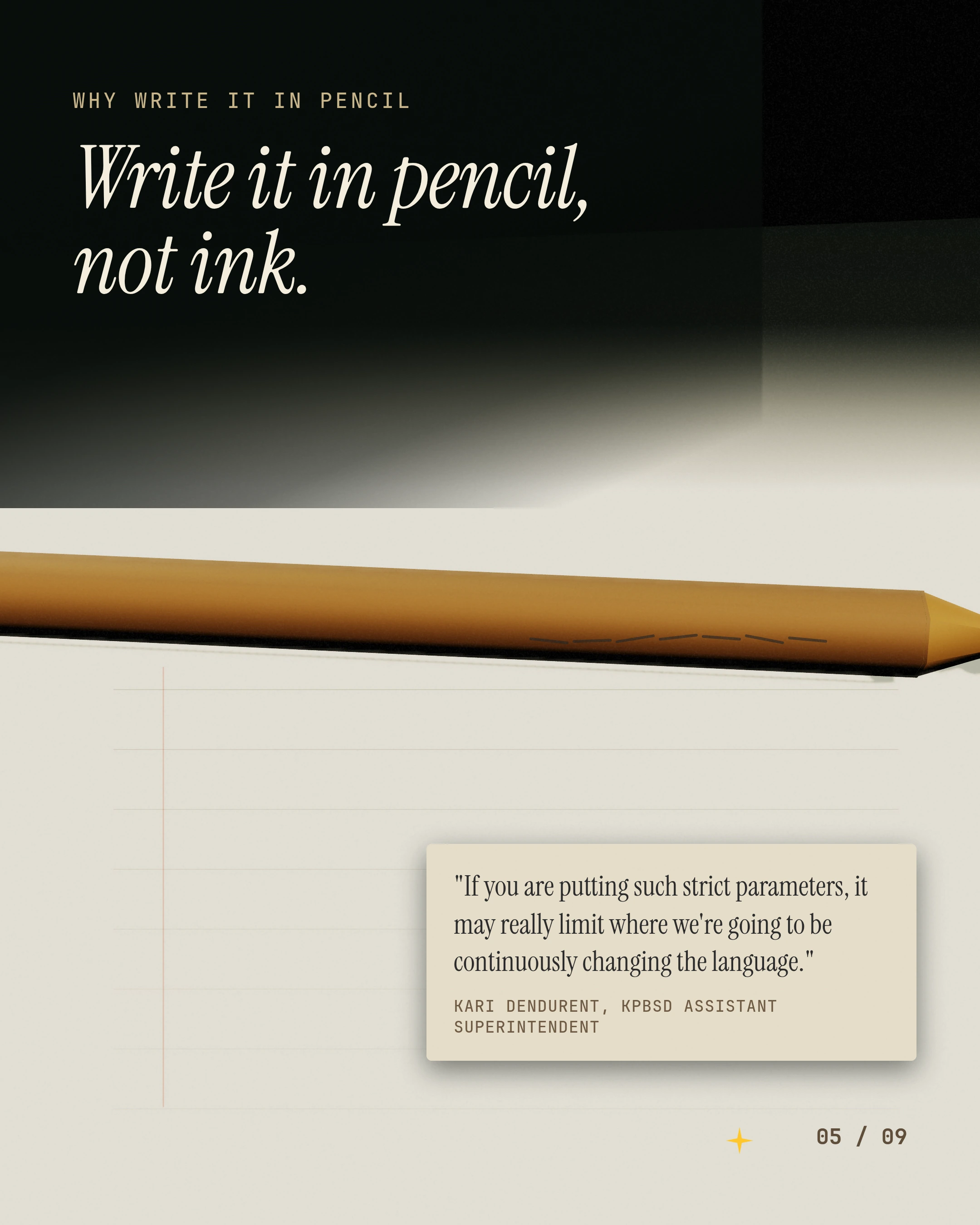
Assistant Superintendent Kari Dendurent cautioned that overly strict parameters could limit needed flexibility as the policy evolves.
Alaska became the 32nd US state to release a K-12 AI education framework, titled 'Artificial Intelligence for K-12, Recommendations and Considerations for Districts.'