Run Both Instruments, or Lose the Record
When a machine takes a ship's place on a fish survey, how do you tell a change in the fish from a change in the instrument?
The deck
SWIPE, SCROLL OR CLICK A SLIDE TO GO FULLSCREEN · 9 SLIDES
The story
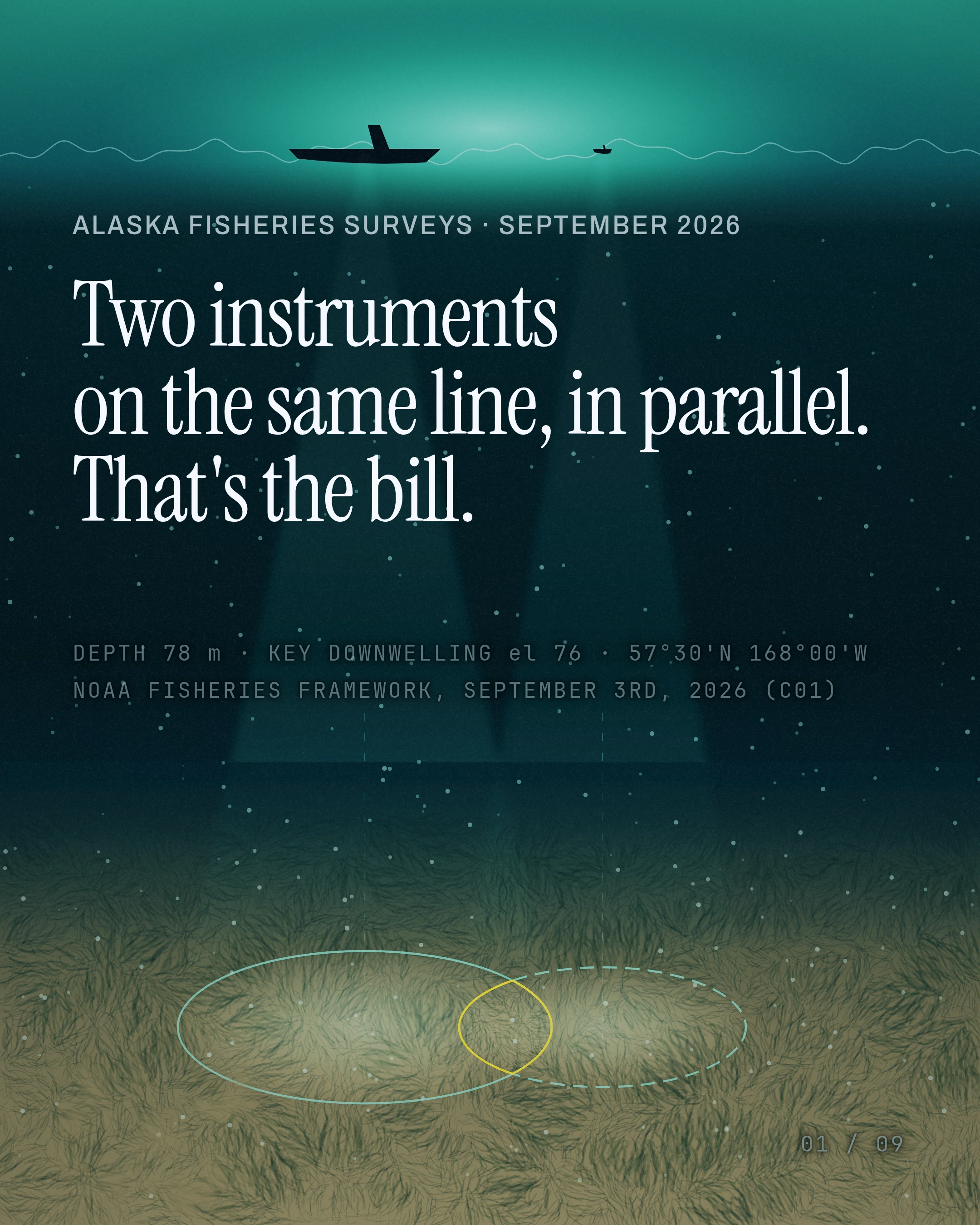
NOAA Fisheries wrote up the framework on September 3rd. The instrument is allowed to change. What the survey reports is not. The common way to buy that is to run both instruments in parallel for a fixed period.
A North Pacific Council committee reviews the draft 2027 deployment plan on September 15th. NMFS expected to monitor 1,473 partial coverage trips of 4,341 in 2026. One of three pools holds vessels with "no probability of carrying an observer or EM system on any trips" that season.
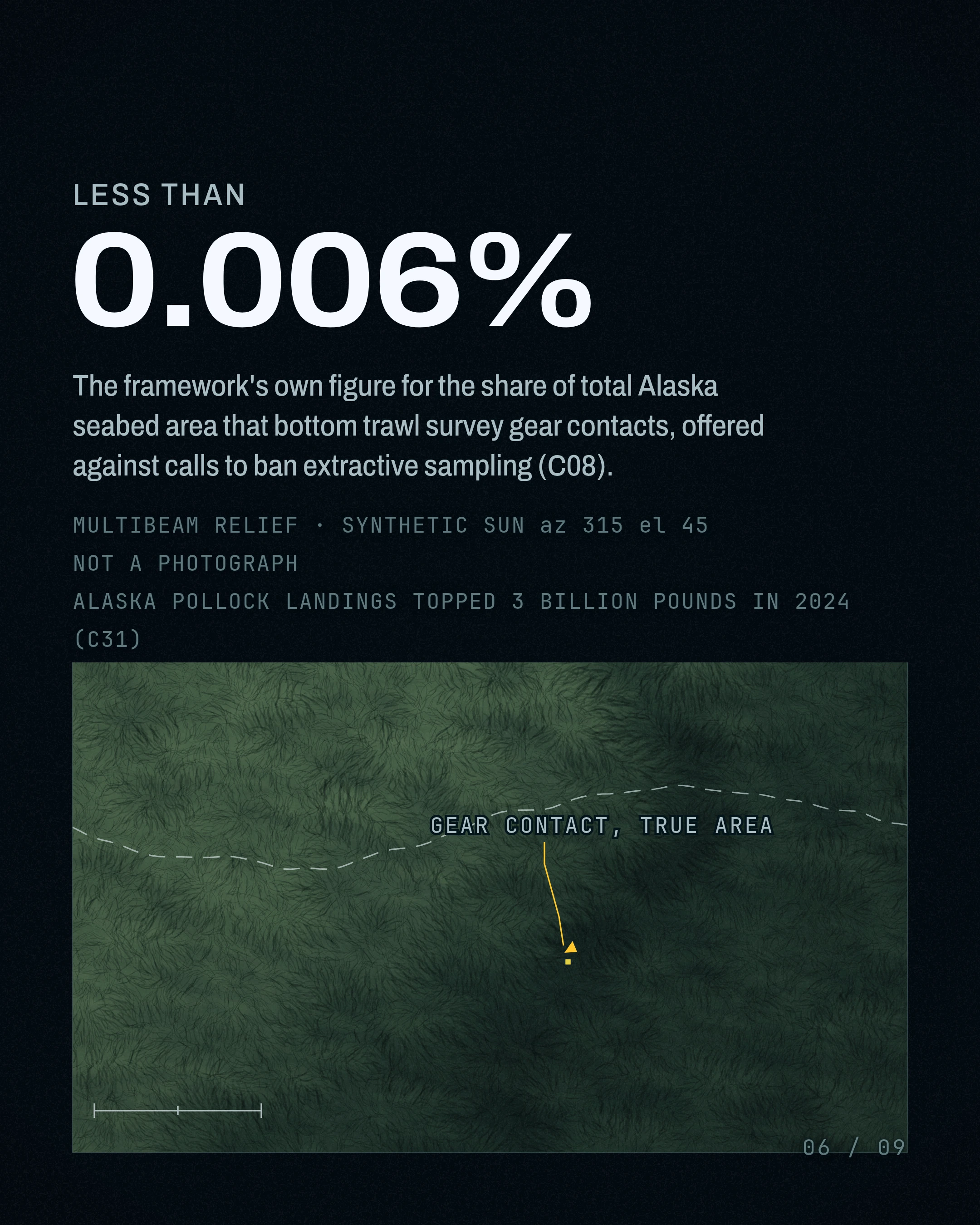
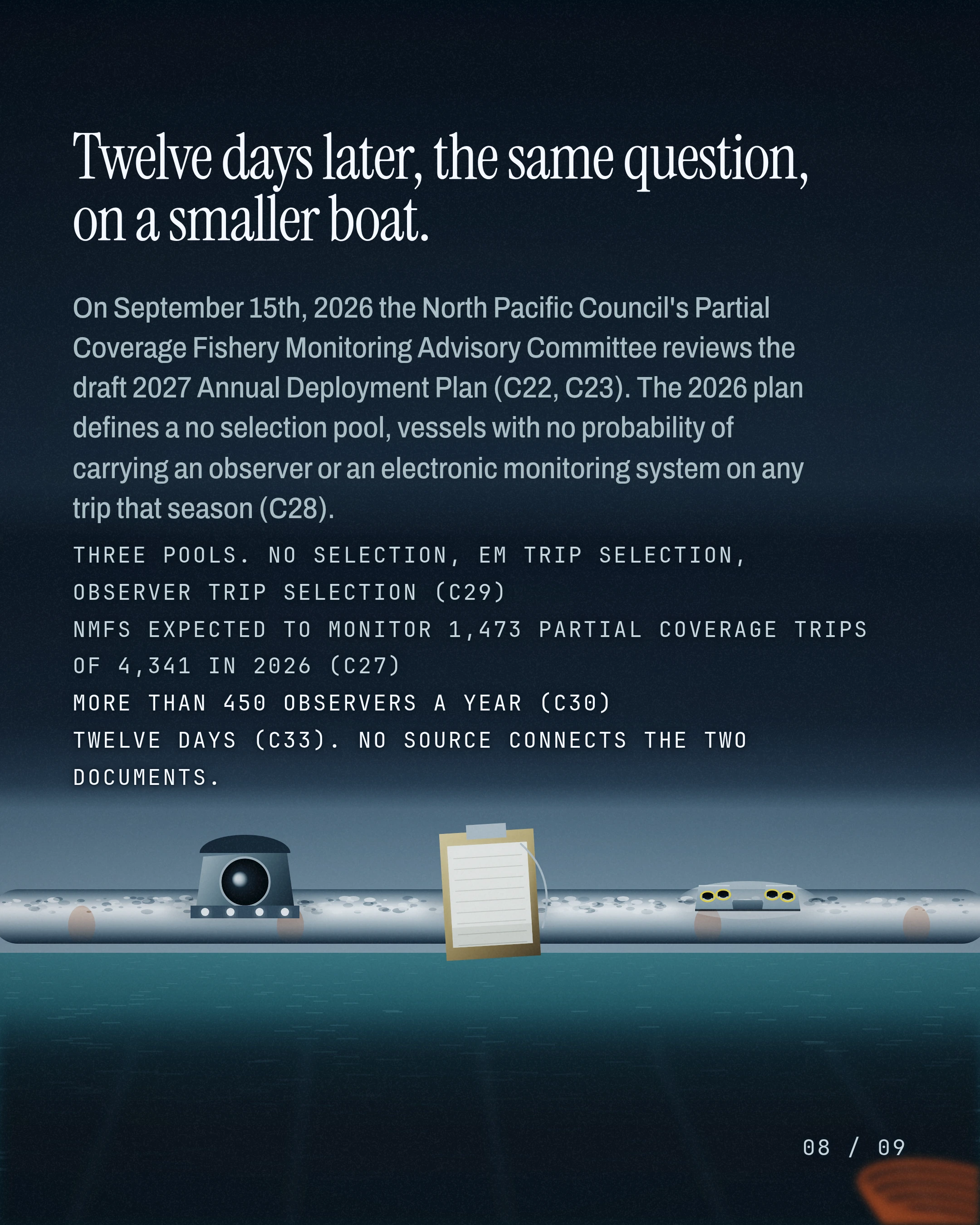
Slide 06 draws the survey gear's seabed footprint at true area, and slide 08 sets the three pools on one rail where the third bracket is empty.
How much of the Alaska record should rest on trips that nothing watched?
What we verified
33 CLAIMS, EACH RE-FETCHED FROM ITS SOURCE BEFORE THIS DECK SHIPPED
NOAA Fisheries published a feature story on the future of fisheries-independent surveys on September 3rd, 2026.
Stan Kotwicki of the Alaska Fisheries Science Center is the lead author of the new fisheries-independent survey framework.
The framework paper carries 23 named authors.
The framework was published in the ICES Journal of Marine Science, Volume 83 Issue 7, on July 16th, 2026.
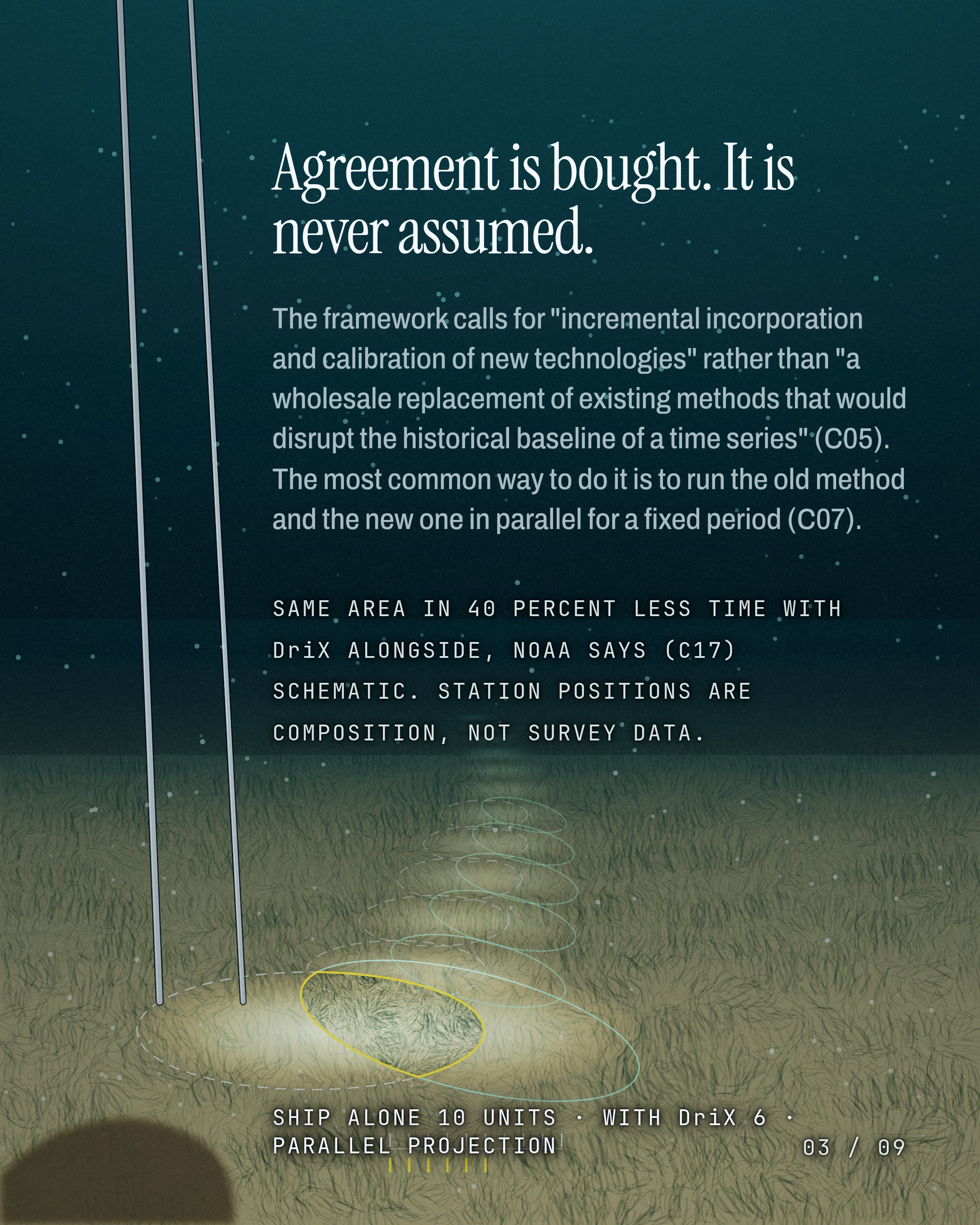
The framework's stated conclusion is that survey modernization works best through incremental incorporation and calibration rather than wholesale replacement.
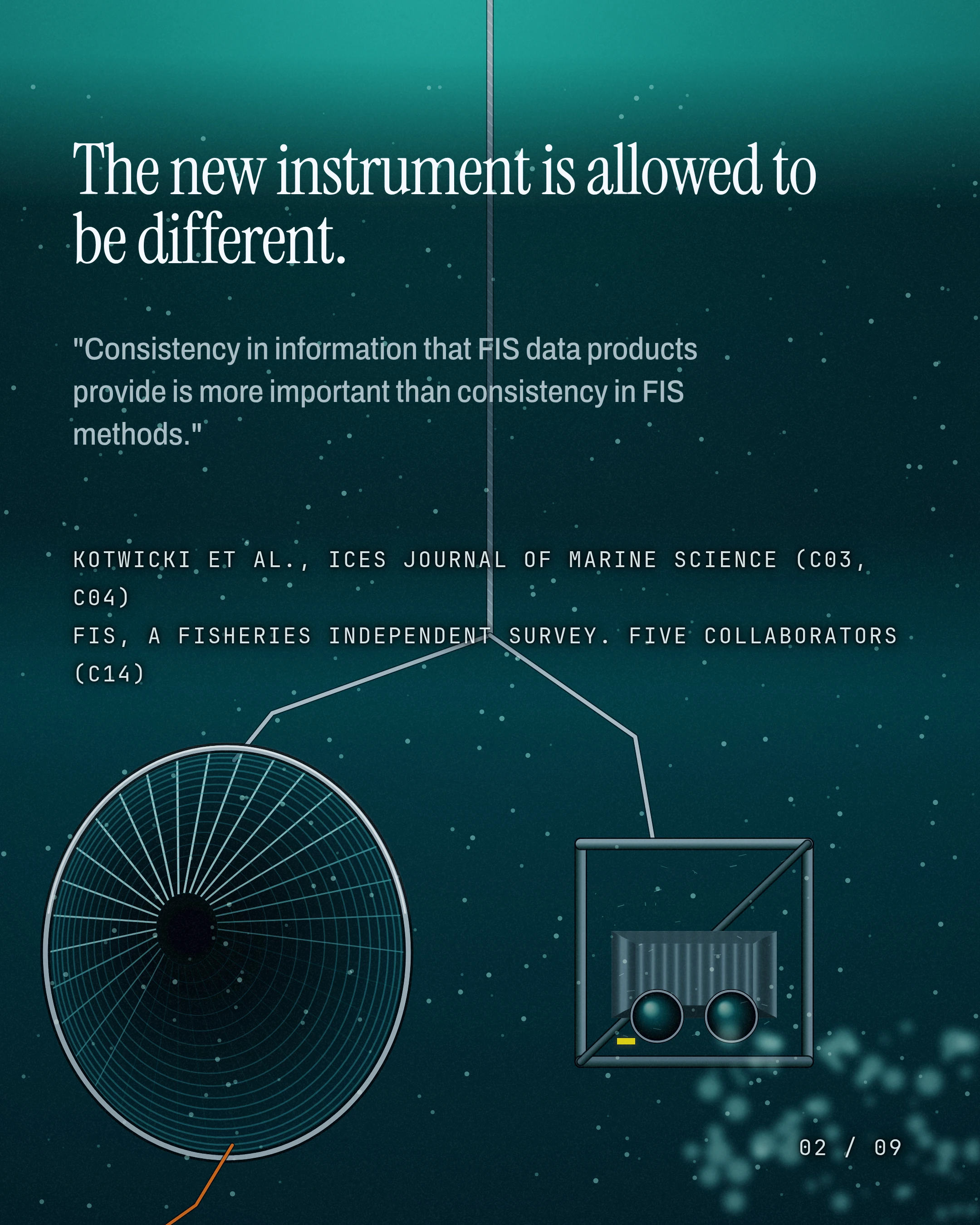
The framework states that consistency in the information the survey data products provide matters more than consistency in survey methods.
The framework says the most common way to implement incremental survey change is to run old and new methods in parallel for a fixed period.
The framework reports that Alaska bottom trawl fisheries-independent surveys contact less than 0.006 percent of total seabed area.
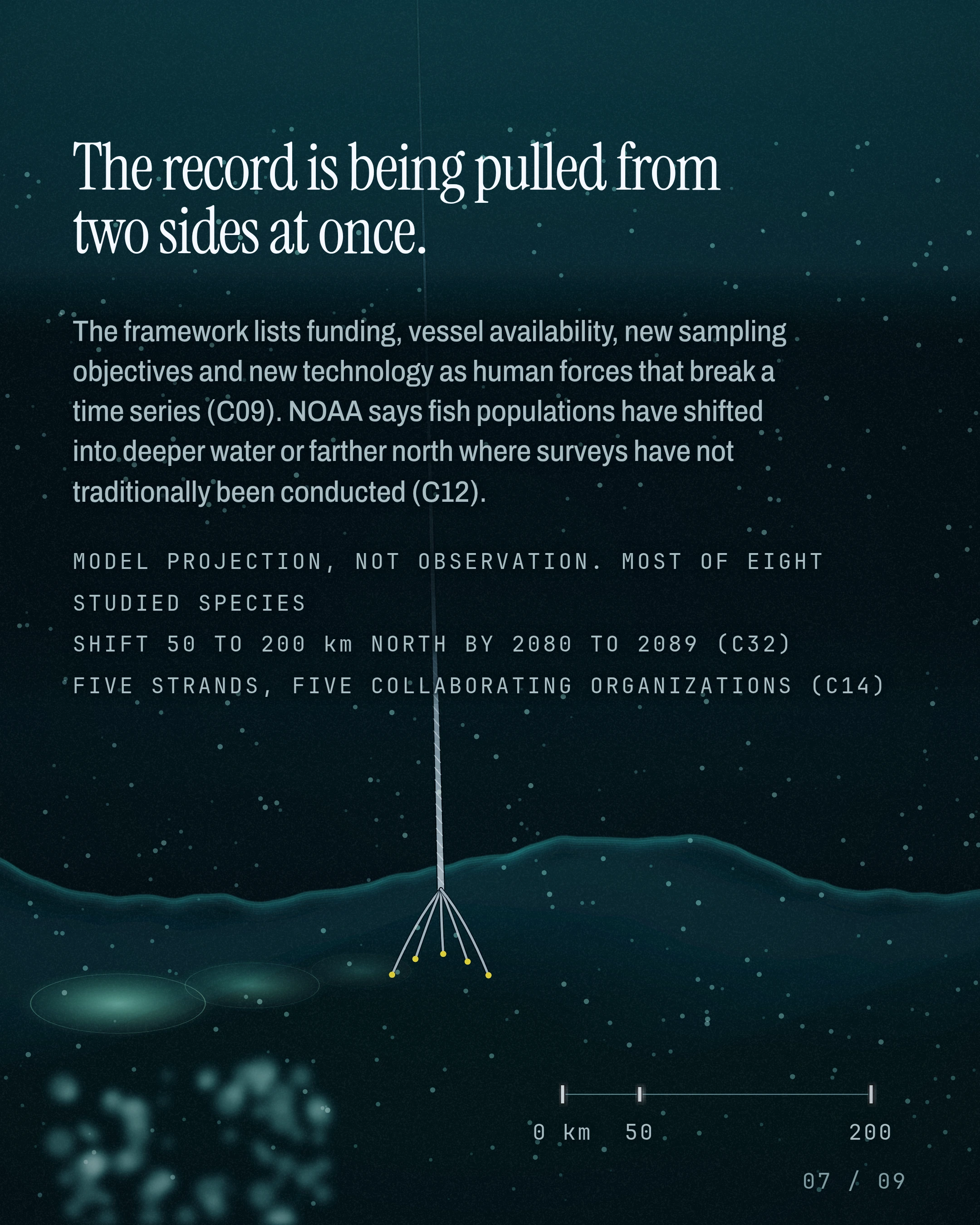
The framework lists funding, vessel availability, new sampling objectives and new technology among the anthropogenic forces that can break the continuity of a survey time series.
Kotwicki said the new tools have the potential to alleviate some challenges facing the survey enterprise and that maintaining data consistency and continuity is critical.
Kotwicki said the research recommends prioritizing calibration and comparison when implementing new methods.
NOAA states that fish populations have shifted into deeper waters or farther north where surveys have not traditionally been conducted.
NOAA states that portions of survey areas have become inaccessible to traditional survey methods because of energy development or conservation needs.
The framework was developed by collaborators from NOAA Fisheries, Earth Sciences New Zealand, the Washington Department of Fish and Wildlife, Norway's Institute for Marine Research and France's Institut Francais de Recherche pour l'Exploitation de la Mer.
NOAA compared eDNA estimates from 2019 to 2023 against acoustic biomass trends and the two together were given more weight than other data sources in the Pacific hake stock assessment model.
NOAA deployed Saildrones for an acoustic-only survey of midwater pollock in the Bering Sea when surveys were curtailed by the COVID-19 pandemic.
NOAA says uncrewed surface vehicles working in tandem with NOAA ships on Alaska pollock acoustic surveys cover the same area in 40 percent less time than a ship working alone.
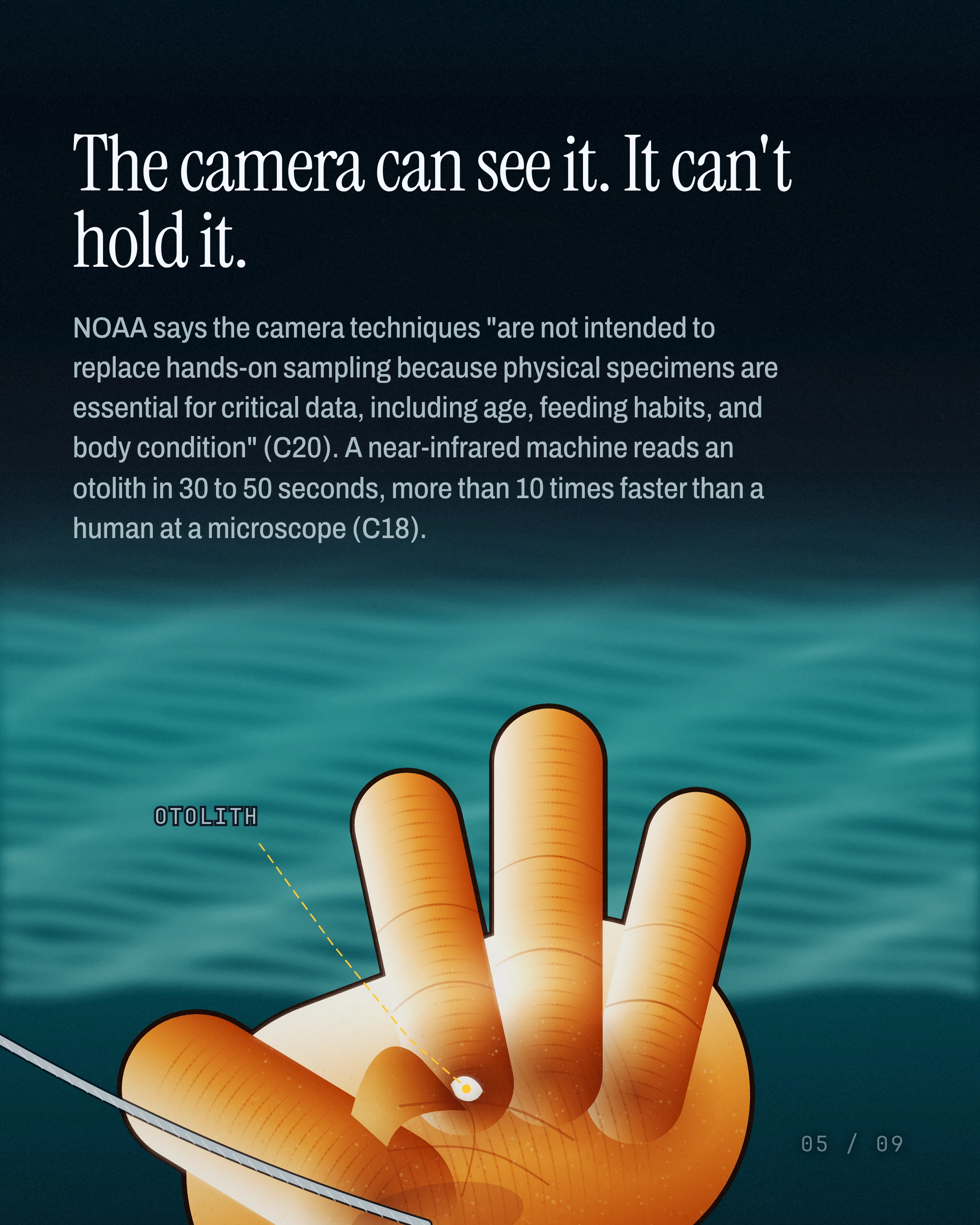
NOAA says near-infrared machine ageing determines a fish age in 30 to 50 seconds per otolith, more than 10 times faster than humans using microscopes.
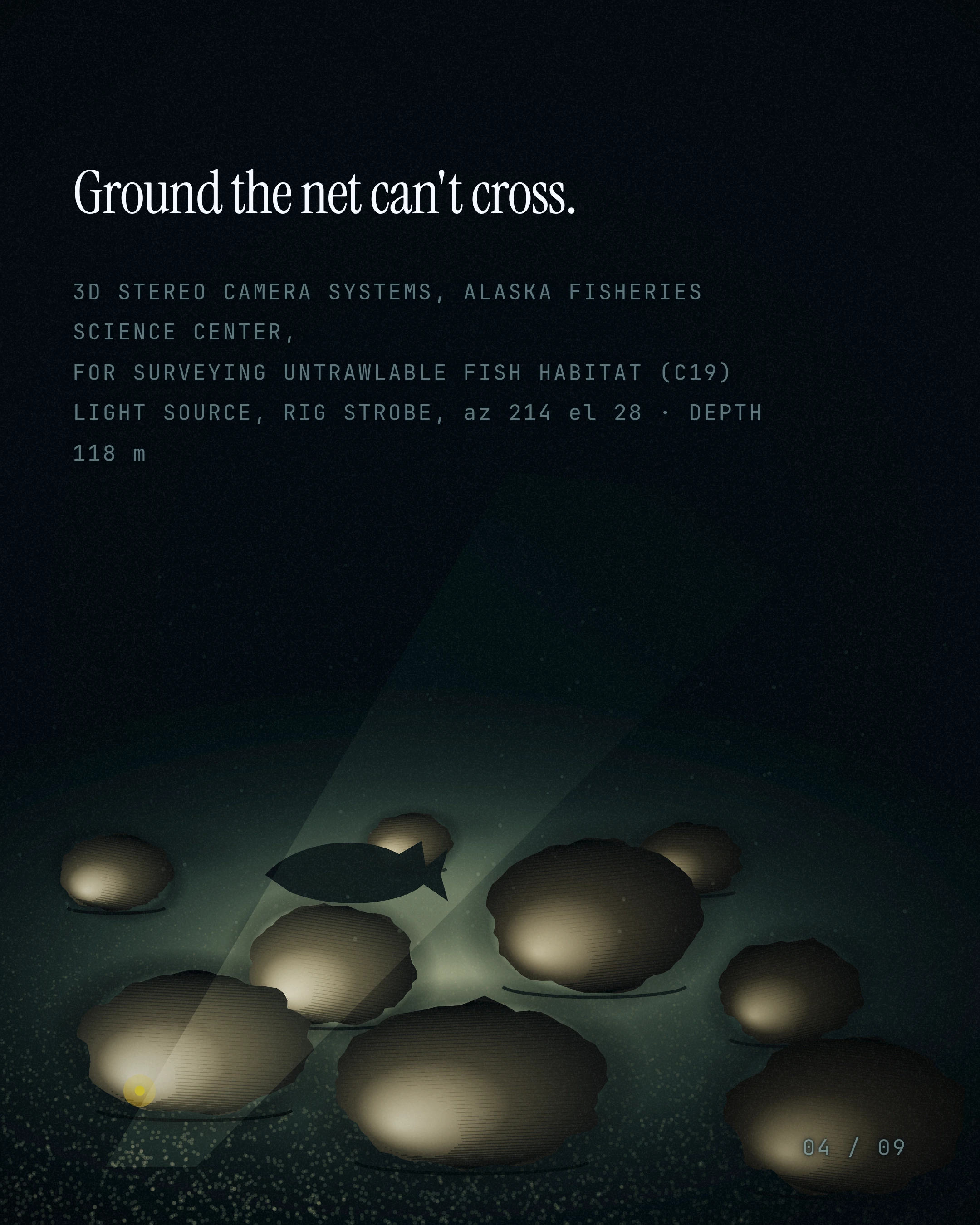
NOAA describes 3D stereo camera systems developed at the Alaska Fisheries Science Center as remote sampling tools used for surveying untrawlable fish habitat.
NOAA says stereo camera techniques for North Pacific rockfish are not intended to replace hands-on sampling because physical specimens are essential for age, feeding habits and body condition.
The Federal Register published a notice of virtual meeting for the North Pacific Fishery Management Council's Partial Coverage Fishery Monitoring Advisory Committee on August 31st, 2026.
The committee meeting is set for Tuesday September 15th, 2026 from 8:30 a.m. to 4 p.m. Alaska Time.
The published agenda for the September 2026 meeting includes review of the draft 2027 Annual Deployment Plan.
The meeting is held online only and the Federal Register notice states that public comment letters will be accepted and should be submitted electronically through the meeting page.
As of September 6th, 2026 the NPFMC meeting portal for the September 15th meeting lists only a schedule document and no downloadable draft 2027 Annual Deployment Plan.
The final 2026 Annual Deployment Plan for Observers and Electronic Monitoring in the Groundfish and Halibut Fisheries off Alaska is dated January 2026.
NMFS expected to monitor 1,473 trips in the partial coverage component of the observer program in 2026, out of 4,341 trips across the whole program.
The 2026 plan defines the no-selection pool as vessels with no probability of carrying an observer or electronic monitoring system on any trip that season.
The North Pacific Observer Program's partial coverage category is divided into a No Selection pool, an EM Trip Selection pool and an Observer Trip Selection pool.
NOAA says the North Pacific Observer Program trains, briefs, debriefs and oversees more than 450 observers annually.
Commercial landings of Alaska pollock from the Bering Sea and Gulf of Alaska totaled over 3 billion pounds in 2024 and were valued at approximately 432 million dollars.
NOAA reported in December 2024 that model projections show most of eight studied Alaska species shifting their summer distributions north by between 50 and 200 kilometers by 2080 to 2089.
Twelve days separate NOAA's September 3rd, 2026 framework story and the September 15th, 2026 committee meeting on the draft 2027 deployment plan.
Beats
This article is on Alaska AI research and science. Each beat page keeps every decision and every article on that subject in one place.