The Permit Knows Where the Machine Is
Two numbers and one blank sit in the stock table of the Arctic permit NMFS issued the Navy on September 10th.
The deck
SWIPE, SCROLL OR CLICK A SLIDE TO GO FULLSCREEN · 9 SLIDES



The story
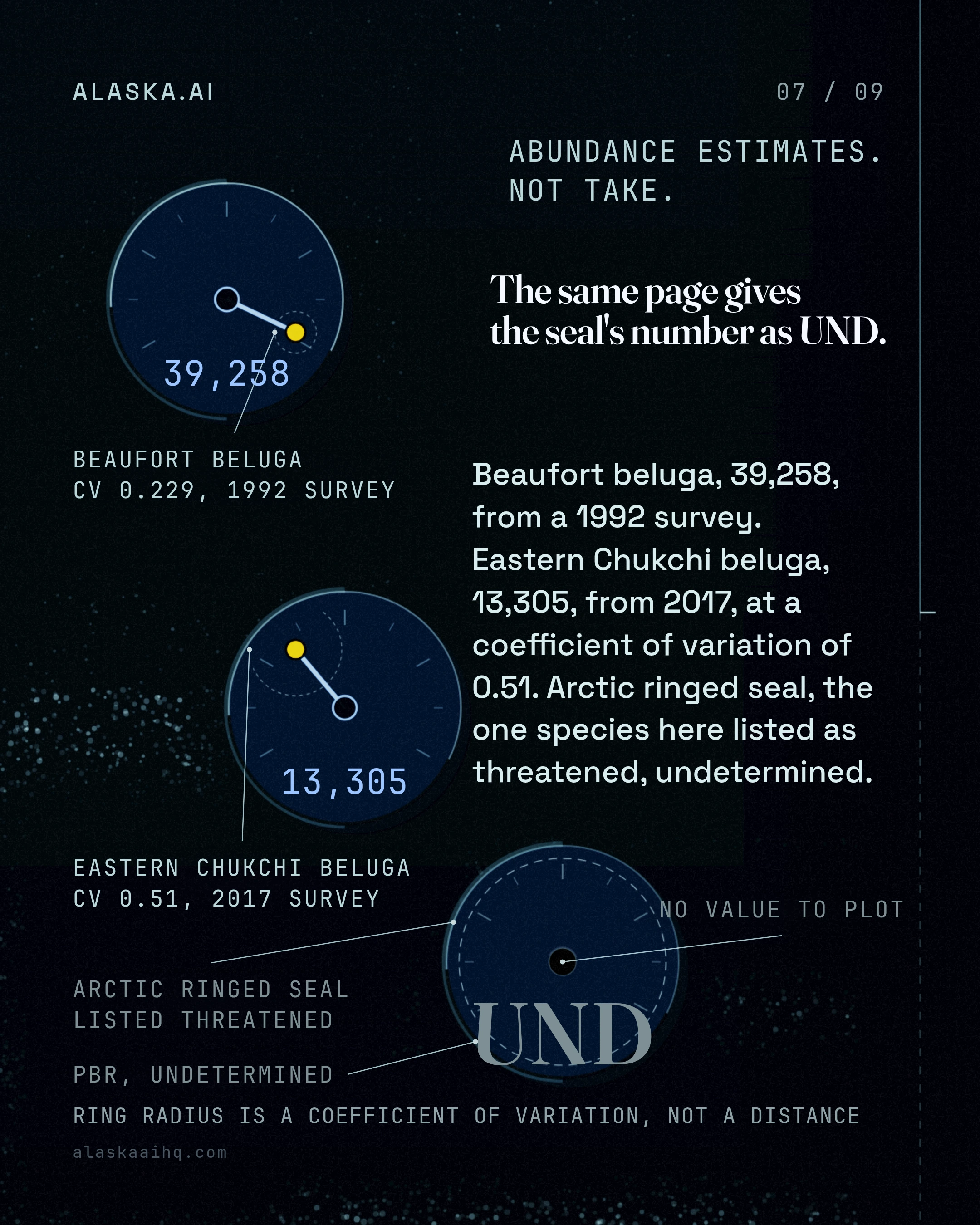
Beaufort beluga. Abundance estimate 39,258 from a 1992 survey. Eastern Chukchi beluga. Abundance estimate 13,305 from 2017. Arctic ringed seal, listed as threatened. Abundance undetermined.
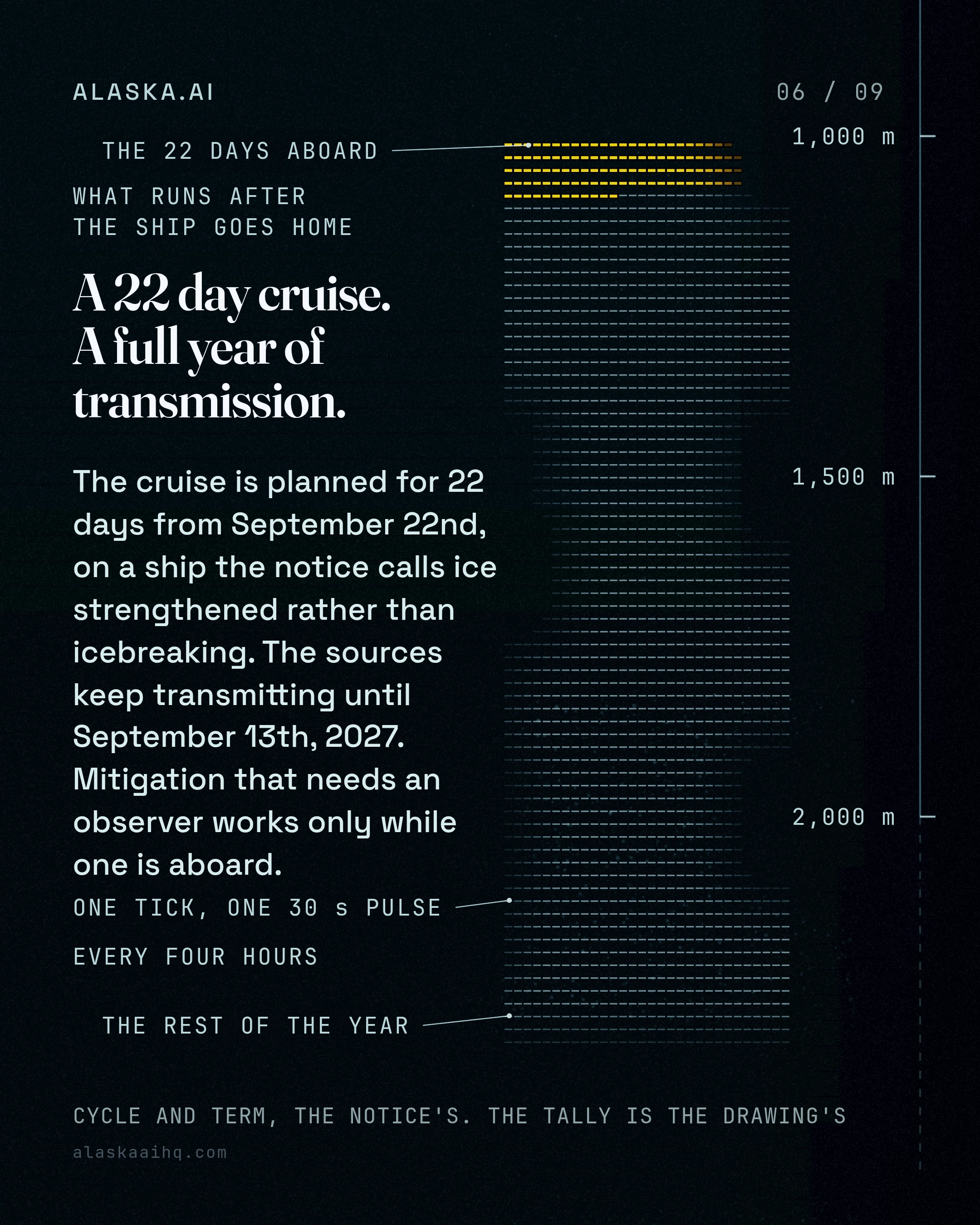
Up to six moorings and two drifting buoys pulse 30 seconds every four hours for a year, so gliders under the ice can fix a position by trilateration.
The machine half is exact to the second. The animal half is stale or blank.
Nine frames descend one column of water, from four mitigation zones at true metre scale down to a stock dial with no needle.
Year 10 is already inside Year 9's comment scope. How does the seal's blank survive nine years of one year permits?
What we verified
52 CLAIMS, EACH RE-FETCHED FROM ITS SOURCE BEFORE THIS DECK SHIPPED
The Federal Register notice published September 10th carries the action line Notice, issuance of incidental harassment authorization, so the authorization is decided and not proposed.
NMFS states the authorization is effective from September 14th through September 13th, 2027.
The notice carries the NOAA regulatory identifier RTID 0648-XF889, which is an identifier and not a measurement.
The issuance occupies Federal Register volume 91 pages 57547 through 57550, which makes 91 FR 57547 its citation address.
The notice title names the action as Year 9 of the Office of Naval Research Arctic Research Activities in the Beaufort and Chukchi Seas.
The proposed notice says this authorization covers the ninth year of a larger project for which the Office of Naval Research obtained prior authorizations and renewals.
The issuance states there are no changes to the specified activity, the species taken, the numbers or methods of take, or the mitigation and monitoring measures set out in the proposed notice.
The proposed notice describes the activity as using acoustic sources and receivers to provide a means of performing under-ice navigation for autonomous underwater vehicles.
The proposed notice describes the activity as the development of a new system under the Arctic Mobile Observing System.
The proposed notice places the Arctic Mobile Observing System inside the Navy Arctic and Global Prediction Program.
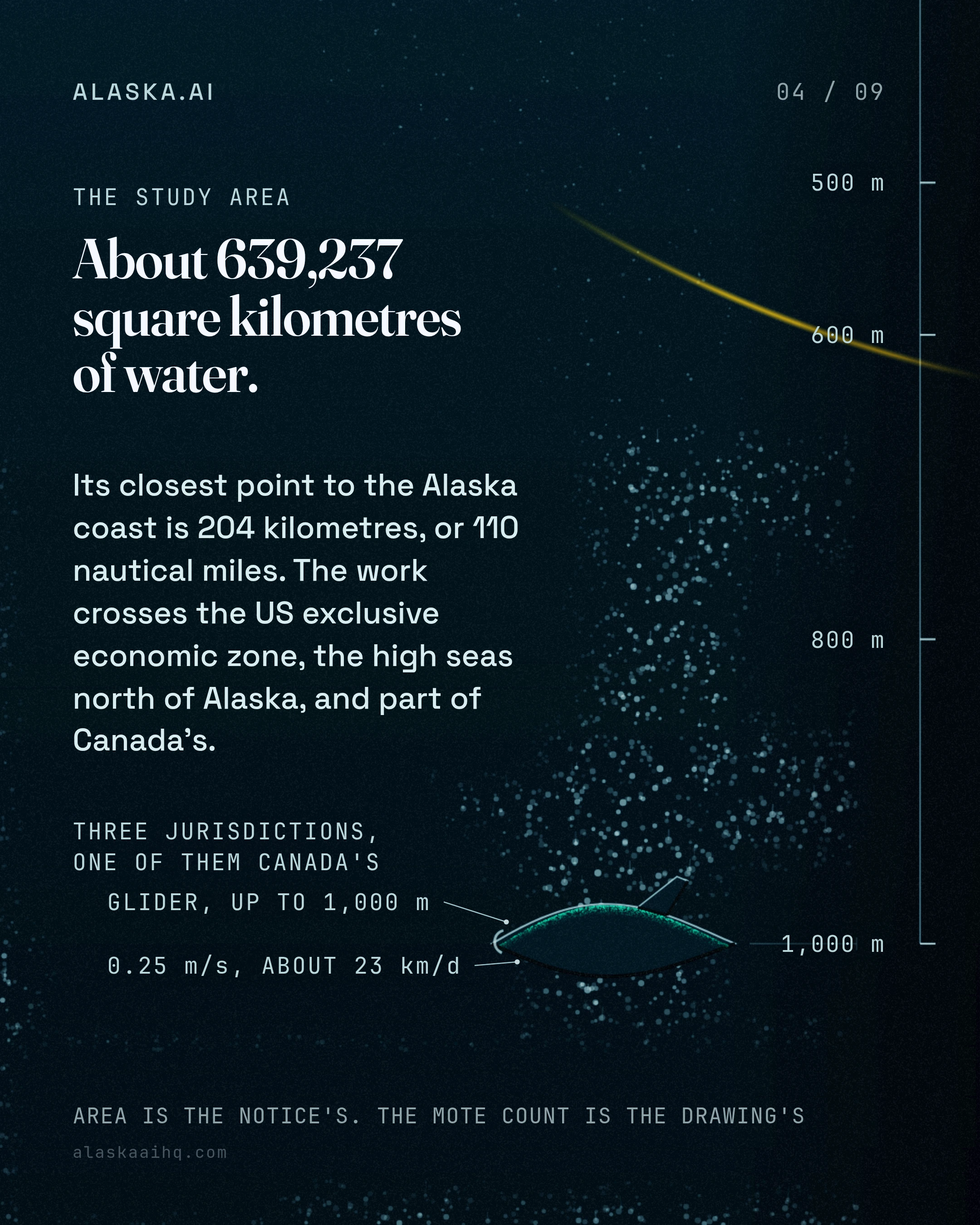
The study area is approximately 639,237 square kilometres.
The closest point of the study area to the Alaska coast is 204 kilometres, which the notice also gives as 110 nautical miles.
The activity would occur across the US Exclusive Economic Zone in the Beaufort and Chukchi seas, partially in the high seas north of Alaska and within part of the Canadian Exclusive Economic Zone.
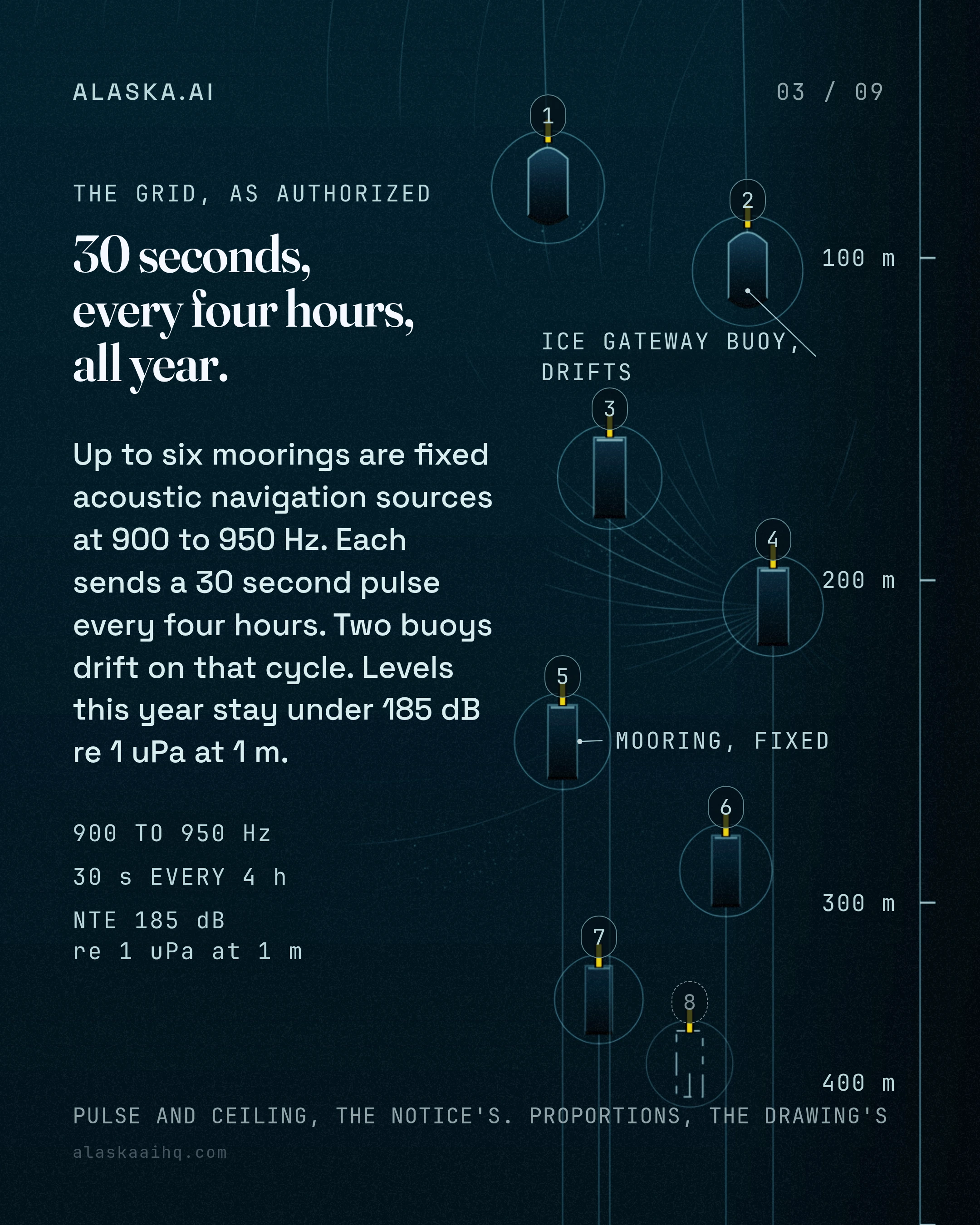
Up to six moorings described as fixed acoustic navigation sources transmitting at 900 Hz would be configured with active acoustic sources.
Two drifting ice gateway buoys would be configured with active acoustic sources.
The moorings and ice gateway buoys would operate for a period of one year.
The 900 Hz navigation moorings transmit a 30 second pulse every four hours.
The 900 to 950 Hz mooring sources carry a not to exceed source level of 180 dB set by system design limits.
The source level column in the notice is headed with the reference convention dB re 1 microPascal at 1 m, so the numbers are source levels and not received levels.
Up to one REMUS 600 uncrewed undersea vehicle is covered, with an 8 to 14 kHz acoustic communications source at a not to exceed level of 185 dB.
The notice says REMUS use is not anticipated during the September 2026 cruise and is included only in case of future use inside the authorization period.
Up to 20 Argo type autonomous profiling floats may be deployed in the central Beaufort Sea.
Argo floats drift at 1,500 m depth and collect temperature and salinity profiles from 2,000 m to the sea surface once every 10 days.
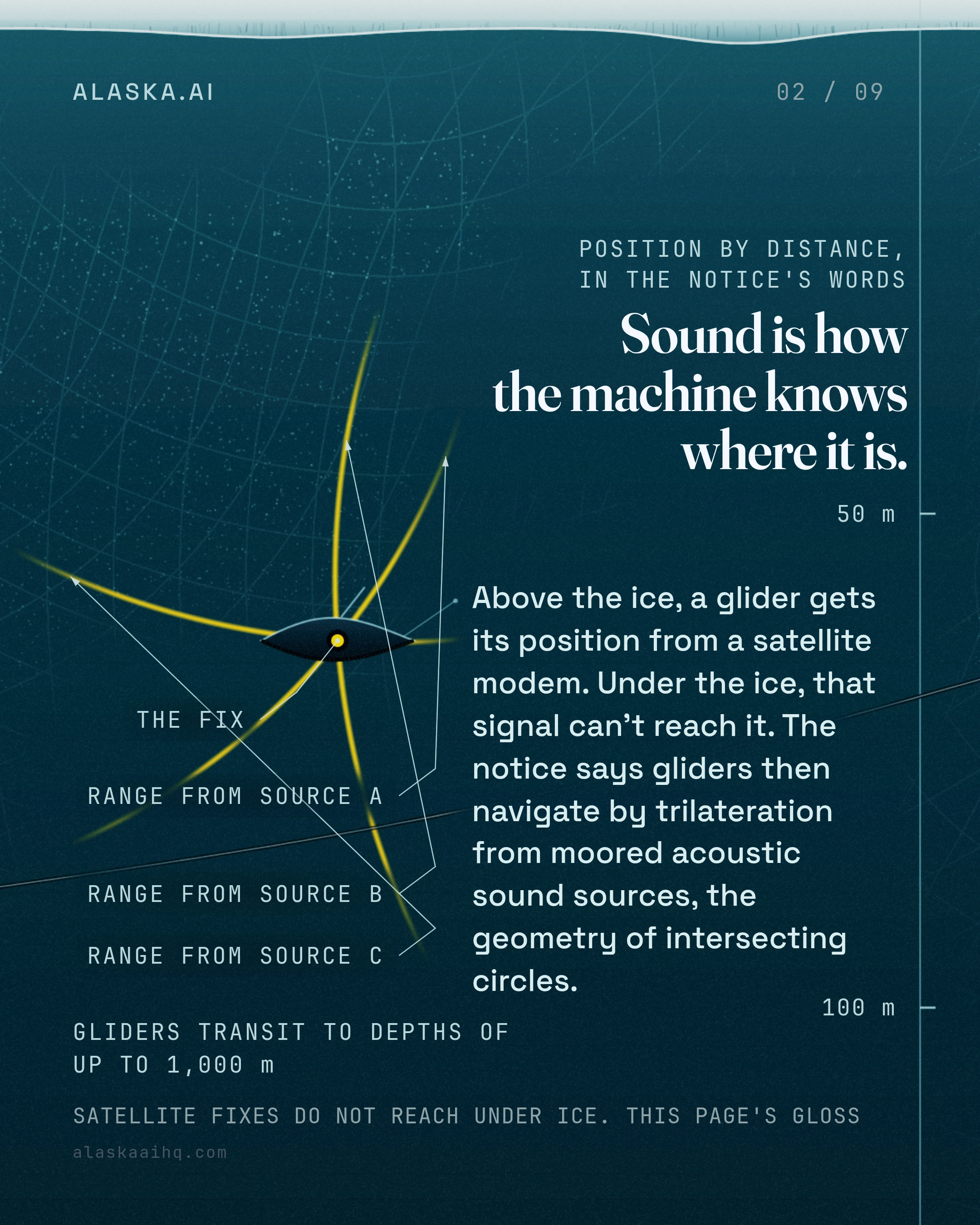
The notice says that in ice covered waters the gliders navigate by trilateration from moored acoustic sound sources, or by dead reckoning if the navigation signals are unavailable.
The gliders move at a speed of 0.25 metres per second, which the notice gives as approximately 23 km per day.
The gliders are buoyancy driven, carry satellite modems for two way communication and can transit to depths of up to 1,000 m.
The very low frequency 35 Hz mooring source carries the highest not to exceed level in the table at 190 dB.
The notice states that no very low frequency 35 Hz sources would be used in Year 9 because of hardware availability.
The issuance states that source levels from acoustic sources would not exceed 185 dB by system design limits.
The research cruise is planned for only 22 days in September and October, according to the issuance.
The proposed notice gives the first cruise a planned start date of September 22nd.
The issuance names the vessels as Research Vessel Sikuliaq, US Coast Guard Cutter HEALY, or another vessel.
The proposed notice says the R/V Sikuliaq is not an icebreaking ship but an ice strengthened ship.
A potential second cruise in summer 2027 may include up to 8 days of icebreaking activities.
The Office of Naval Research request was for take of beluga whales and ringed seals by Level B harassment only.
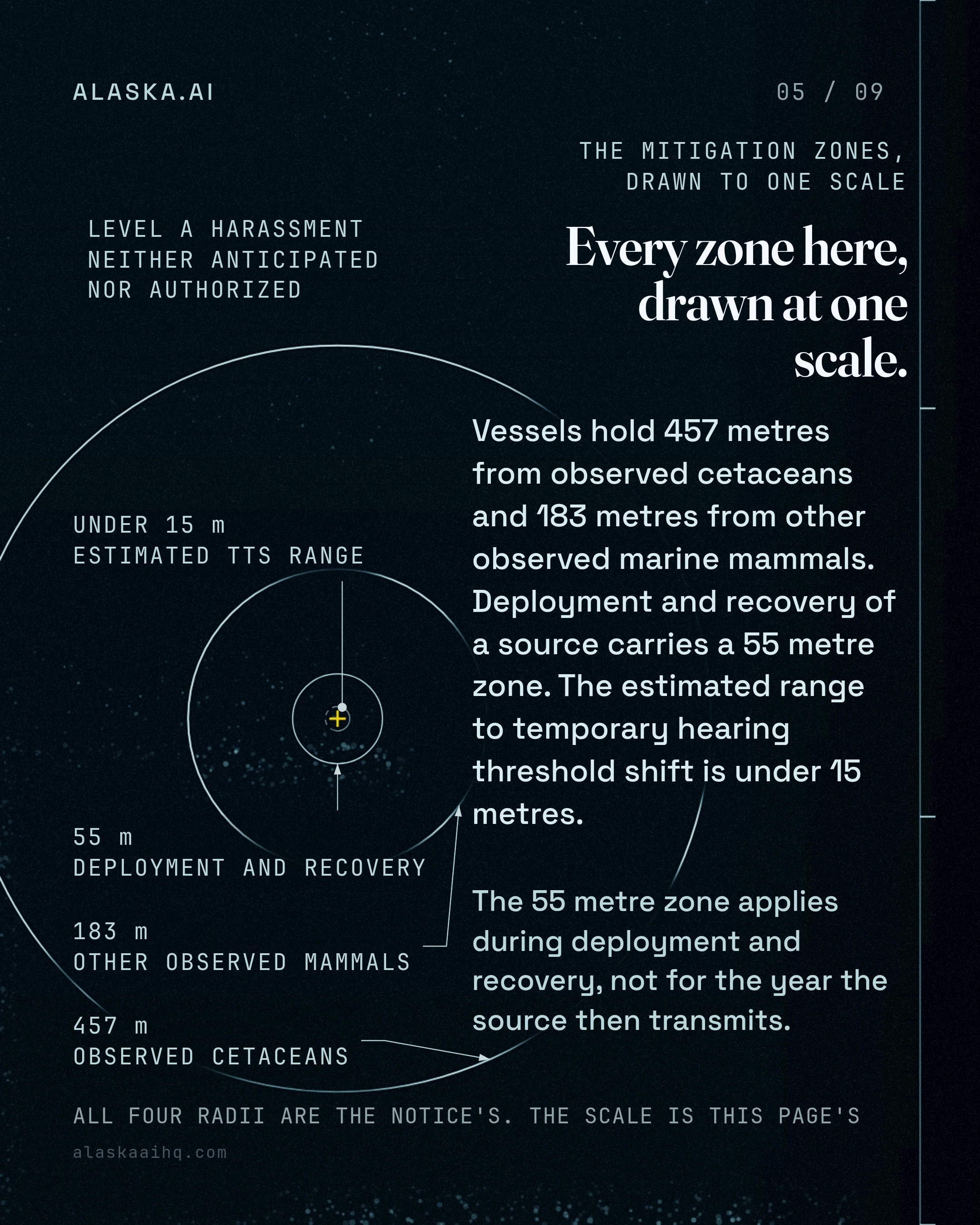
The issuance states that take by Level A harassment is neither anticipated nor authorized based on the nature of the planned activities.
NMFS did not authorize take by Level A harassment from icebreaking.
The issuance states there is one marine mammal species with confirmed occurrence in the study area listed as threatened under the Endangered Species Act, the Arctic subspecies of ringed seal.
The NMFS Alaska Regional Office Biological Opinion relied on for this authorization was issued on September 13th, 2022 and concluded the action is not likely to jeopardize the continued existence of Arctic ringed seals.
The stock abundance estimate the notice gives for the Beaufort Sea beluga stock is 39,258, with a coefficient of variation of 0.229, from a 1992 survey.
The stock abundance estimate the notice gives for the Eastern Chukchi beluga stock is 13,305, with a coefficient of variation of 0.51, from a 2017 survey.
The notice lists the abundance of the Arctic ringed seal stock as undetermined, and its potential biological removal as undetermined.
NMFS received three comment letters from private citizens during the 30 day public comment period.
Vessels must maintain a mitigation zone of 457 m around all observed cetaceans and 183 m around all other observed marine mammals.
During deployment and recovery of moored and drifting acoustic sources the Office of Naval Research must implement a mitigation zone of 55 m around the deployed source.
NMFS states that all authorizations it issues, whether an initial authorization or a renewal, are valid for a period of not more than one year.
The only reference to subsistence in the issuance is the statutory standard NMFS must apply, which asks whether the taking will have an unmitigable adverse impact on the availability of the stock for subsistence uses where relevant.
The issuance says modeling did not predict Level A take of beluga whale because the acoustic sources are continuous with a low duty cycle and a relatively short ping duration of 4 to 30 seconds.
The issuance states the estimated range to temporary hearing threshold shift is less than 15 m and that the range to auditory injury would be smaller still.
The issuance was signed by Kimberly Damon-Randall, Director of the NMFS Office of Protected Resources, and dated September 4th, then filed on September 9th.
The proposed notice was published on July 22nd at 91 FR 46055 and the issuance cites it as the document it incorporates.
The proposed notice action line invited comment on the proposed authorization and on a possible renewal of it.
Beats
This article is on Alaska land and permitting for AI · Alaska AI research and science. Each beat page keeps every decision and every article on that subject in one place.