Utqiagvik Observers and an Arctic Ocean Model
Validation is what science does to data to decide if it is good enough. A paper published September 18th inverts that.
The deck
SWIPE, SCROLL OR CLICK A SLIDE TO GO FULLSCREEN · 9 SLIDES
The story
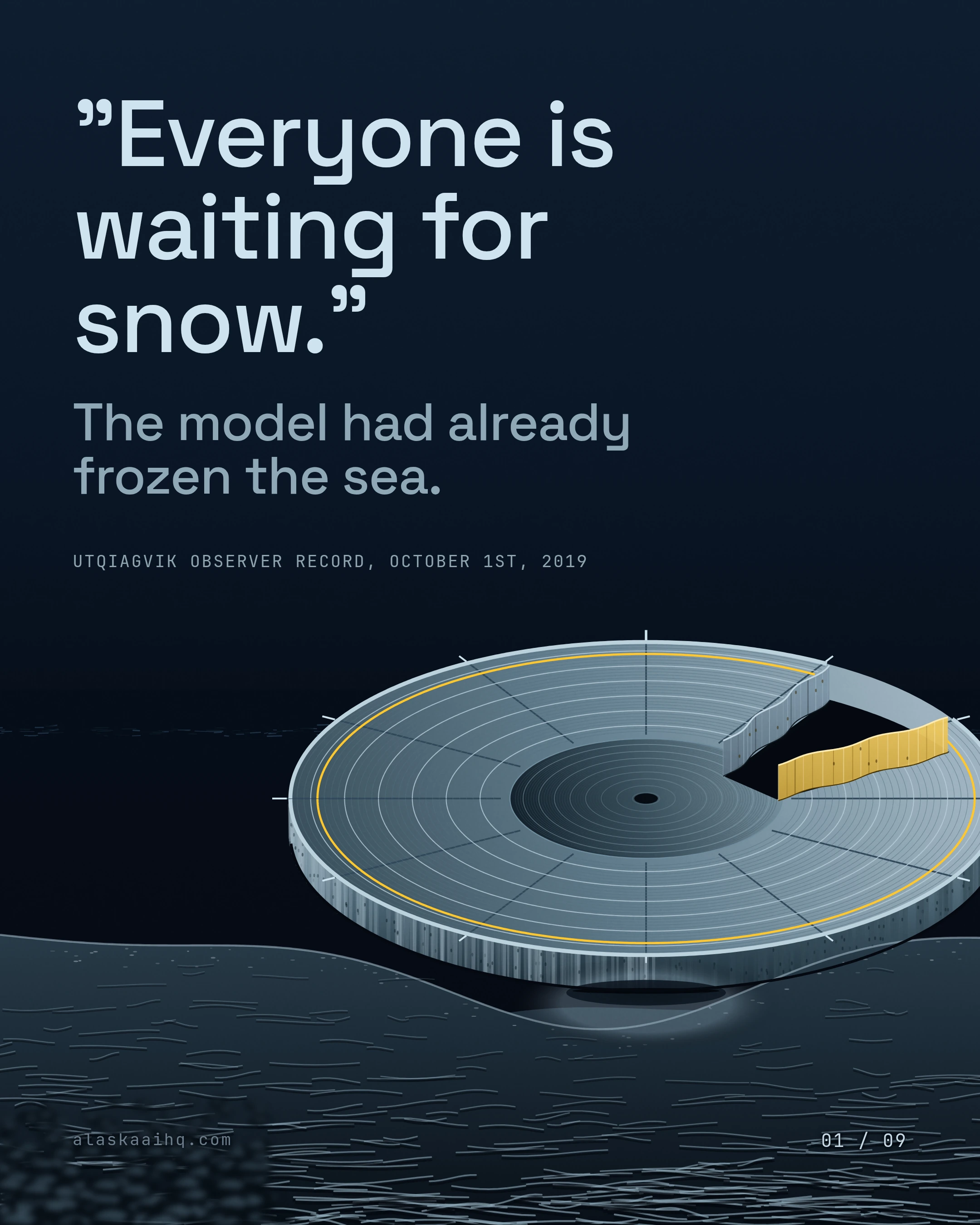
Did the model fail? No. It generally caught seasonal timing, especially the end of open water.
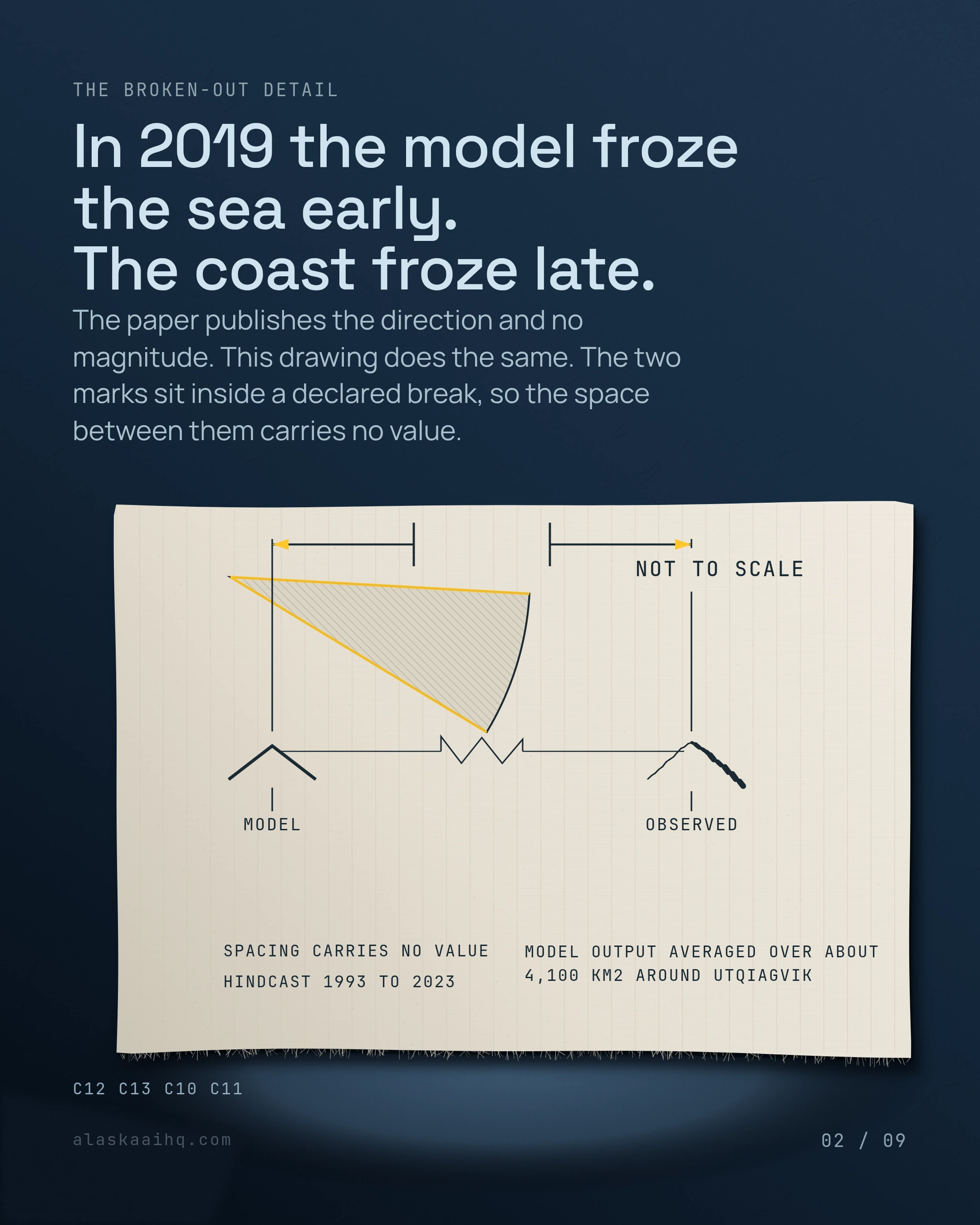
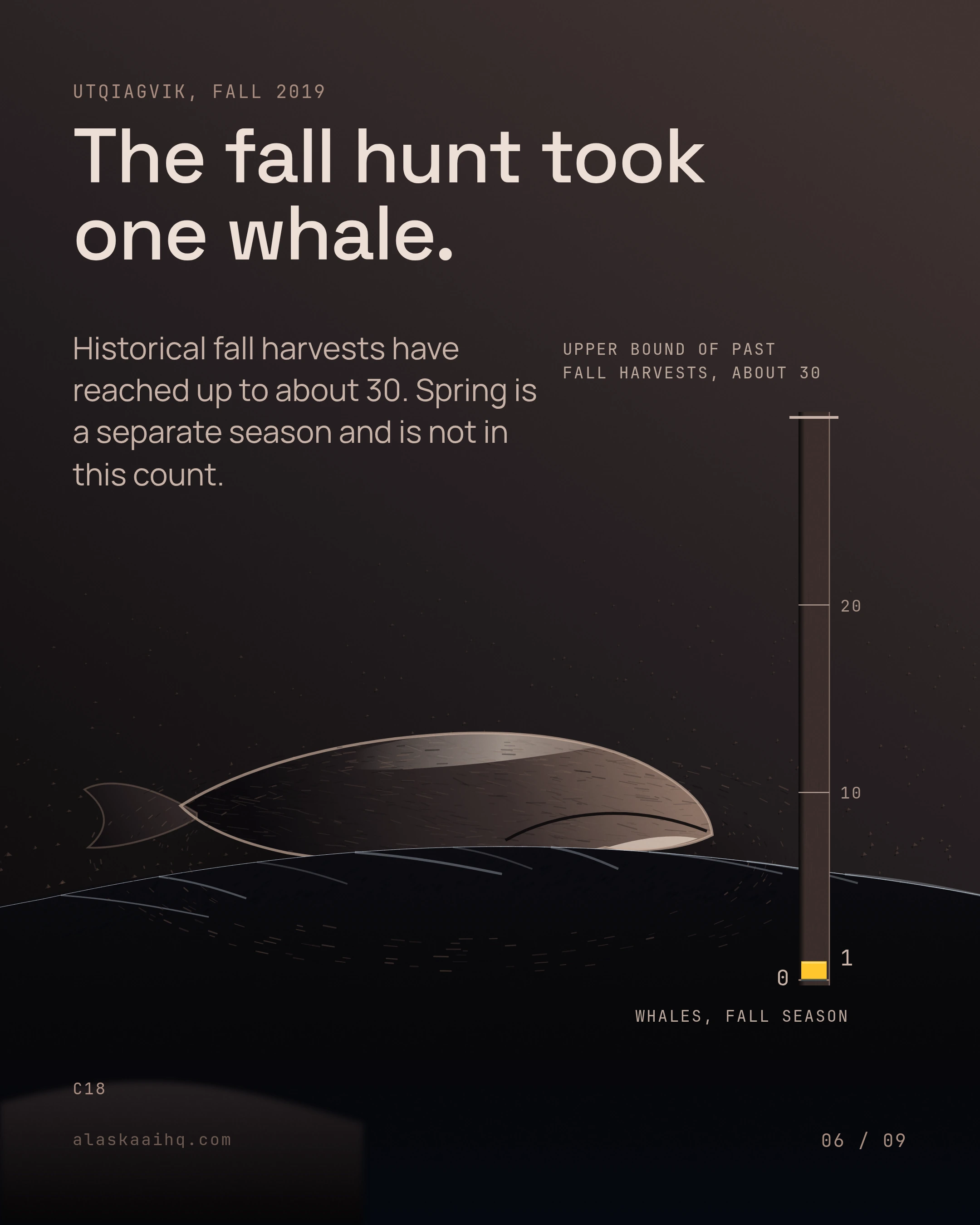
Where did it break? During the 2019 marine heatwave the model had ice freezing up earlier than the ocean did. The records cover more than 1,500 km of coast and show late freeze-up and storms that made hunting hard. That fall Utqiagvik took one bowhead, against past fall harvests of up to about 30.
The paper's line is that Indigenous Knowledge "does not require validation by scientific frameworks". Observers are co-authors.
The deck holds a season disc broken open where the records disagree, the observer's October 1st, 2019 entry, and ten author slots.
When a model and a coastline disagree about the same week, which one gets corrected?
What we verified
29 CLAIMS, EACH RE-FETCHED FROM ITS SOURCE BEFORE THIS DECK SHIPPED
The paper "Indigenous Knowledge and observations improve Arctic Ocean model skill and relevance" was published online on September 18th in Communications Earth and Environment.
The paper carries DOI 10.1038/s43247-026-03899-w and is article 748 in volume 7 of the journal.
The paper has ten authors, listed in order as Claudine Hauri, Donna D. W. Hauser, Billy Adams, Victoria Q. Buschman, Roberta T. Glenn, Krista Heeringa, Brita Irving, Joseph M. Leavitt, Remi Pages and Robert Schaeffer.
Lead author Claudine Hauri is a research faculty member at the International Arctic Research Center at the University of Alaska Fairbanks.
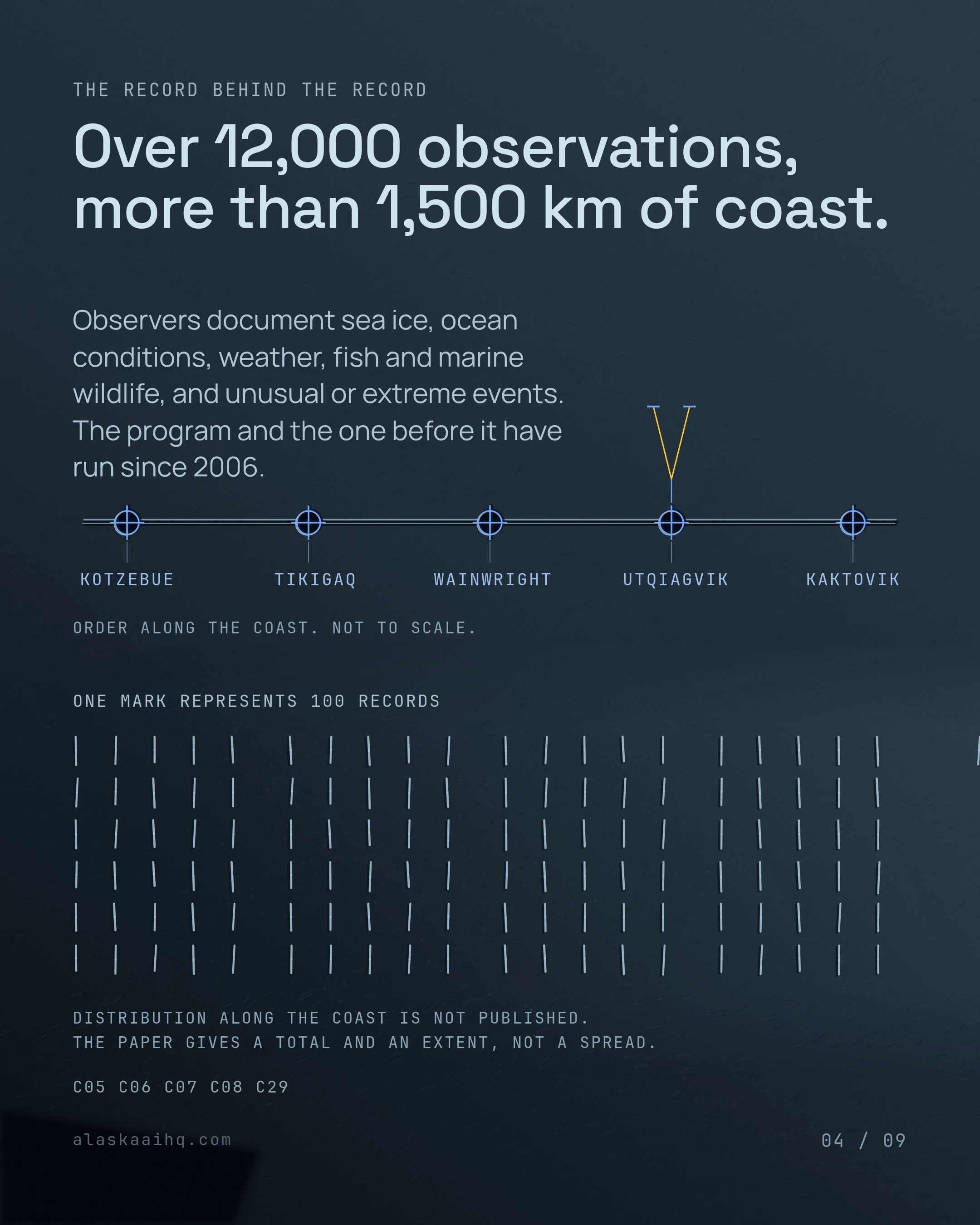
The Alaska Arctic Observatory and Knowledge Hub database holds over 12,000 observation records.
Those AAOKH records come from more than 1,500 kilometres of Arctic Alaska coastline.
AAOKH observers record sea ice, ocean conditions, weather, fish and marine wildlife, and unusual or extreme events.
AAOKH and its predecessor the Seasonal Ice Zone Observing Network have sustained knowledge exchange with Indigenous environmental observers in coastal Arctic Alaska since 2006.
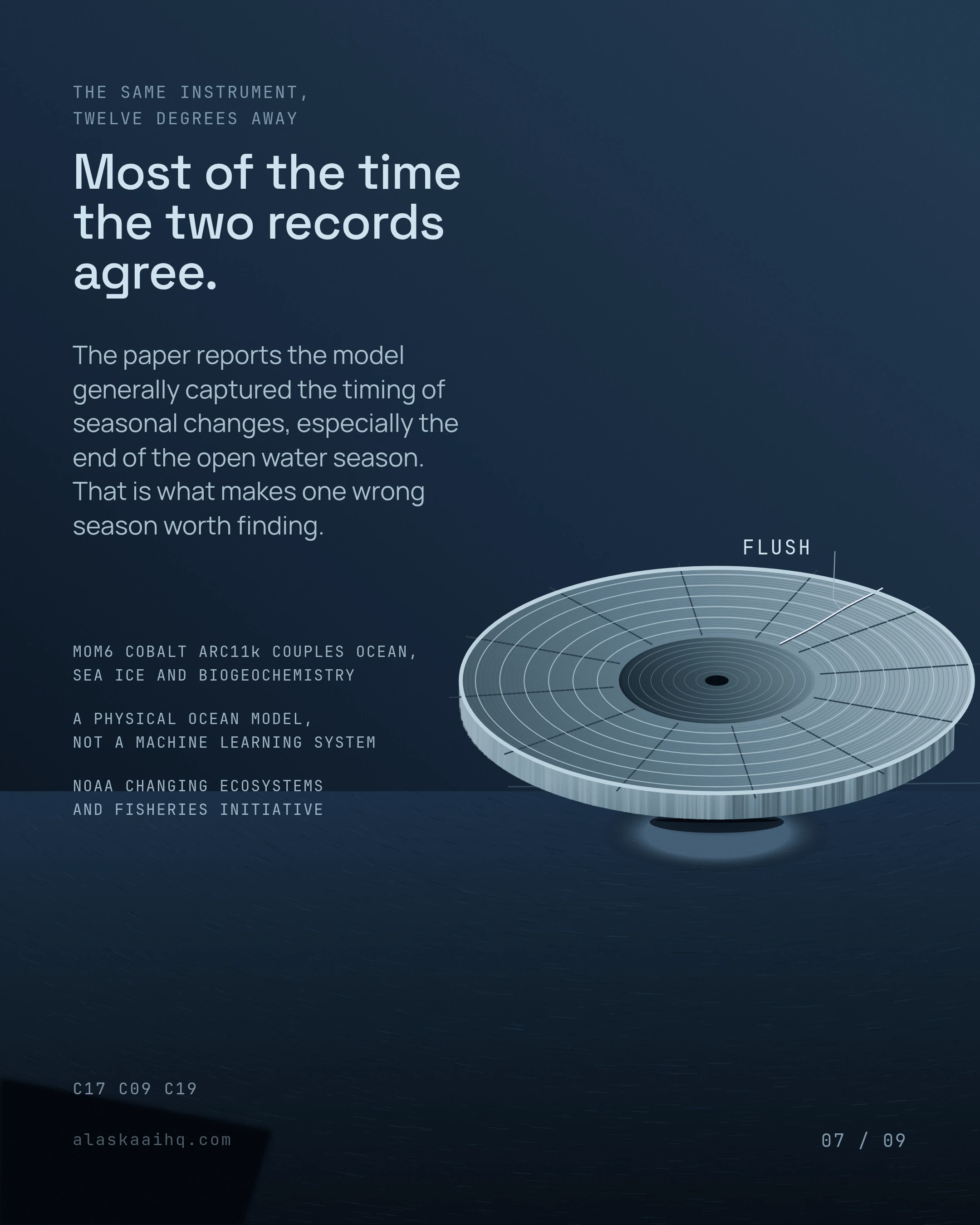
The model is the MOM6 COBALT ARC11k configuration, built on the Modular Ocean Model version 6, the Sea Ice Simulator version 2 and the COBALT version 3 biogeochemical model.
The analysis used a regional Arctic Ocean hindcast simulation covering 1993 to 2023.
Model output was spatially averaged over an area of roughly 4,100 square kilometres around Utqiagvik.
In 2019, during a major marine heatwave, the model predicted sea ice would freeze up earlier than it actually did.
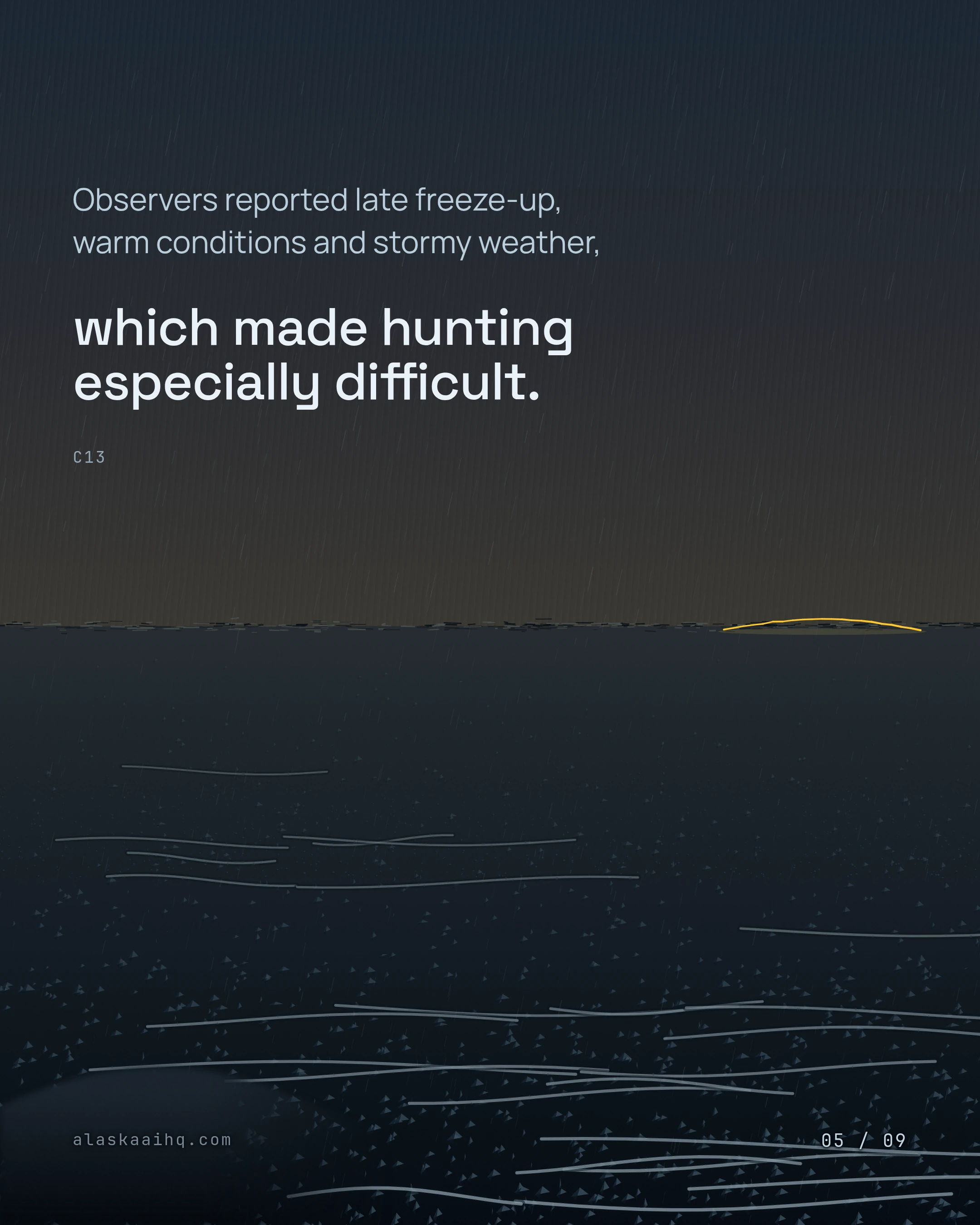
Indigenous observers in that season reported late freeze up, warm conditions and stormy weather, which made hunting especially difficult.
The paper states that Indigenous Knowledge can identify model deficiencies that conventional metrics miss.
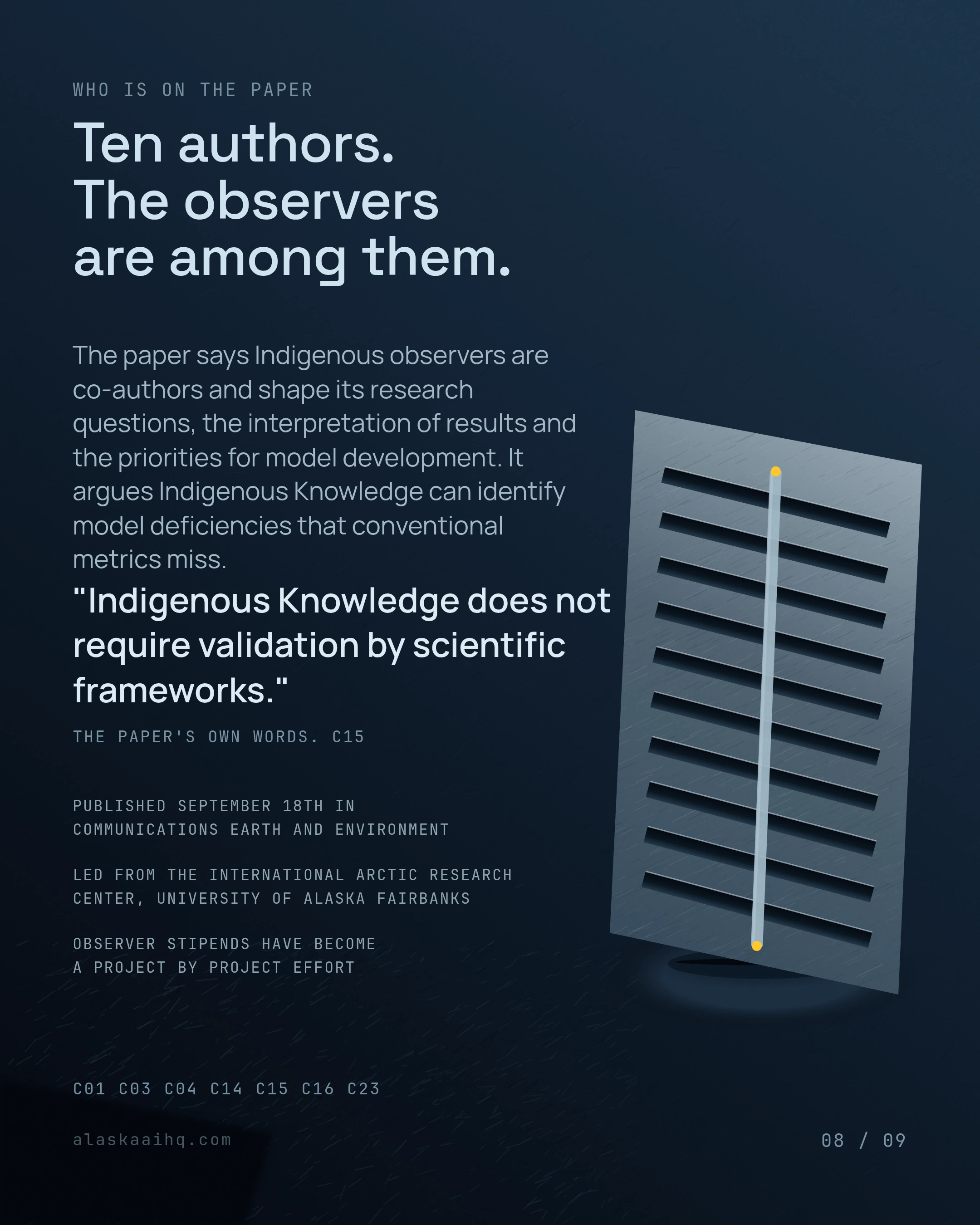
The paper states that Indigenous Knowledge does not require validation by scientific frameworks.
The paper states that Indigenous observers are co-authors of the work and shape its research questions, the interpretation of model results and the priorities for model development.
The paper reports the model generally captured the timing of seasonal changes, especially the end of the open water season.
In Utqiagvik the fall 2019 bowhead whale hunt yielded only one whale, against historical fall harvests of up to about 30.
The modeling work sits within the National Oceanic and Atmospheric Administration's Changing Ecosystems and Fisheries Initiative.
The paper used a seasonal calendar for Utqiagvik as the shared format for putting Indigenous observations and model output side by side.
The paper describes seasonal calendars as reflecting the cycles of the seasons and the close connections between environmental conditions and community harvesting activities.
The paper argues that academic institutions reward productivity, publications and novelty, while co-production requires patience and a pace set by relationship rather than deadlines.
The paper reports that AAOKH observer stipends were historically supported by longer term funding but that stability is no longer guaranteed, and sustaining them has become a project by project effort.
The published funding record for the paper names NOAA awards NA24OARX431C and NA23OAR4690390, Office of Naval Research award N00014-22-1-2792, and the Sasakawa Peace Foundation.
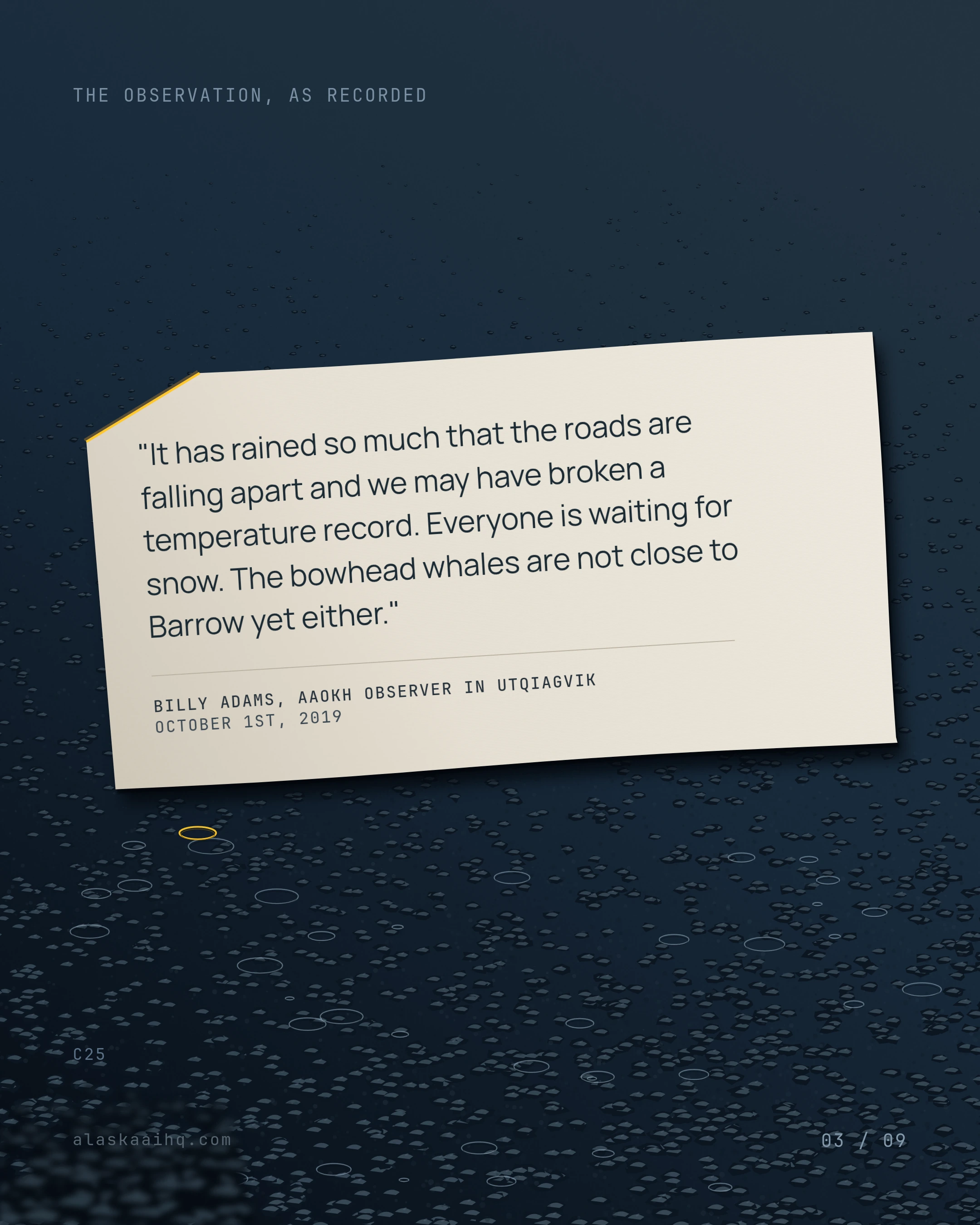
Utqiagvik observer Billy Adams recorded on October 1st, 2019 that it had rained so much the roads were falling apart and a temperature record might have been broken.
Billy Adams said he thinks it is going to be a big thing very soon to have Indigenous input in ice and ocean modeling.
Claudine Hauri said the observations are not just data points, because an Inupiat observer noticing something about the sea ice is drawing on generations of knowledge about how that ice behaves.
Claudine Hauri said the partnership fundamentally changed the way the team conducts research, and that the model framework was co-developed with Indigenous observers.
AAOKH works with northern Alaska coastal communities including Tikigaq, Kotzebue, Wainwright, Utqiagvik and Kaktovik.
Beats
This article is on Alaska AI research and science. Each beat page keeps every decision and every article on that subject in one place.