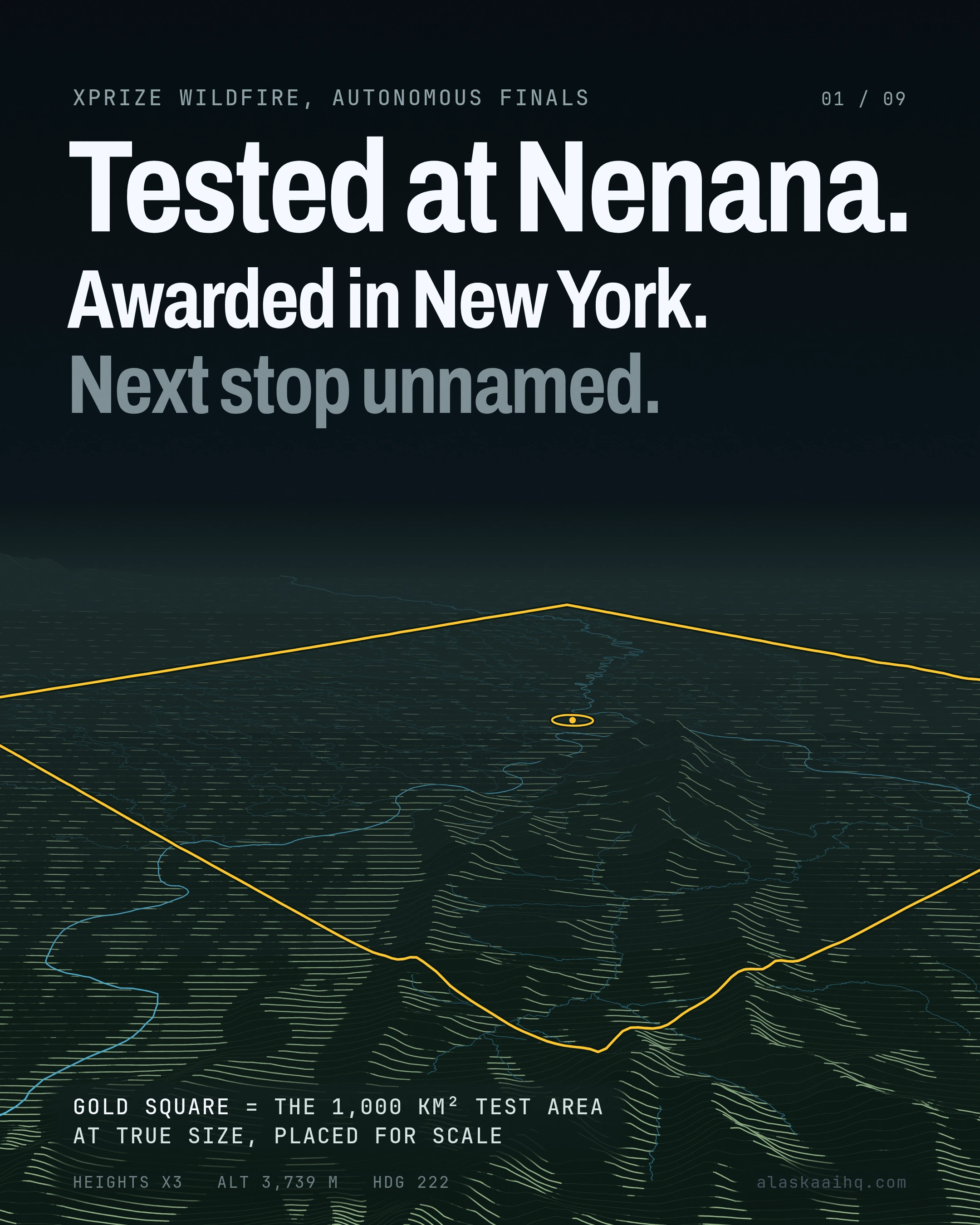
Tested at Nenana. Awarded in New York. Next stop unnamed.
In June, controlled fires were set along the Nenana-Totchaket Road, and machines from Nenana's airport had 8 hours to find them alone.
The deck
SWIPE, SCROLL OR CLICK A SLIDE TO GO FULLSCREEN · 9 SLIDES


The story
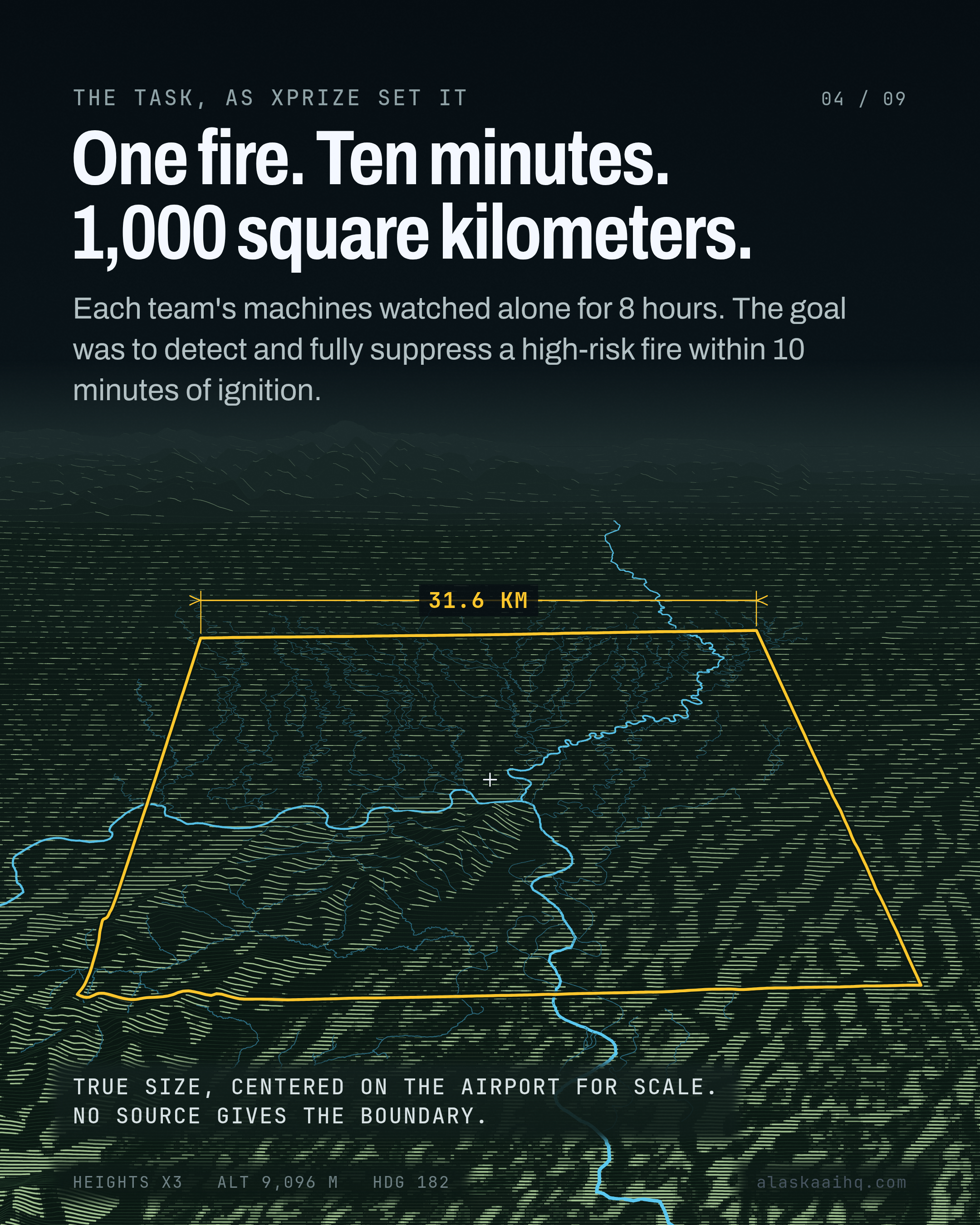
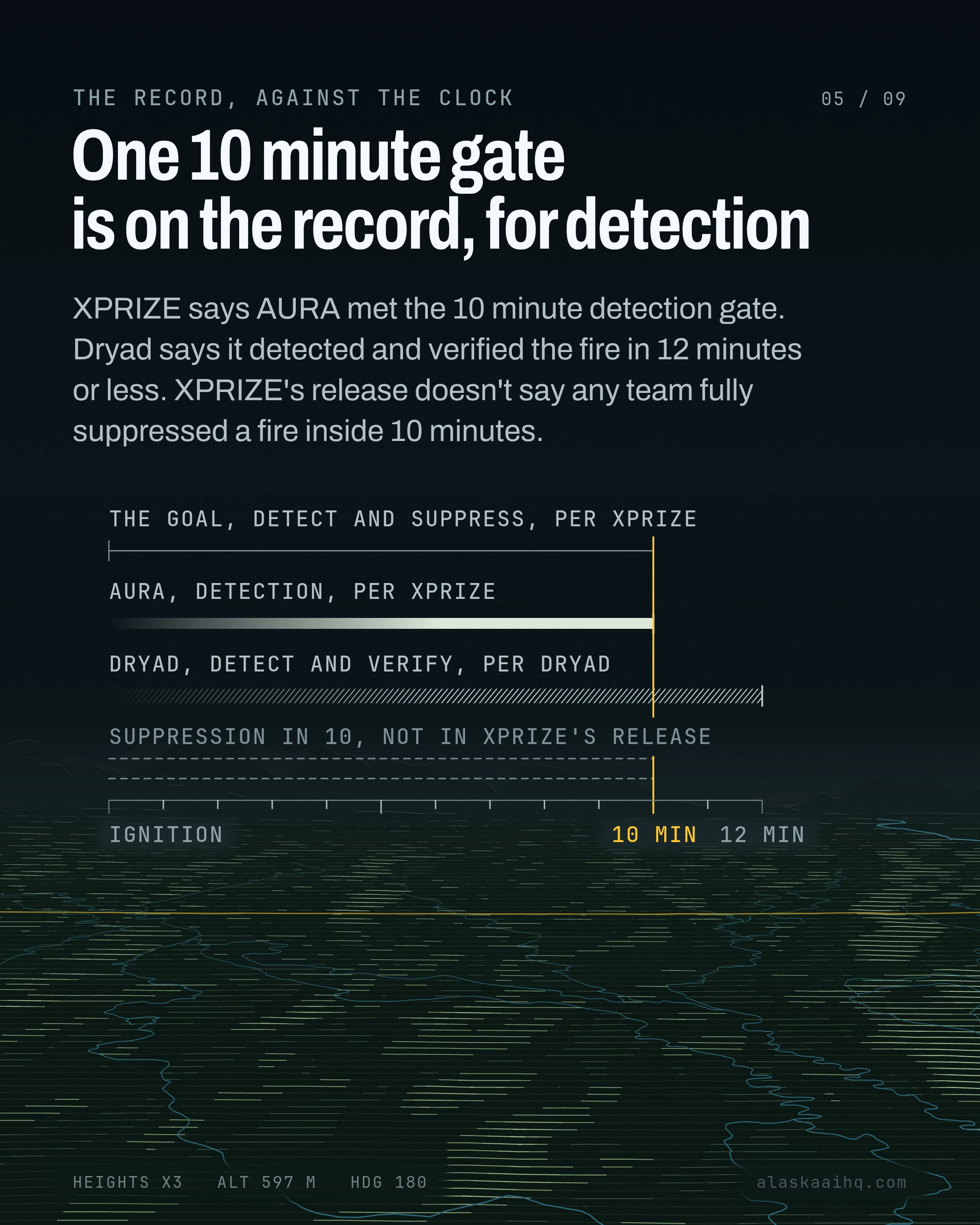
Catherine Cahill's UAF drone center ran the airspace. The task was a fire found and fully out in 10 minutes across 1,000 square kilometers. AURA Foresight met the detection gate. XPRIZE's release is silent on full suppression.
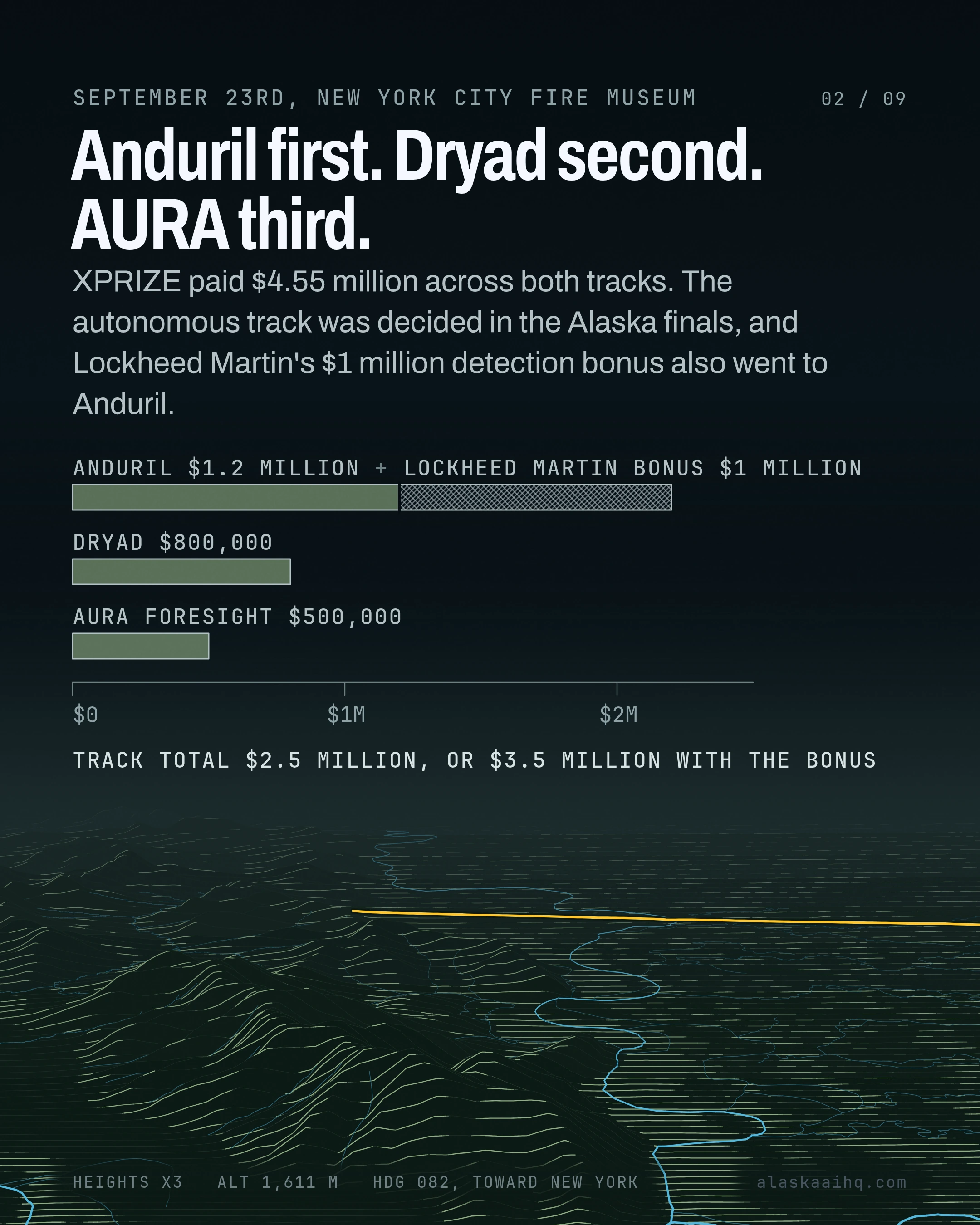
Anduril took first place in the autonomous track as $4.55 million was awarded on September 23rd.
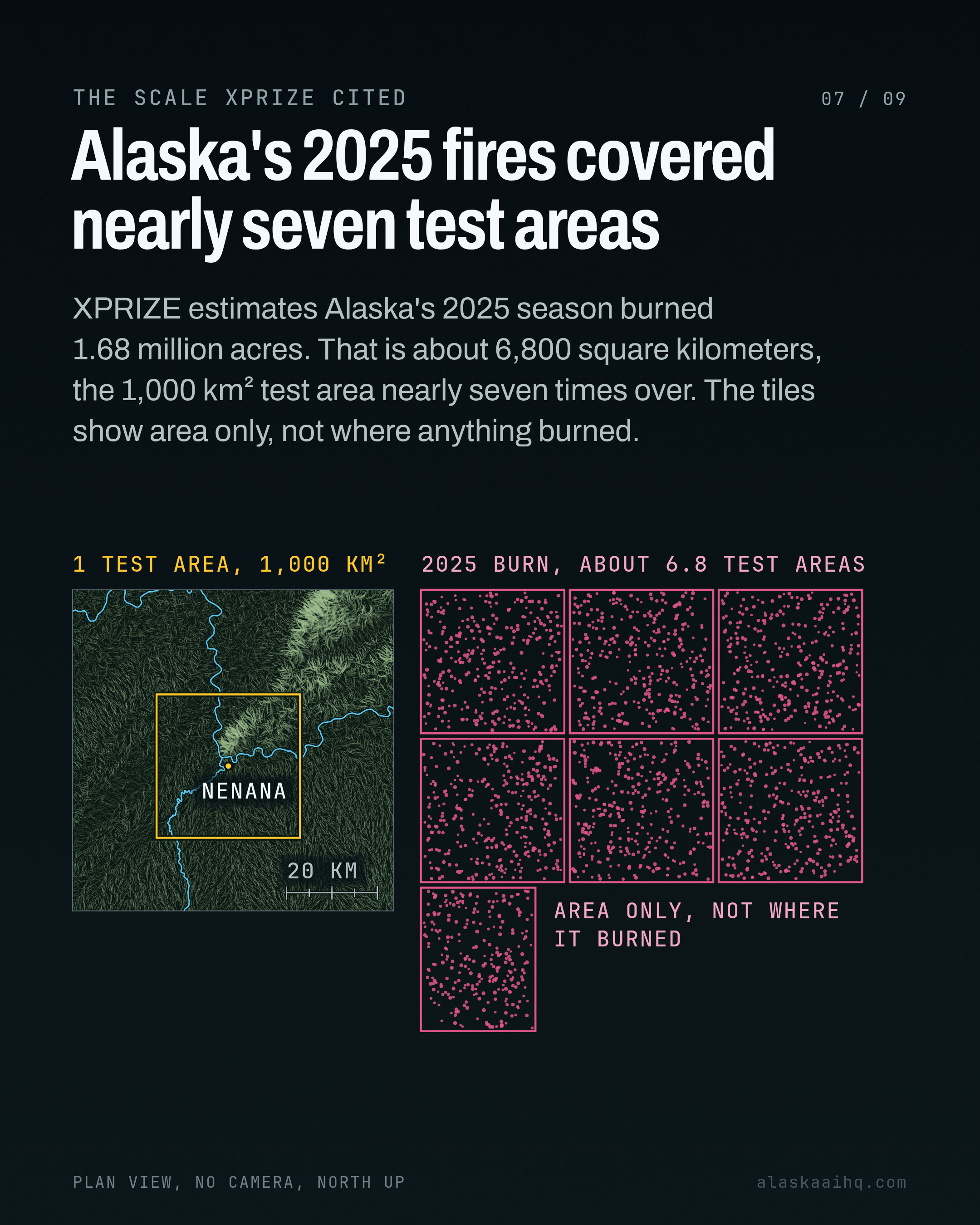
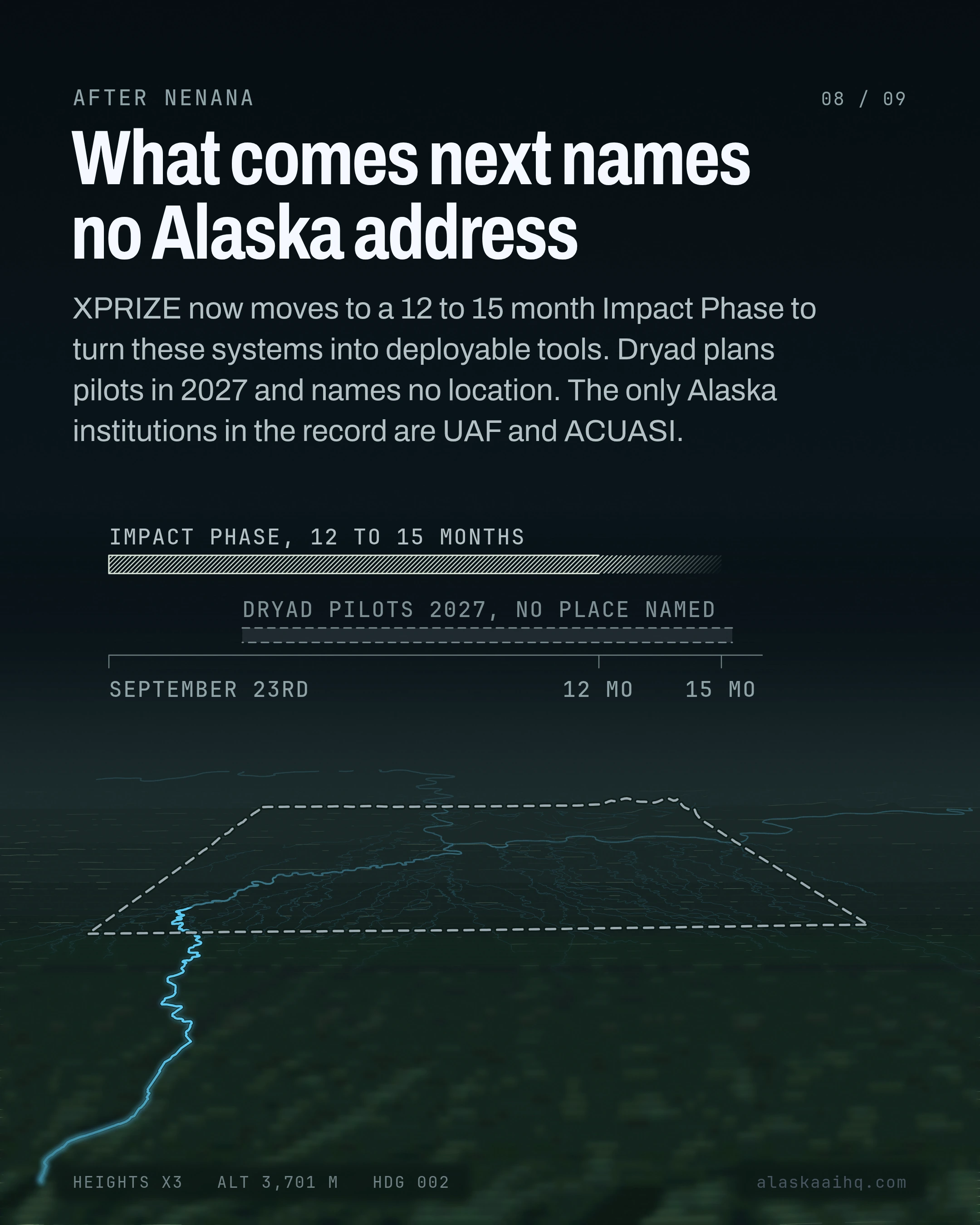
Alaska's 2025 season burned 1.68 million acres by XPRIZE's estimate, nearly seven test areas. Next is a 12 to 15 month Impact Phase. Dryad's 2027 pilot plans name no place.
Aerial views over Nenana show the awards, the test area at true size, a scorecard against the clock and a season in test areas.
Whose ground should host the first fire these machines meet that nobody lit?
What we verified
43 CLAIMS, EACH RE-FETCHED FROM ITS SOURCE BEFORE THIS DECK SHIPPED
XPRIZE announced the XPRIZE Wildfire awardees on September 23rd at a ceremony held at the New York City Fire Museum.
XPRIZE Wildfire awarded a total of $4.55 million across both of its tracks.
XPRIZE Wildfire is an $11 million global competition that launched in 2023.
According to the XPRIZE release on PR Newswire, the judging panel awarded $3.5 million across the three Autonomous Wildfire Response finalist teams.
The XPRIZE awardees page and Dryad's release both give $2.5 million for the three Track B finalist teams, a figure that excludes the $1 million Lockheed Martin bonus.
XPRIZE awarded $1.05 million across five teams in Track A, the space-based wildfire detection track.
SIRIUS Wildfire Alliance won first place in Track A, the space-based detection track, and $500,000.
Anduril Industries won first place in the Autonomous Wildfire Response track and $1.2 million.
Dryad Networks won second place in the Autonomous Wildfire Response track and $800,000.
AURA Foresight won third place in the Autonomous Wildfire Response track and $500,000.
Anduril Industries also won the $1 million Lockheed Martin Accurate Detection Intelligence Bonus Prize for its multi-sensor detector performance.
Track B teams were challenged to autonomously detect and completely suppress a high-risk fire within 10 minutes of ignition.
The Track B test area covered 1,000 square kilometers of challenging terrain.
Track B systems had to suppress the target fire without disturbing nearby decoy fires.
Autonomous Wildfire Response competitors tested their systems in the Alaskan wilderness in June 2026.
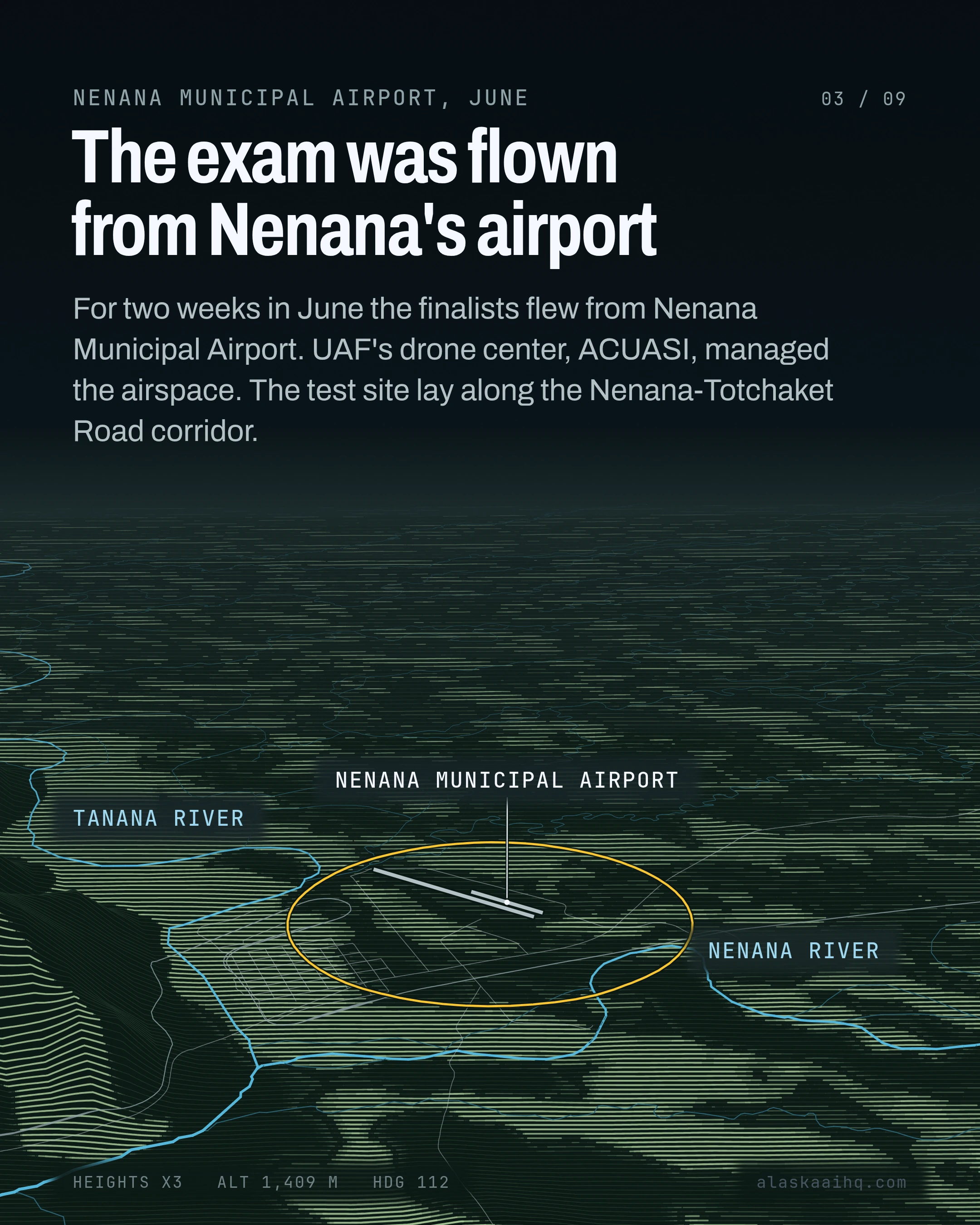
Over two weeks in June 2026, finalist teams deployed autonomous systems in rural Nenana, Alaska, in partnership with the University of Alaska Fairbanks.
The finals testing site was at the Nenana Municipal Airport, where ACUASI performs flight operations and managed the surrounding airspace during the competition.
Official finals testing at Nenana was scheduled to begin on June 15th.
The Nenana test site lay along the Nenana-Totchaket Road corridor.
At Nenana, each team had to monitor a vast area for 8 hours and detect, locate and suppress up to three controlled incipient-stage wildfires without human intervention.
Three finalists competed in the June 2026 Alaska finals.
AURA Foresight rejoined the competition after a finalist spot opened, combining two former semifinalist teams from the UK and Australia.
In January, XPRIZE named five Autonomous Wildfire Response finalists, Anduril, Data Blanket, Dryad, FireSwarm Solutions and Wildfire Quest.
XPRIZE awarded $750,000 across the autonomous finalist teams when it announced them in January.
XPRIZE field-tested 13 Autonomous Semifinalist teams in late 2025.
According to Dryad, it advanced from an original field of approximately 300 entrants in the four-year competition.
Dryad's Silvanet is a 170-sensor persistent field network, which XPRIZE credited with Silvaguard drones for demonstrating end-to-end autonomy.
According to Dryad, its Silvanet network detected and verified the target fire in 12 minutes or less and autonomously launched a response.
Dryad's Suppression Drone deploys up to 100 liters of suppressant on a fire.
According to Dryad, its Suppression Drone accurately hit the fire with suppressant during the Alaska tests.
XPRIZE said AURA Foresight met the critical 10-minute detection gate with autonomous and persistent detection.
XPRIZE credited Anduril's Lattice software platform with an integrated detection-to-suppression pathway unifying cameras, sensors and drones.
Track A testing for space-based detection concluded in New South Wales, Australia, in April.
The September 23rd XPRIZE release does not state whether any team fully suppressed a fire within 10 minutes, and Lockheed Martin's Adam Broecker said the final prize remains on the horizon.
XPRIZE Wildfire program director Andrea Santy said the teams helped identify where continued innovation is needed before real-world deployment at scale.
Dryad CEO Carsten Brinkschulte said drones can suppress a small ignition but their limited payload makes them largely ineffective once a wildfire has grown out of control.
XPRIZE describes Interior Alaska testing conditions as unpredictable weather, long distances, rugged terrain and abundant wildlife.
The VIP Day at the finals was welcomed by UAF Vice Chancellor for Research Laura Conner and ACUASI Director Catherine Cahill.
Former U.S. Fire Administrator Lori Moore-Merrell called the finals VIP event a genuine inflection point in how humanity responds to wildfire.
XPRIZE Wildfire now moves into a 12- to 15-month Impact Phase aimed at turning the technologies into deployable wildfire tools.
Dryad plans real-world operational pilots of its system in 2027 and targets commercial availability in 2028.
XPRIZE Wildfire was sponsored by PG&E, the Gordon and Betty Moore Foundation, Minderoo Foundation and Lockheed Martin.
XPRIZE says Alaska's 2025 wildfire season burned an estimated 1.68 million acres.
Beats
This article is on Alaska AI research and science. Each beat page keeps every decision and every article on that subject in one place.