One River, Two Ways to Count It, AI vs the Tower
A hand-clicker on a Bristol Bay tower has counted the sockeye since 1955. This year an AI drone wants that job.
The deck
SWIPE, SCROLL OR CLICK A SLIDE TO GO FULLSCREEN · 9 SLIDES
The story
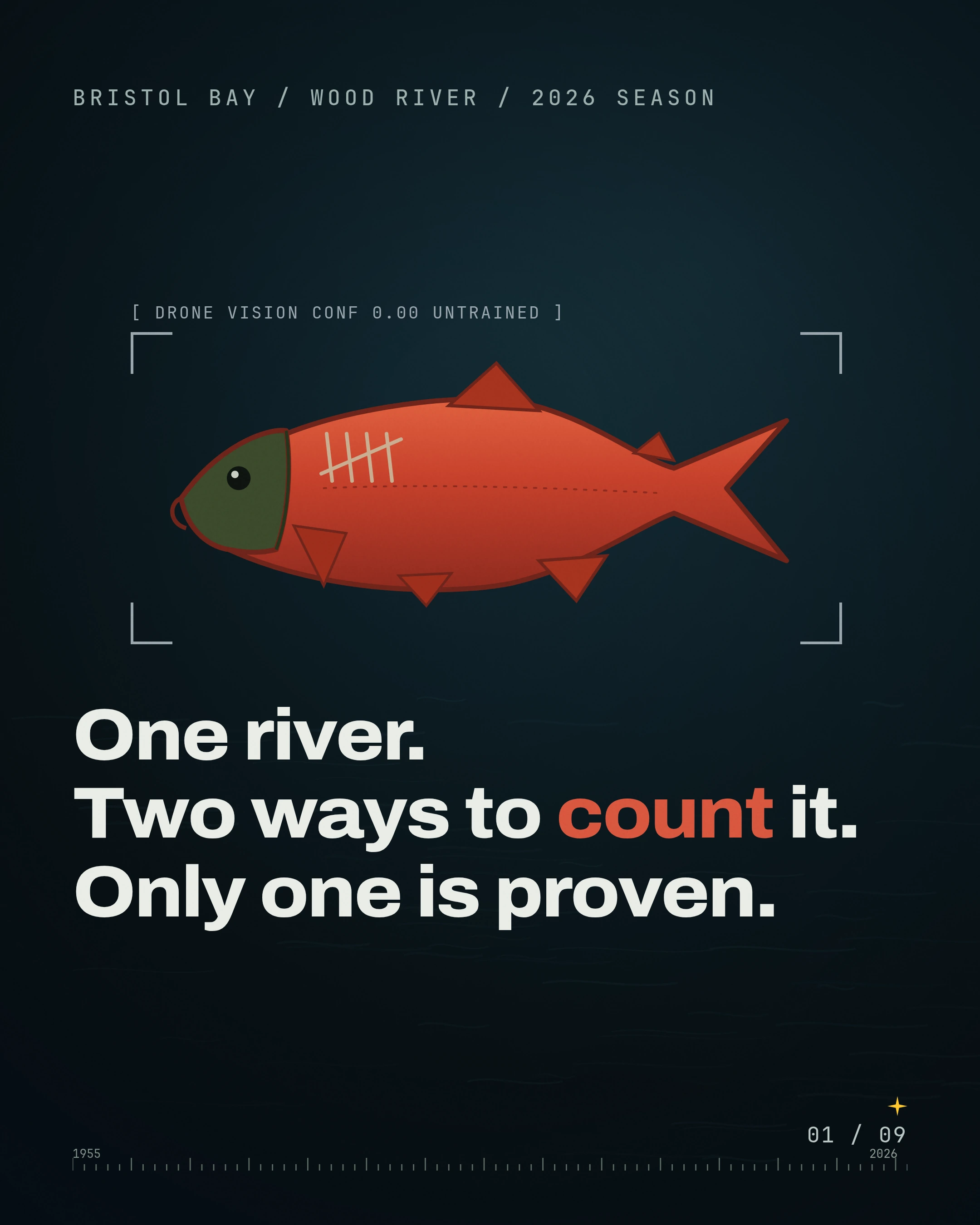
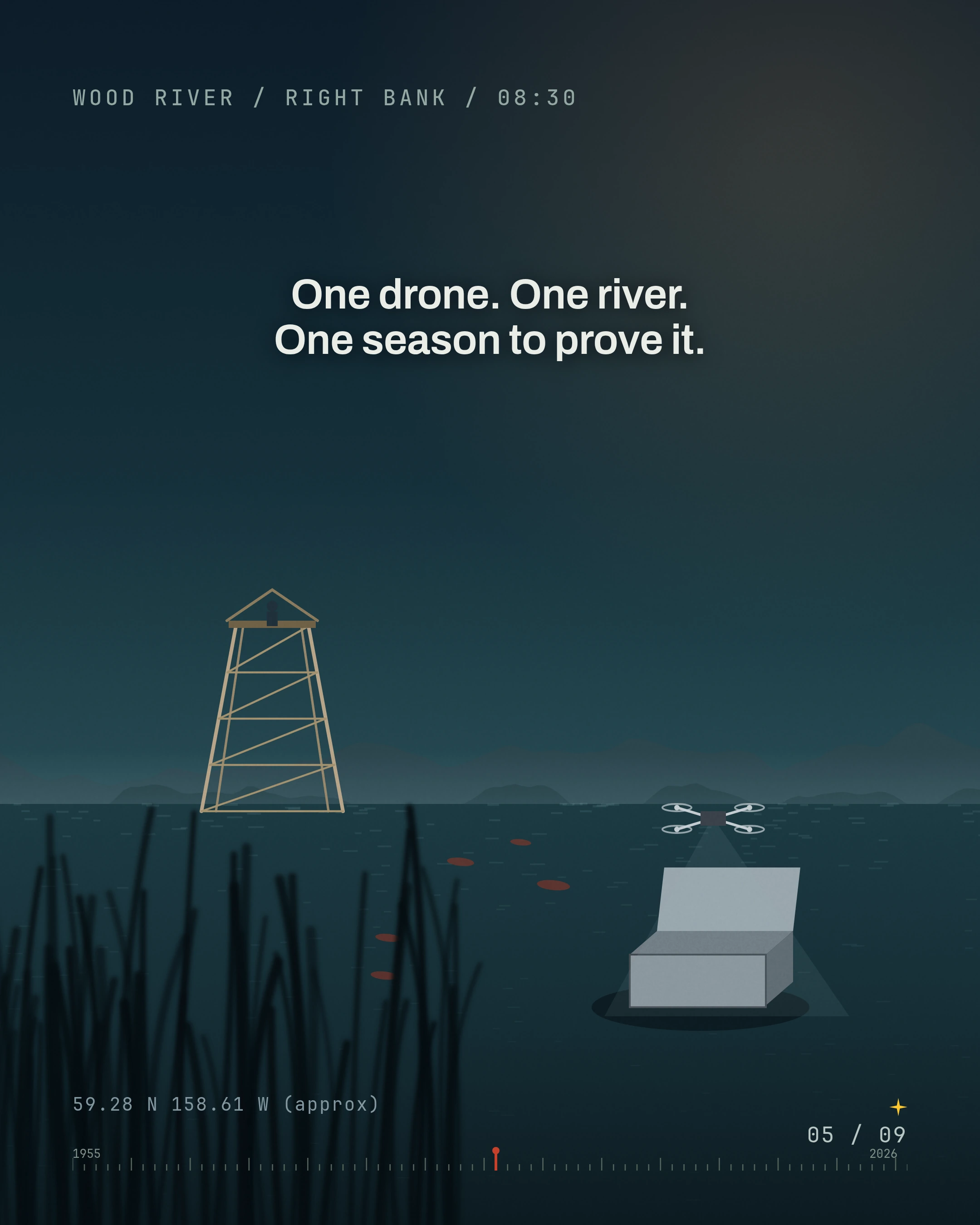
On the Wood River the drone launches itself at 8:30 a.m. and films the run below. A computer-vision model is being trained to count the fish, but it is not trained yet.
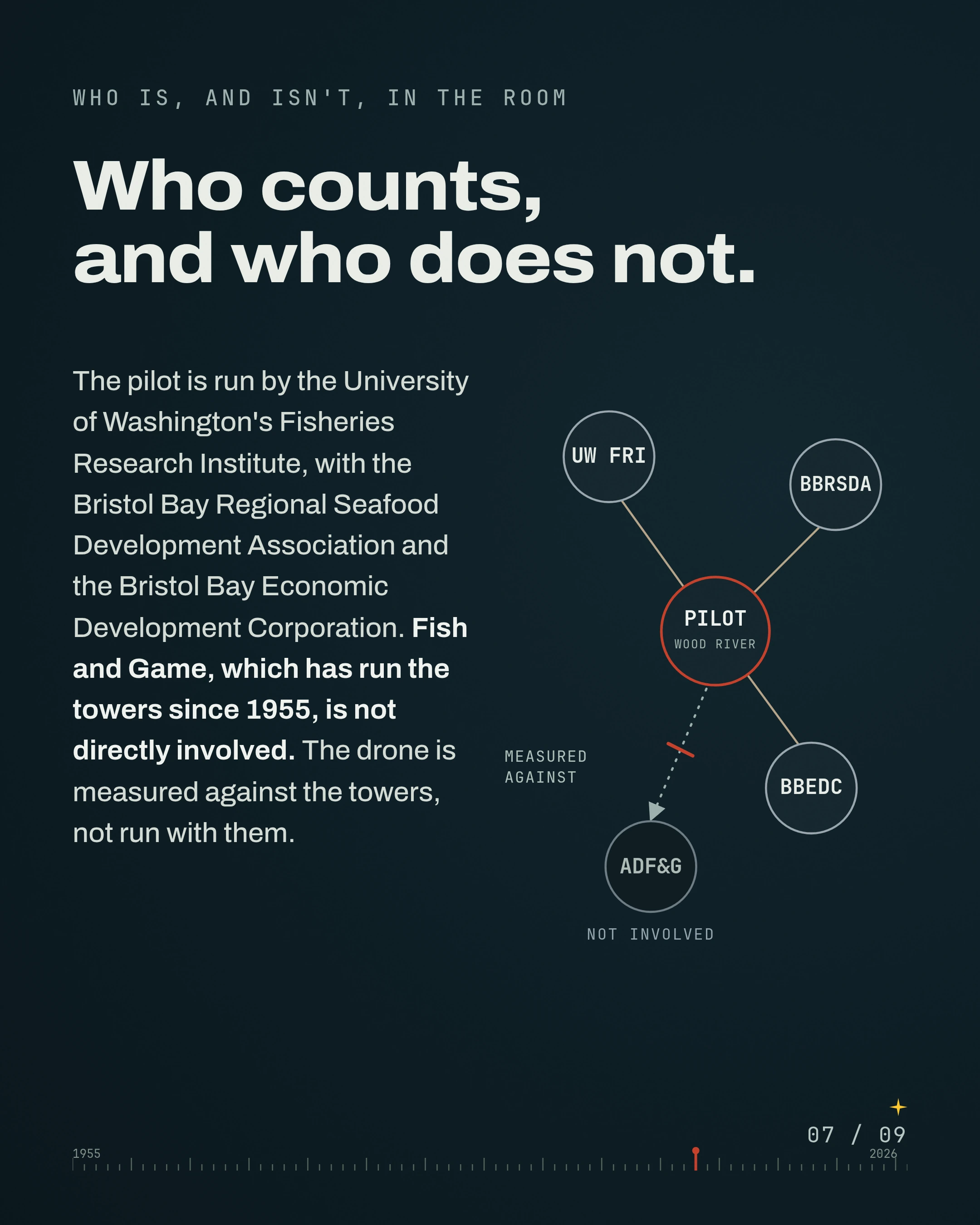
The tower crews still produce every count the fleet actually lives by, clicking each passing fish by hand. Fish and Game, which runs the towers, is not part of the pilot. The machine is measured against them, not run with them.
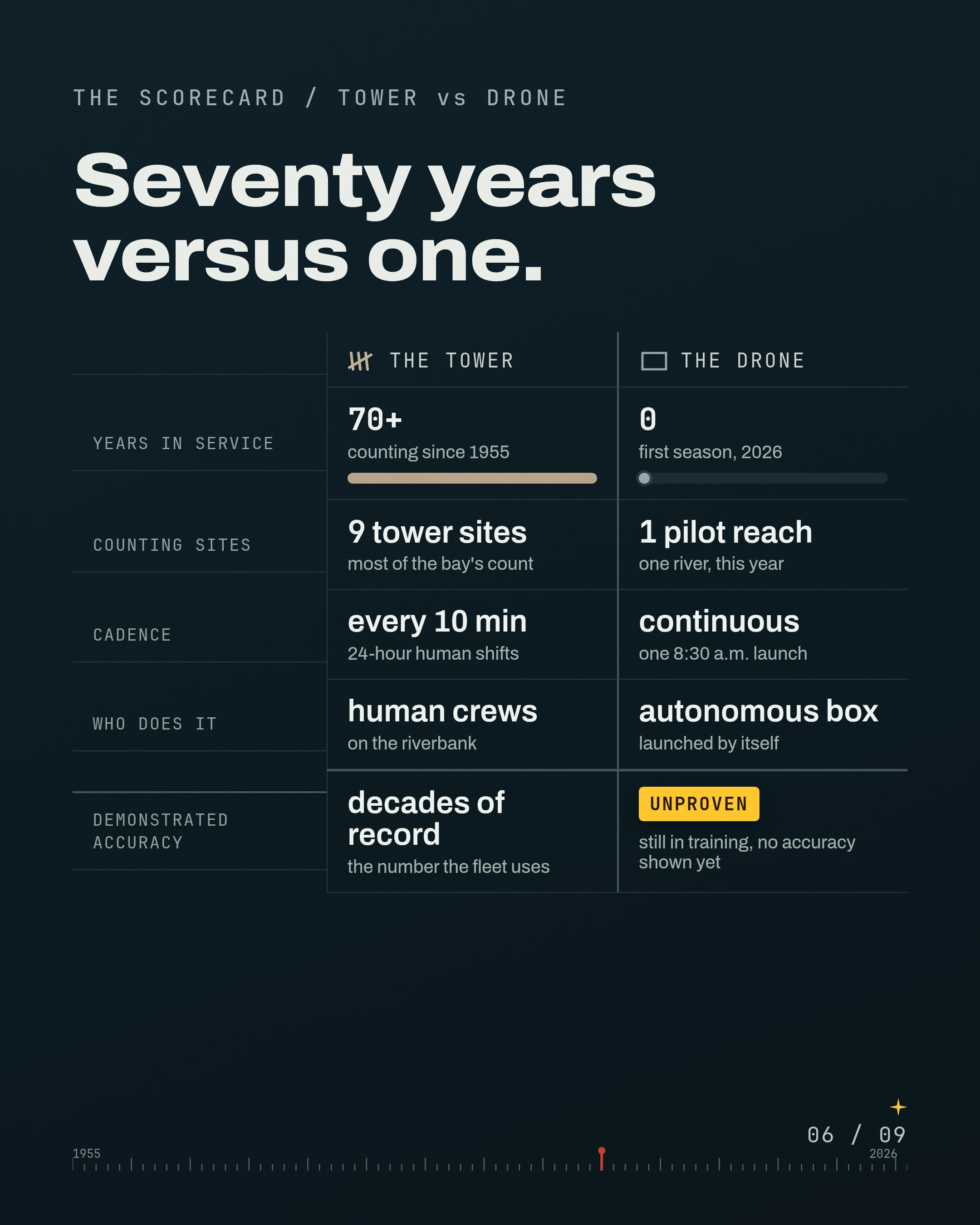
The deck is 9 slides on who decides when Bristol Bay can fish, the 70-year tower method against a first-season drone, and a scorecard where the machine's accuracy cell is still blank.
Would you open or close a fishery on a count the machine has not yet proven?
What we verified
18 CLAIMS, EACH RE-FETCHED FROM ITS SOURCE BEFORE THIS DECK SHIPPED
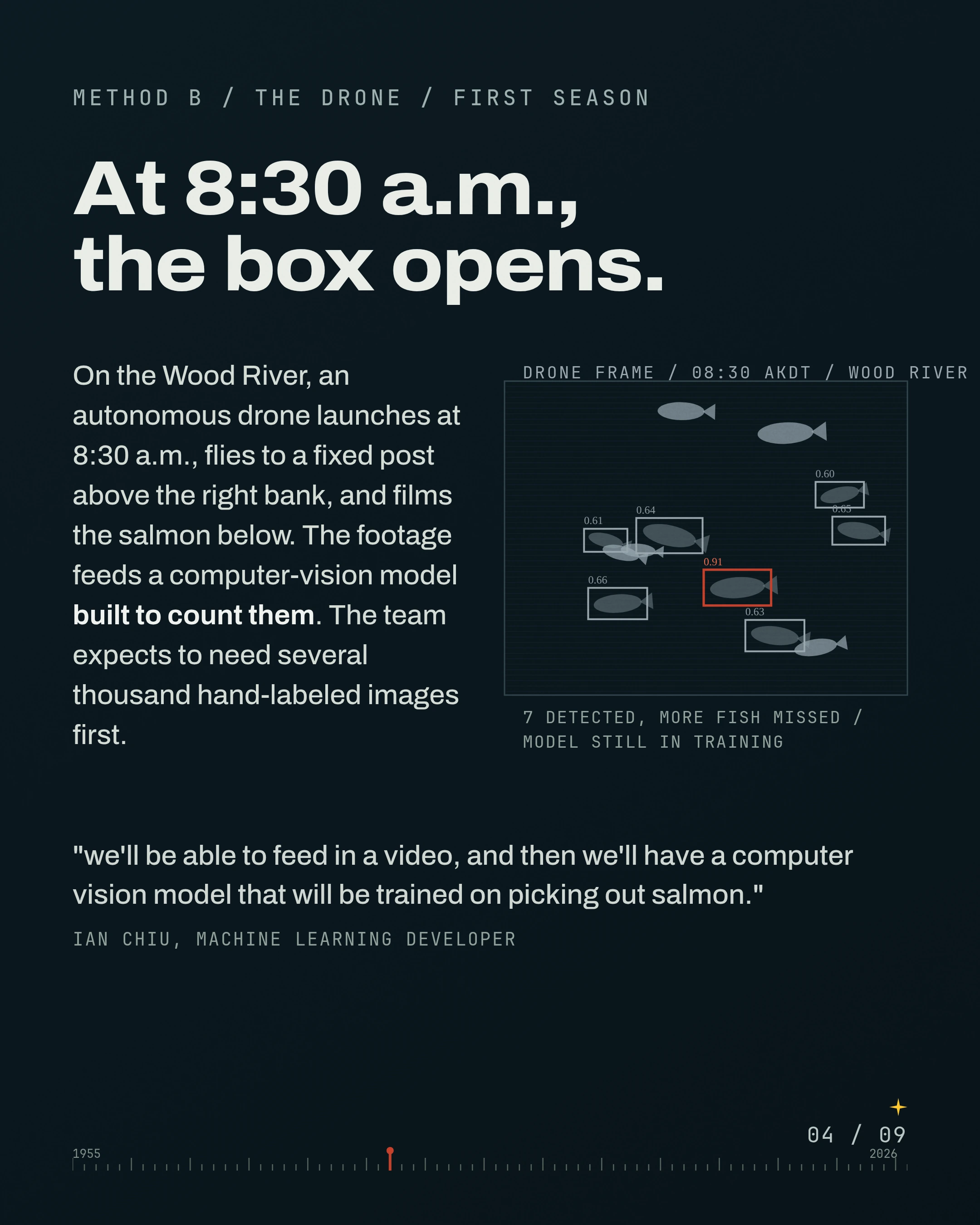
An autonomous drone-in-a-box launches at 8:30 a.m. on an automated flight to an observation position above the right bank of the Wood River.
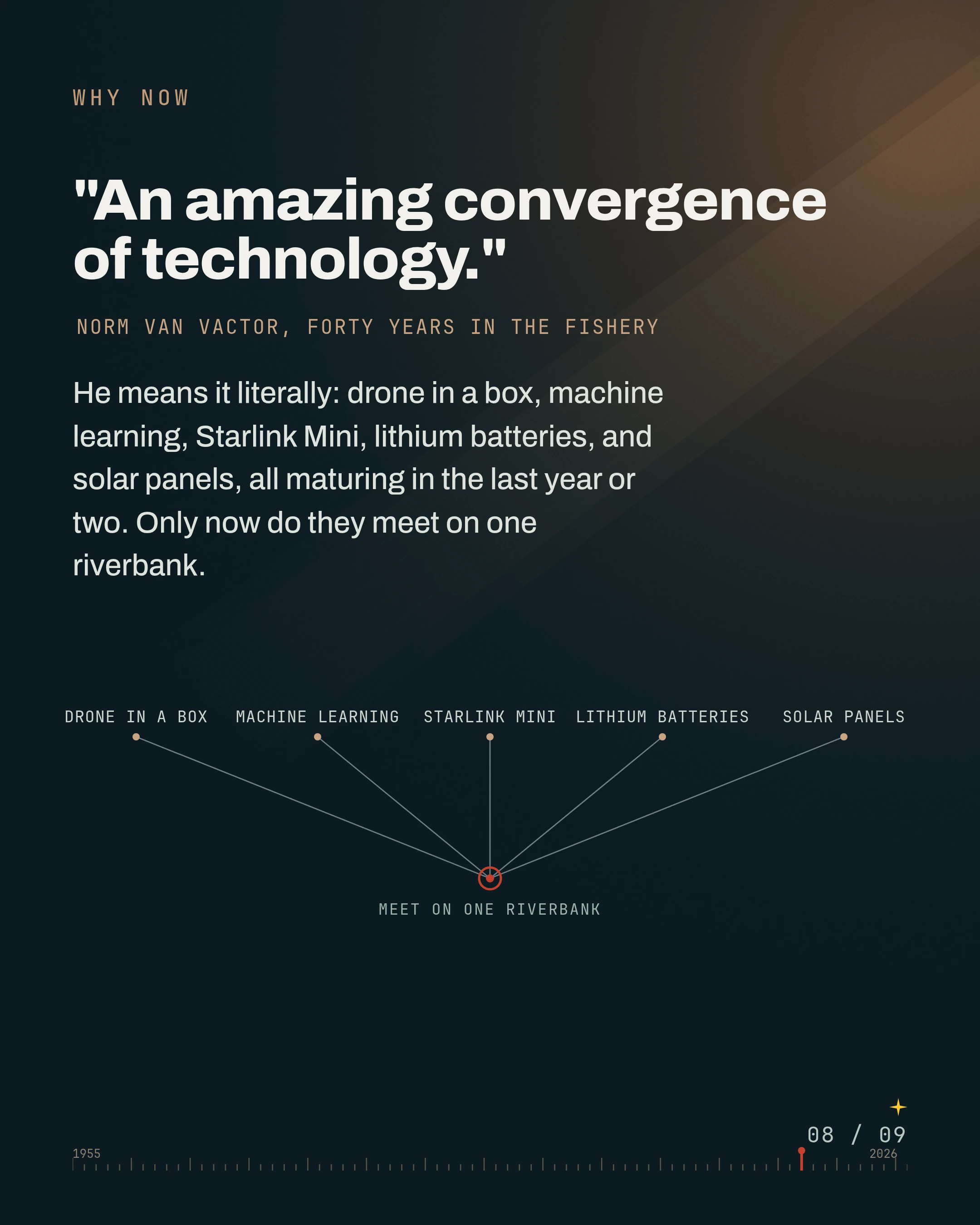
Project lead Norm Van Vactor says he has been engaged in the Bristol Bay commercial fishery for 40 years.
Ian Chiu develops the machine-learning components of the project remotely.
Van Vactor calls the moment an 'amazing convergence of technology,' citing drone-in-a-box, machine learning and AI, Starlink Mini, lithium batteries and solar panels all maturing in the last year or two.
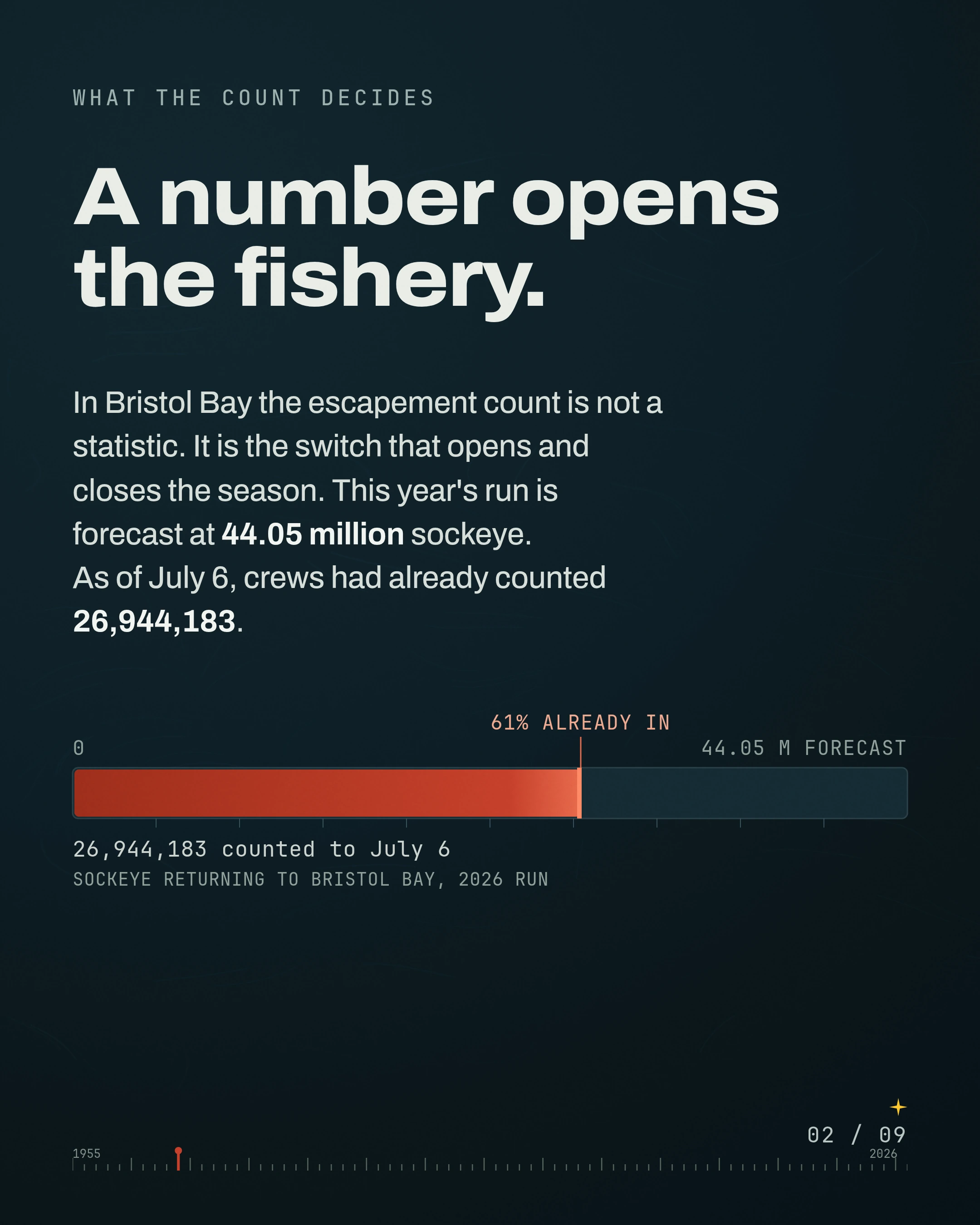
The 2026 Bristol Bay preseason forecast estimates a total run of 44.05 million sockeye.
As of July 6, 2026, the total Bristol Bay sockeye run to date was 26,944,183 fish.
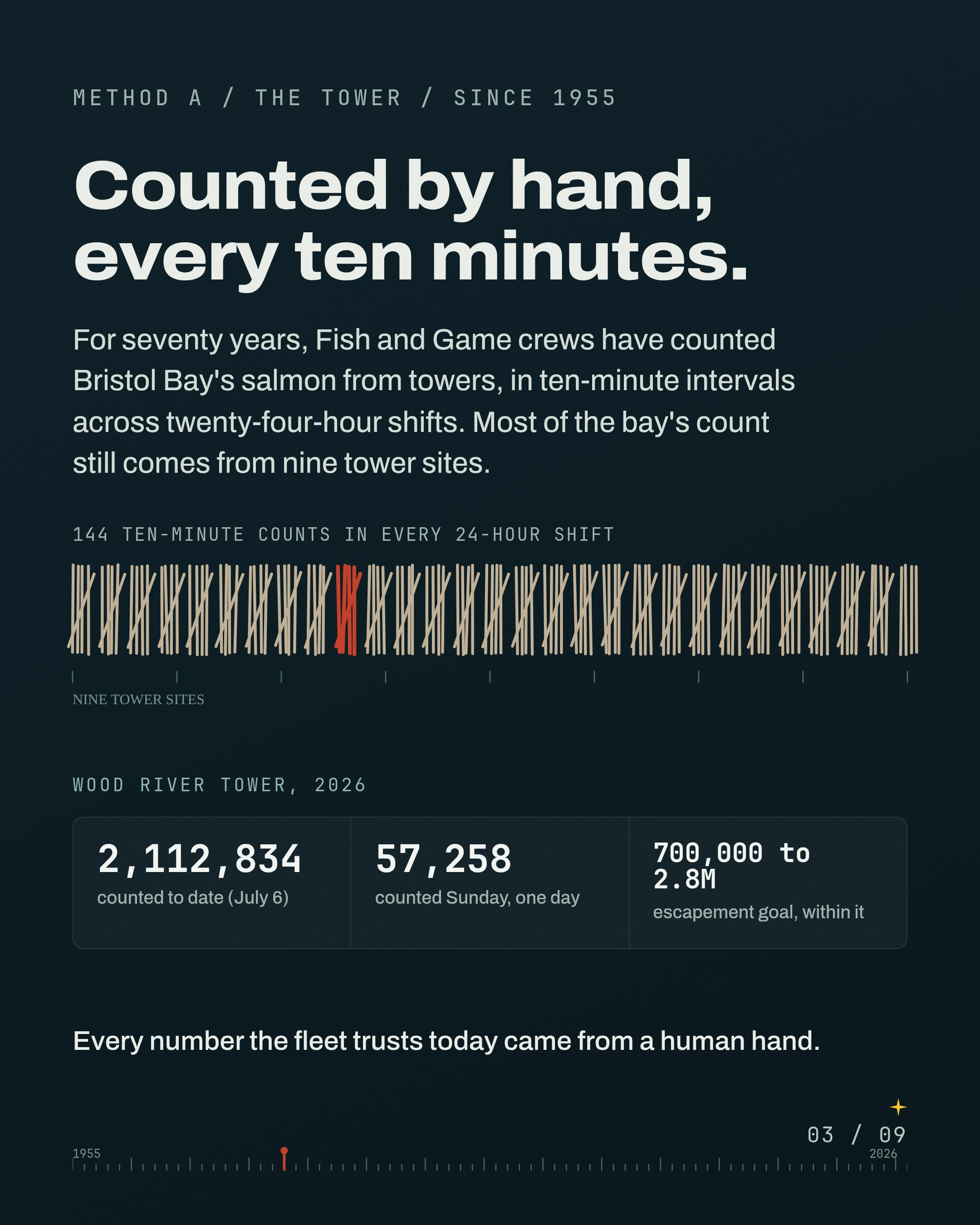
As of the July 6, 2026 report, Wood River tower escapement to date totaled 2,112,834 fish.
Wood River tower crews counted 57,258 sockeye on Sunday.
The Wood River escapement goal range is 700,000 to 2.8 million fish, and the 2026 run is within that range.
The story was written by Jessie Sheldon and republished statewide via KMXT on July 8, 2026 (originally KDLG, July 3, 2026).
The drone imagery is fed into a computer model intended to generate more accurate salmon escapement counts.
Machine-learning developer Ian Chiu describes the end product as a computer vision model trained to pick out salmon from video.
The team will likely need several thousand drone images to train the model to reliably identify a fish; technicians hand-label the imagery.
Alaska Department of Fish and Game has used counting towers for Bristol Bay escapement since 1955 (70+ years).
Tower crews rotate through continuous 24-hour shifts, counting each passing salmon with a hand-clicker in 10-minute intervals.
Most Bristol Bay escapement counts currently come from nine Fish & Game counting tower sites.
Project partners include the University of Washington's Fisheries Research Institute (lab at Lake Aleknagik), the Bristol Bay Regional Seafood Development Association, and the Bristol Bay Economic Development Corporation.
At this stage, Alaska Department of Fish and Game is not directly involved in the drone project.
Beats
This article is on Alaska AI research and science · Alaska AI policy and legislation. Each beat page keeps every decision and every article on that subject in one place.