Alaska's Critical Mineral Engine, and Its Unbuilt AI
Alaska just won a decade-scale federal bet to find its critical minerals. The AI headlining it is one unbuilt sentence.
The deck
SWIPE, SCROLL OR CLICK A SLIDE TO GO FULLSCREEN · 9 SLIDES

The story
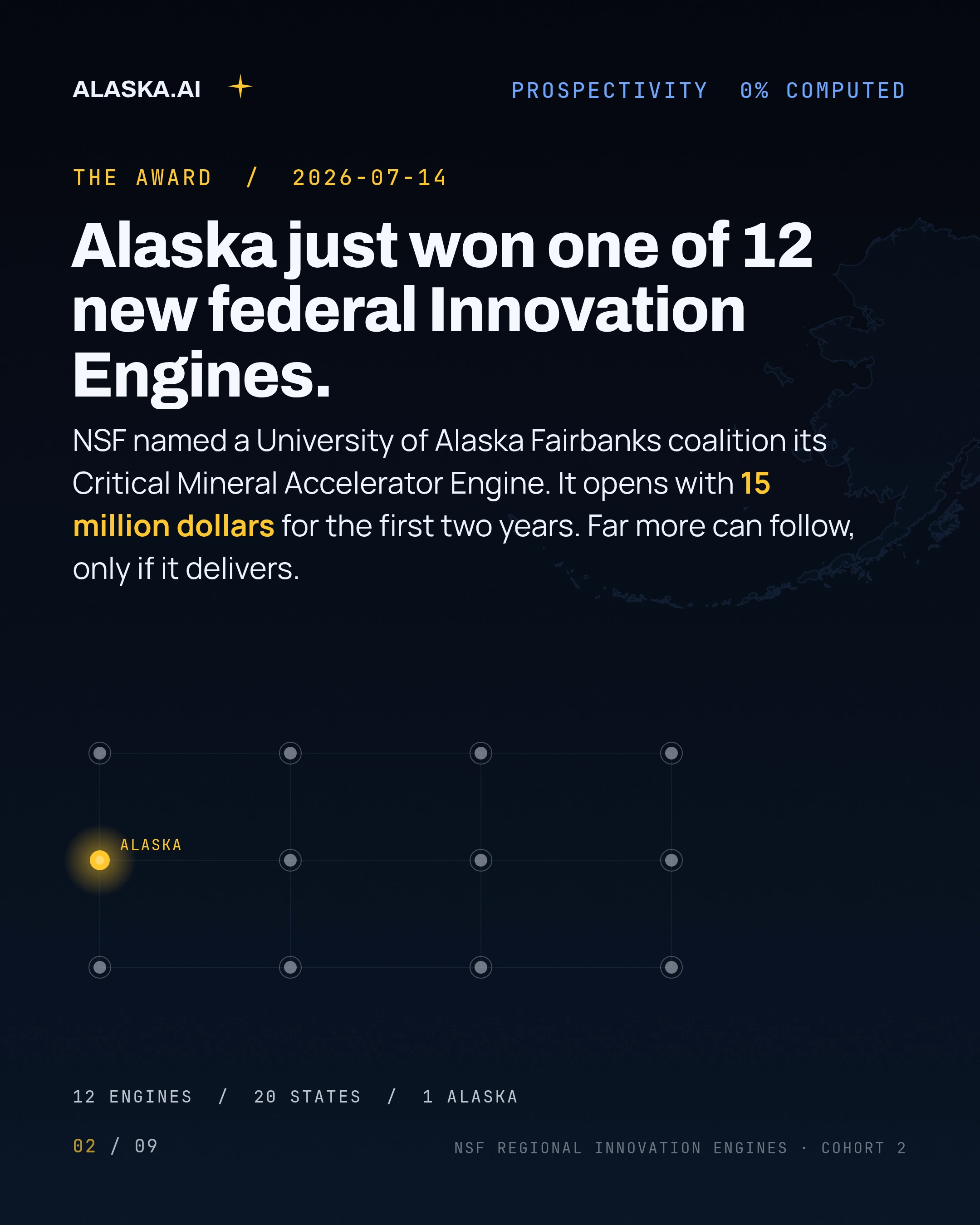
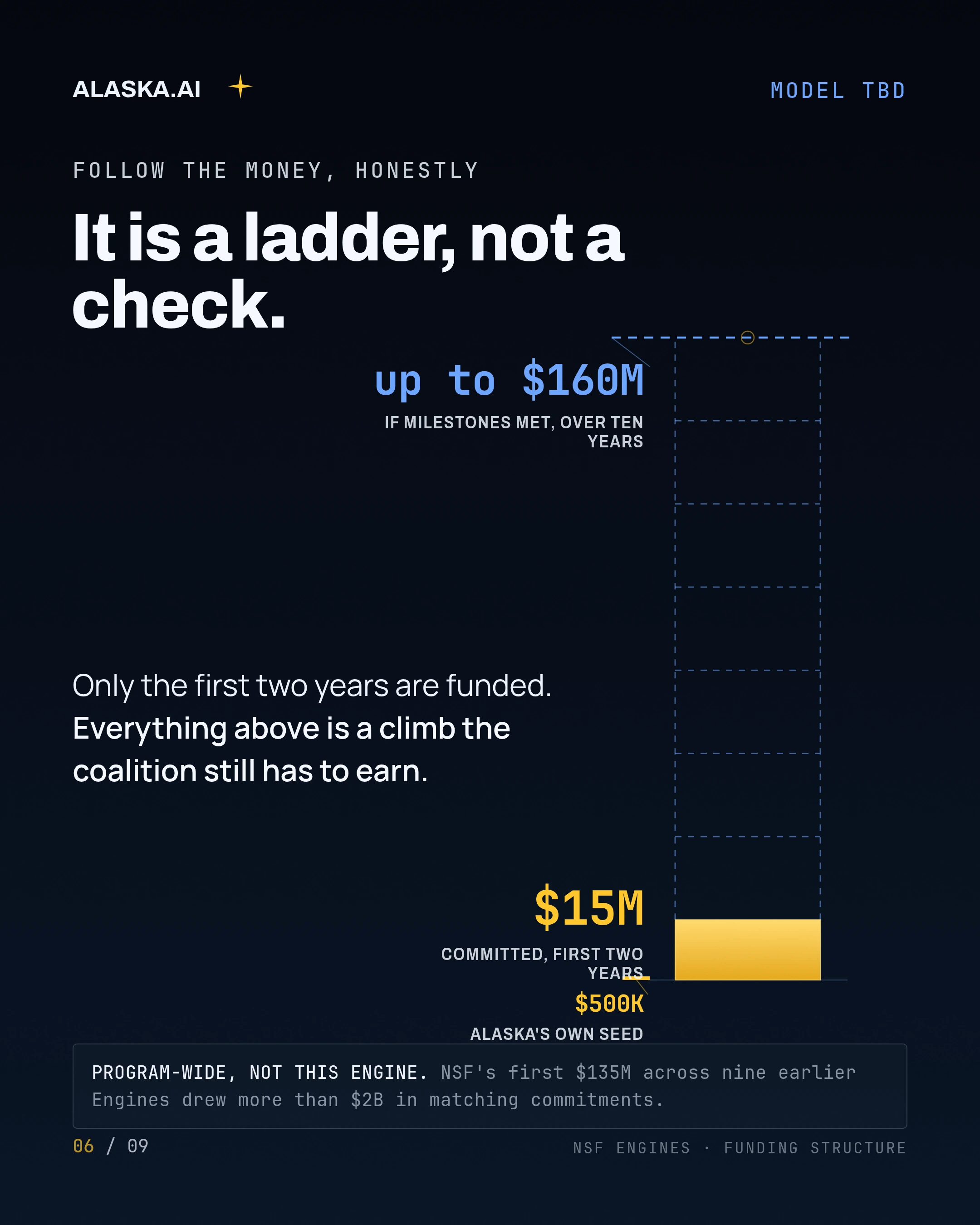
On July 14 the NSF named a University of Alaska Fairbanks coalition its Critical Mineral Accelerator Engine. It starts with 15 million dollars in hand, with up to 160 million over ten years if it clears milestones.
The deck covers what Alaska actually won, the 56 of 60 minerals the USGS calls essential, the money as a ladder not a check, and the single named site so far.
Funded but unspecified, is that a credible start or a headline running ahead of the work?
What we verified
18 CLAIMS, EACH RE-FETCHED FROM ITS SOURCE BEFORE THIS DECK SHIPPED
More than 500 public comments opposed the Stak Energy North Slope data-center lease and fewer than a dozen endorsed it, with the comment window extended to July 17, 2026.
Sen. Sullivan secured 56 provisions and a historic $2.6 billion for Alaska in the FY2027 NDAA (advanced 18-9 from committee), including a mandate for grid-impact assessments before executing or renewing an Enhanced Use Lease.
On July 14, 2026, NSF announced 12 new Regional Innovation Engines spanning 20 states.
Lee Ann Munk, a UAF geosciences professor, is the Engine's chief executive officer, and Christi Bell is its strategy and innovation officer.
NSF's initial $135 million across its nine inaugural Engines has garnered more than $2 billion in matching commitments.
NANA's Lance Miller endorsed the Engine, tying it to innovation, workforce development and responsible resource development.
Gov. Dunleavy framed the award as unlocking Alaska's resource potential and reducing America's dependence on China for mineral processing; Robert McCoy is Geophysical Institute Director and Michelle Rizk is Interim University of Alaska President.
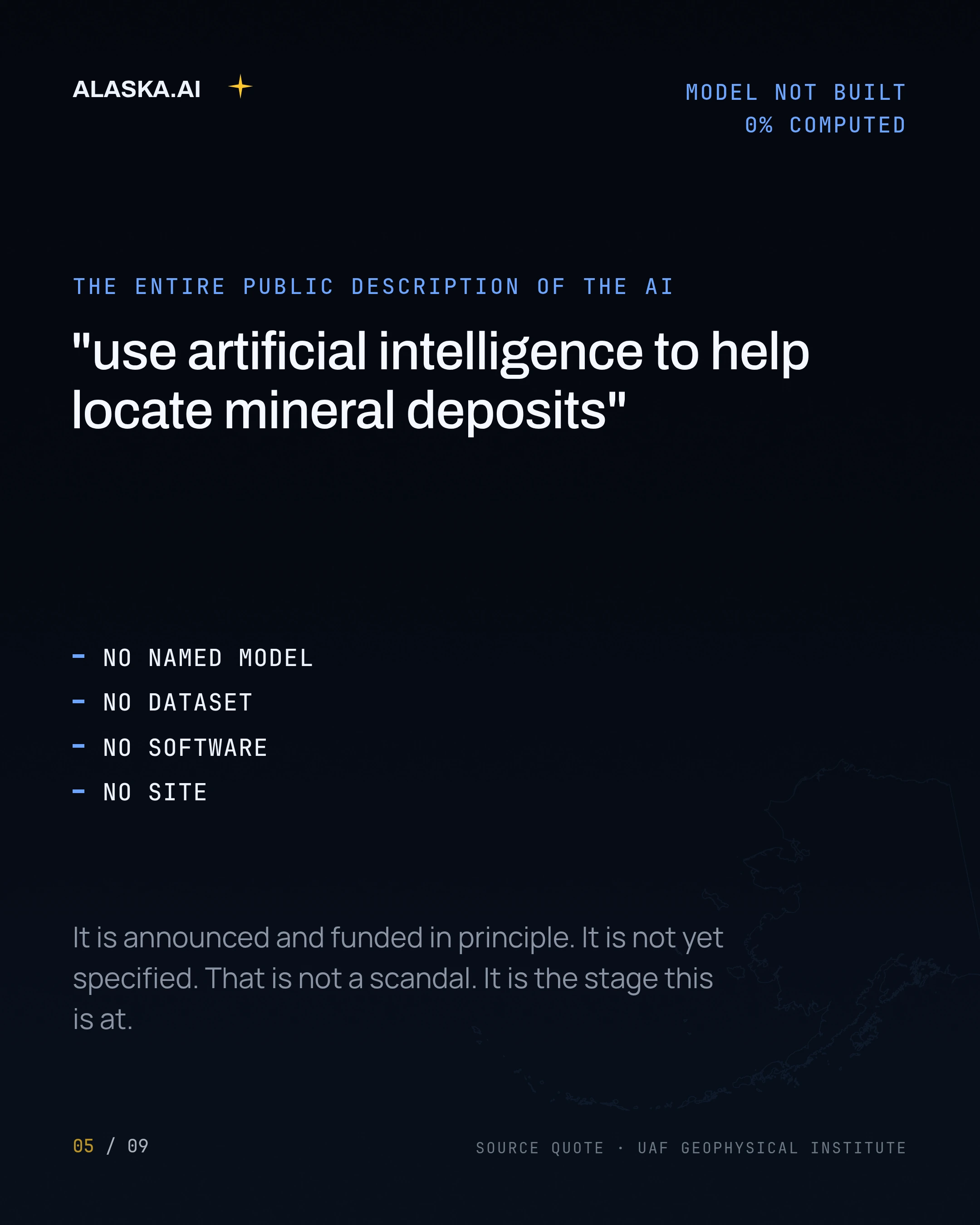
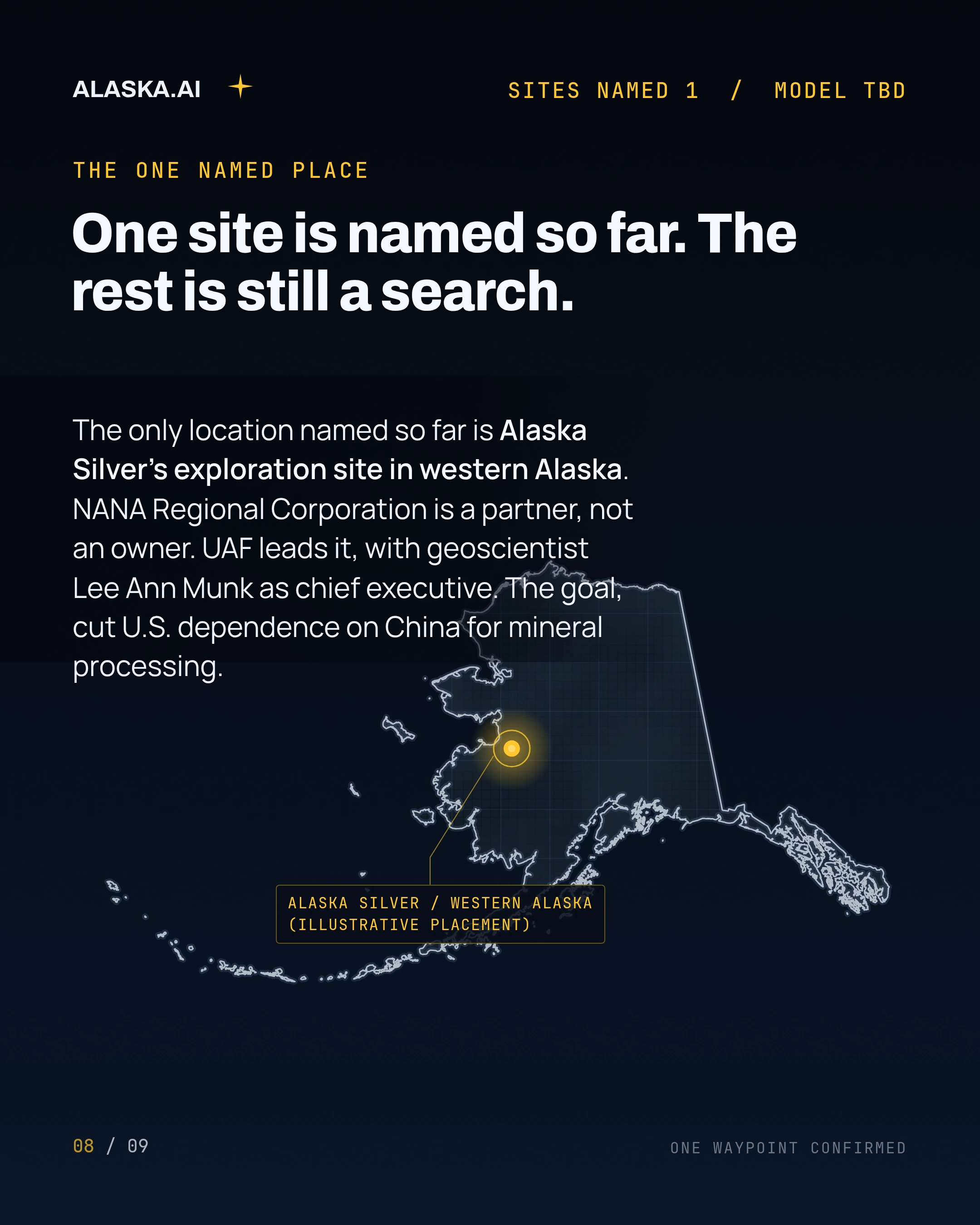
Neither primary source names any specific AI algorithm, model, dataset, software, or deployment site; the AI is described only in general terms.
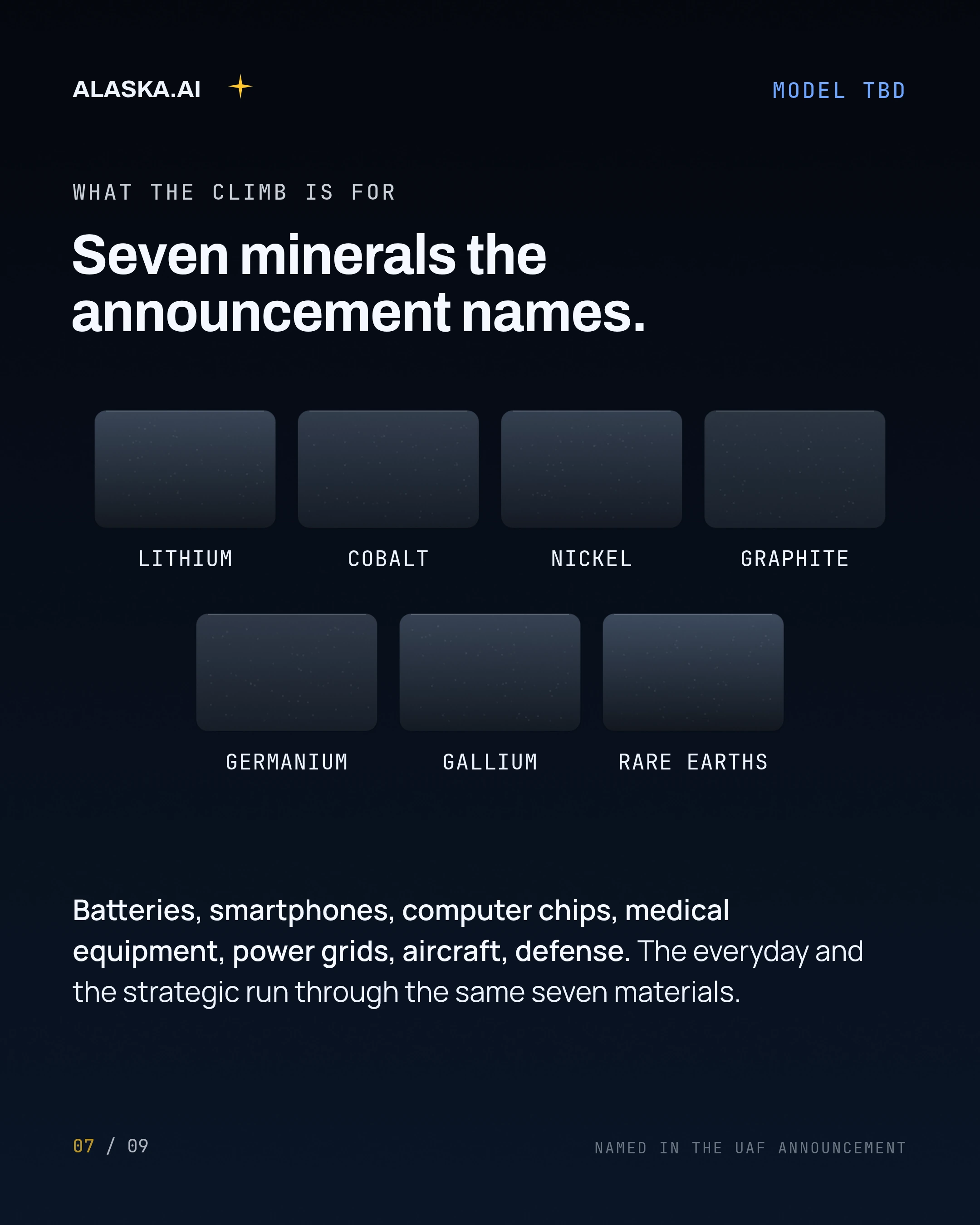
The UAF page names lithium, cobalt, nickel, graphite, germanium, gallium and rare earth elements as example critical minerals, used in batteries, smartphones, computer chips, medical equipment, power grids, aircraft and defense technologies.
The Engine program runs up to ten years, with continued NSF funding contingent on meeting well-defined milestones.
One of the new Engines is the NSF Critical Mineral Accelerator Engine in Alaska, led by the University of Alaska Fairbanks.
Each new Engine initially receives $15 million over its first two years.
Each Engine can eventually receive up to $160 million from NSF over ten years, contingent on meeting milestones.
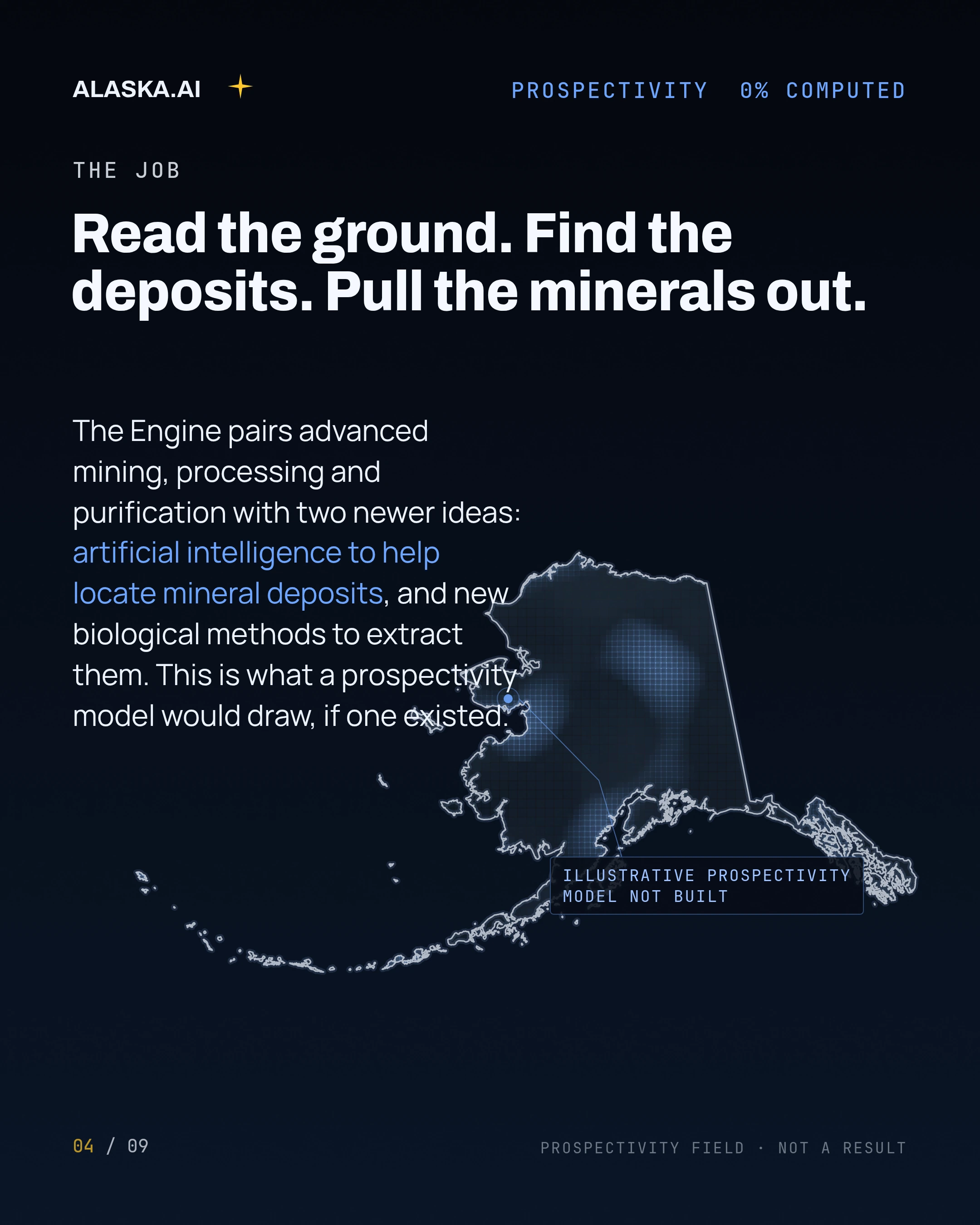
The Alaska Engine will use artificial intelligence to help locate mineral deposits.
Partners in the Engine include NANA Regional Corporation and Alaska Silver.
The Engine's approach combines advanced technologies for mining, processing and purification with AI to locate deposits and new biological methods to extract minerals.
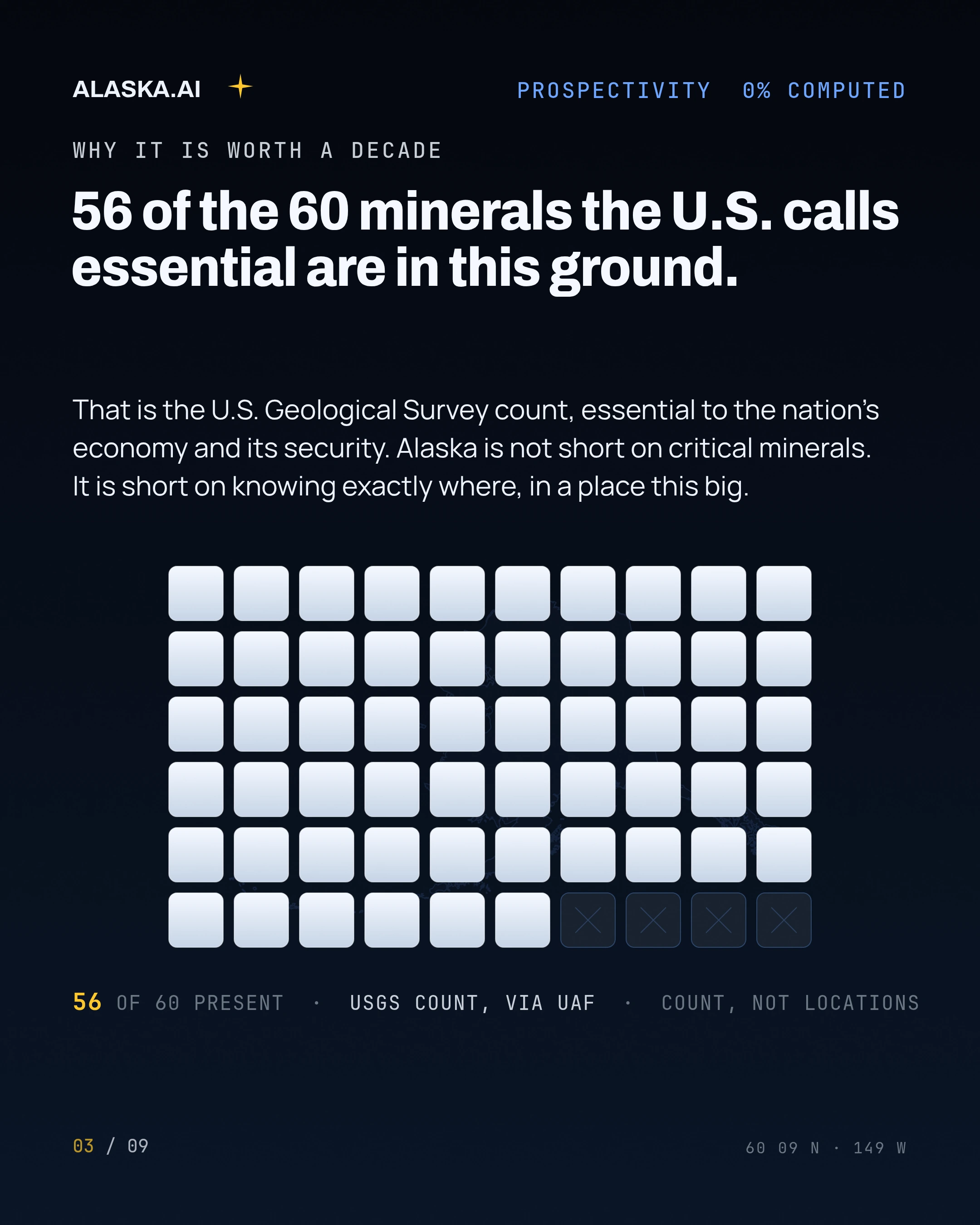
Alaska contains 56 of the 60 minerals the U.S. Geological Survey considers essential to the nation's economy and national security.
Gov. Mike Dunleavy and the Alaska Legislature provided $500,000 in one-time funding.
Beats
This article is on Defense and federal AI in Alaska · Alaska AI research and science · Alaska AI policy and legislation. Each beat page keeps every decision and every article on that subject in one place.