A Better Ear Is Not a Recovery
Cook Inlet has about 331 belugas left, and AI can finally hear them through the ship noise.
The deck
SWIPE, SCROLL OR CLICK A SLIDE TO GO FULLSCREEN · 9 SLIDES


The story
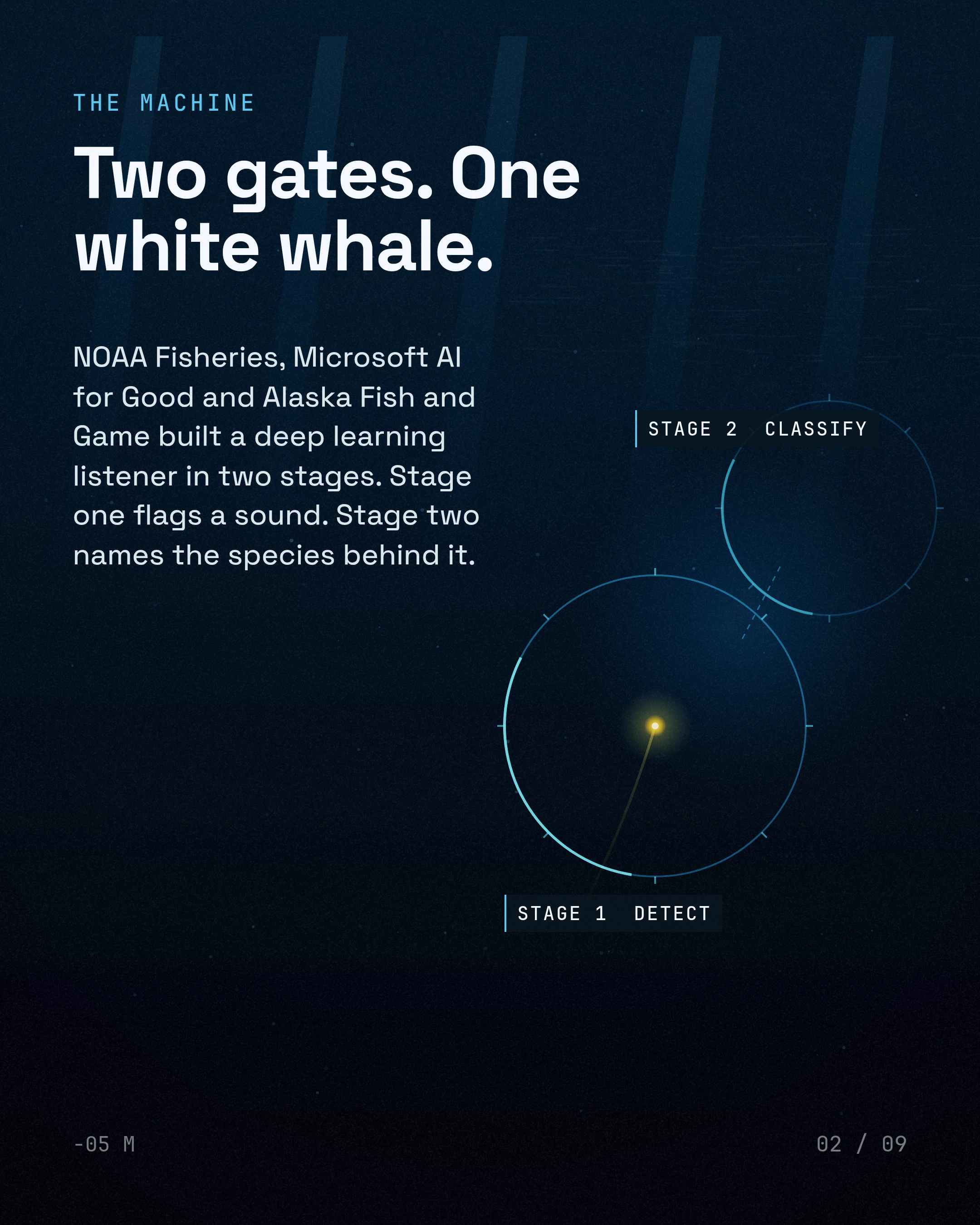
NOAA Fisheries, Microsoft AI for Good and Alaska Fish and Game built a two stage listener, one model flags a sound, another names the species. A separate NOAA effort is adding satellite eyes.
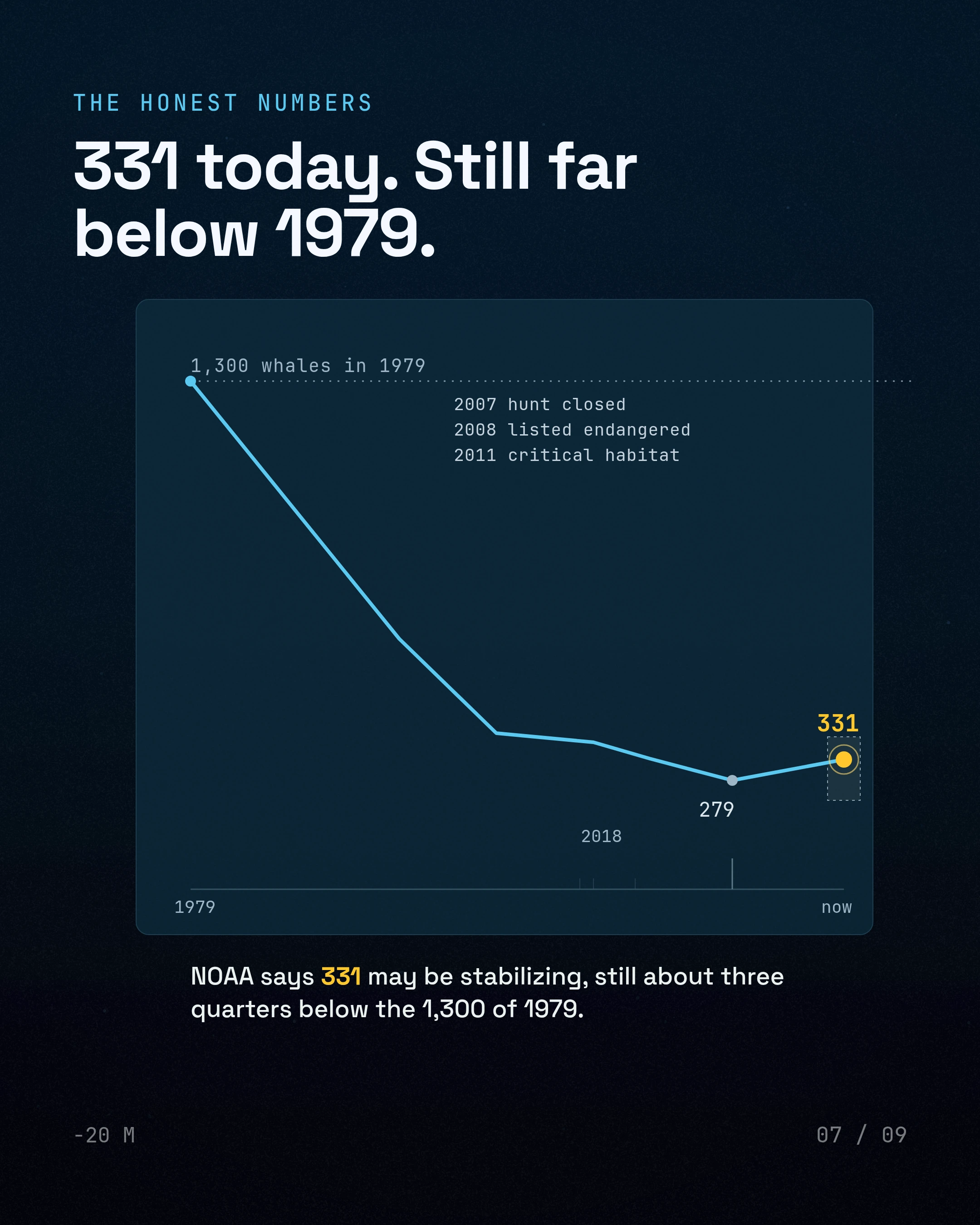
These 9 slides walk through the machine, the wall of noise it fights, and one honest chart, 331 today, still about three quarters below the 1,300 counted in 1979.
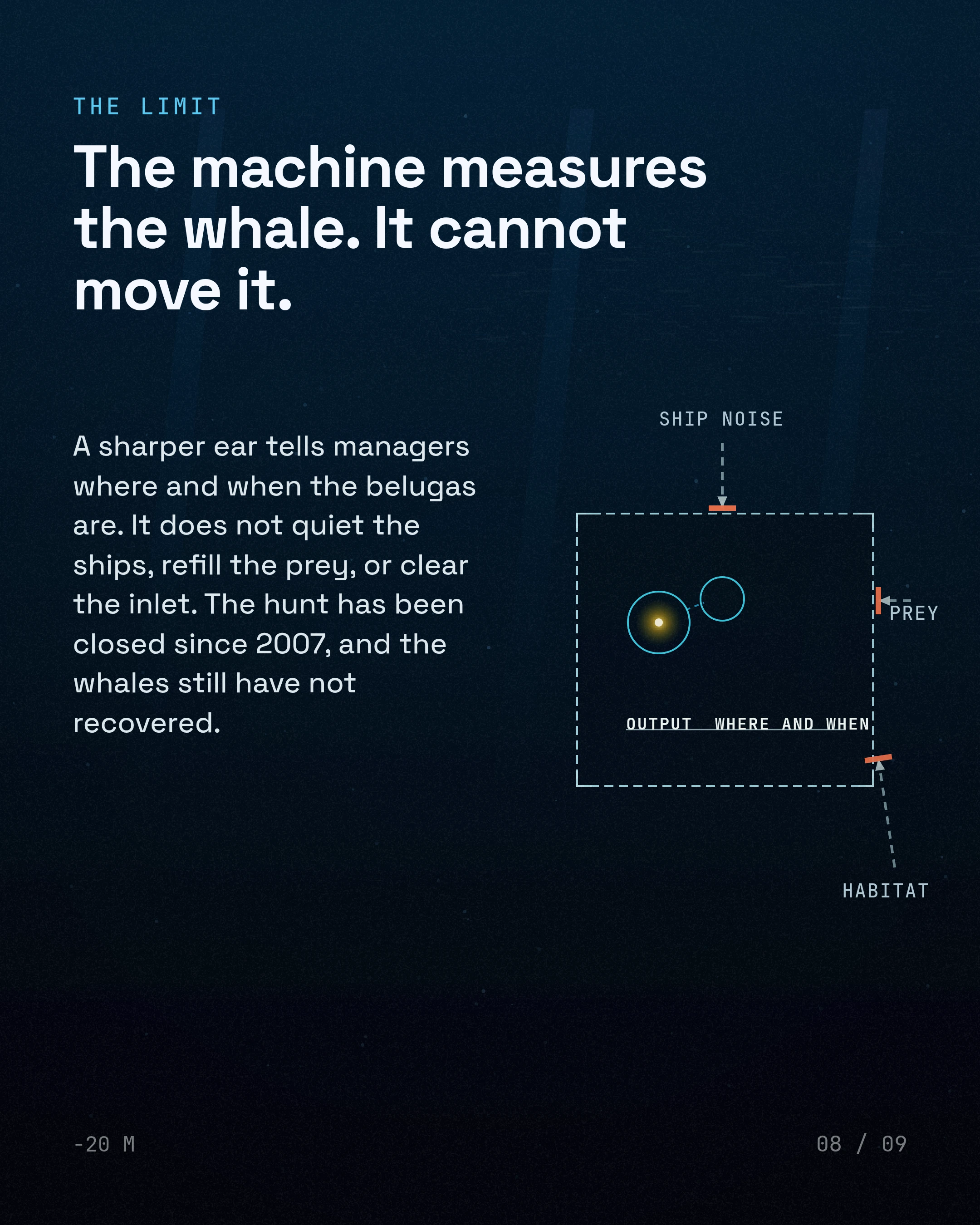
A sharper ear tells managers where and when the belugas are. It does not quiet the ships or refill the prey. So what would it actually take to turn a clearer signal into more whales?
What we verified
16 CLAIMS, EACH RE-FETCHED FROM ITS SOURCE BEFORE THIS DECK SHIPPED
A 2026 study titled "Adaptive Acoustic Monitoring for Endangered Cook Inlet Beluga Whales in Complex Soundscapes" was published in the journal Marine Mammal Science.
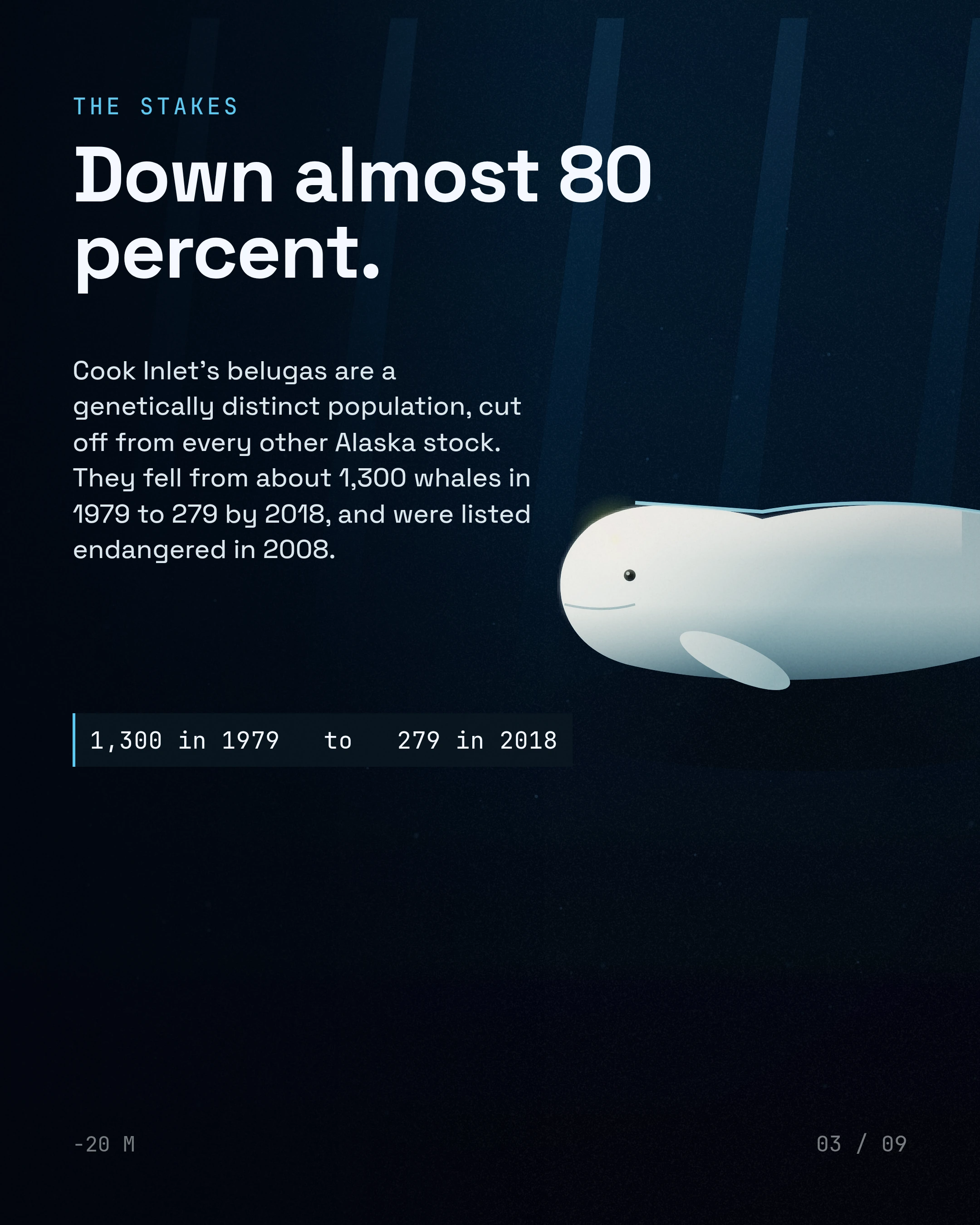
The Cook Inlet beluga population declined by nearly 80 percent between 1979 and 2018, from about 1,300 whales to an estimated 279.
In 2008, the Cook Inlet beluga population was listed as endangered under the Endangered Species Act.
In 2011, NOAA Fisheries designated two areas of Cook Inlet as critical habitat.
NOAA Fisheries identifies five beluga whale stocks in Alaskan waters, and the Cook Inlet stock is geographically isolated from the others.
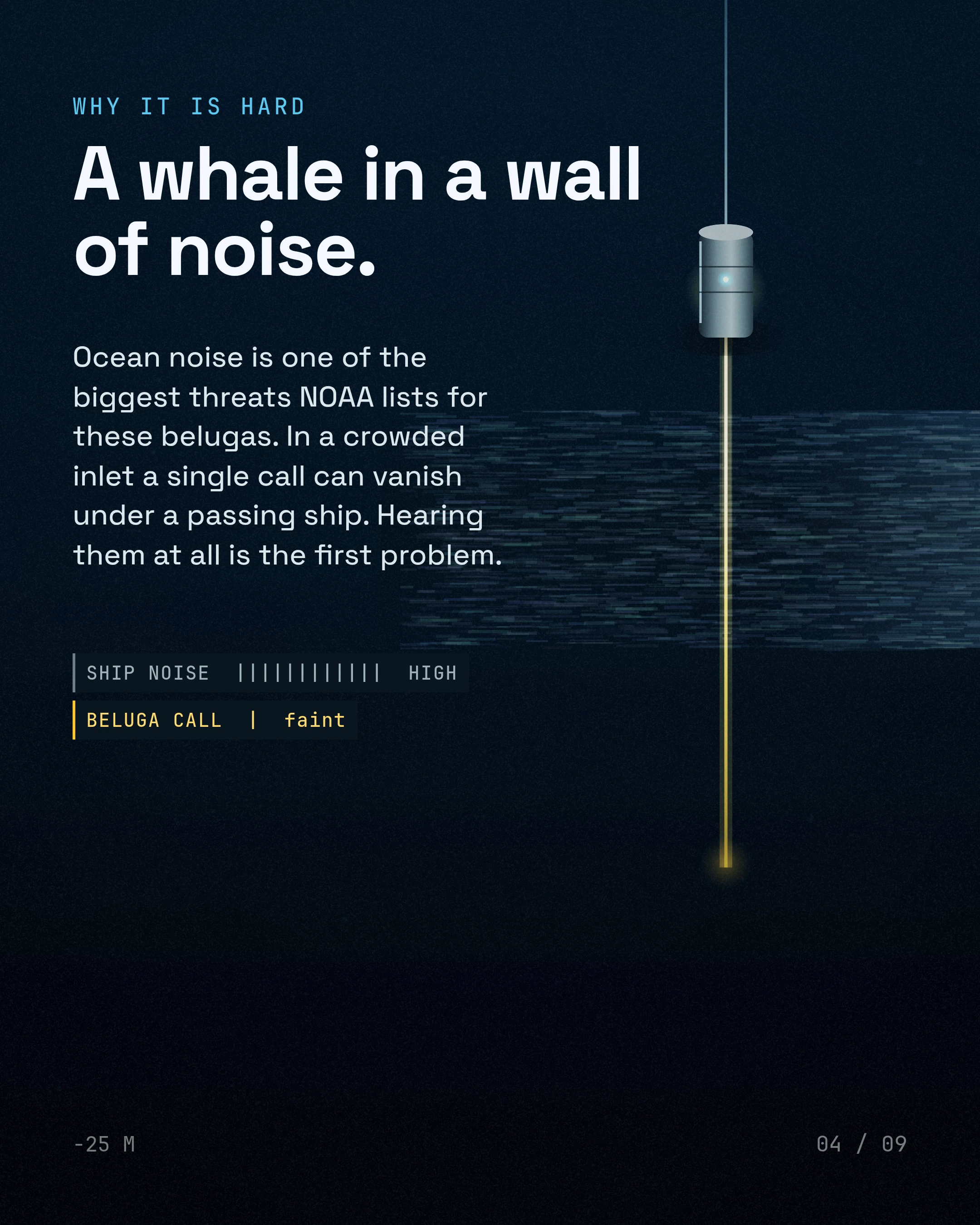
NOAA lists threats to Cook Inlet belugas including ocean noise, prey limitations, habitat impacts, contaminants, predation, strandings, disease and changing climate conditions.
Although the subsistence hunt has been suspended since 2007, the Cook Inlet beluga population has not recovered as expected.
The Cook Inlet beluga whale is managed as a Distinct Population Segment (DPS).
The paper was published online first on June 7, 2026, with a print issue dated July 2026.
The study was a NOAA Fisheries, Microsoft AI for Good, and Alaska Department of Fish and Game collaboration; authors include Verena Gill (NOAA Fisheries, Anchorage), Manuel Castellote and Rahul Dodhia and Juan M. Lavista Ferres (Microsoft AI for Good Research Lab), and Lori Polasek (Alaska Department of Fish and Game).
The framework is a deep-learning dual-stage model that separates signal detection from species classification.
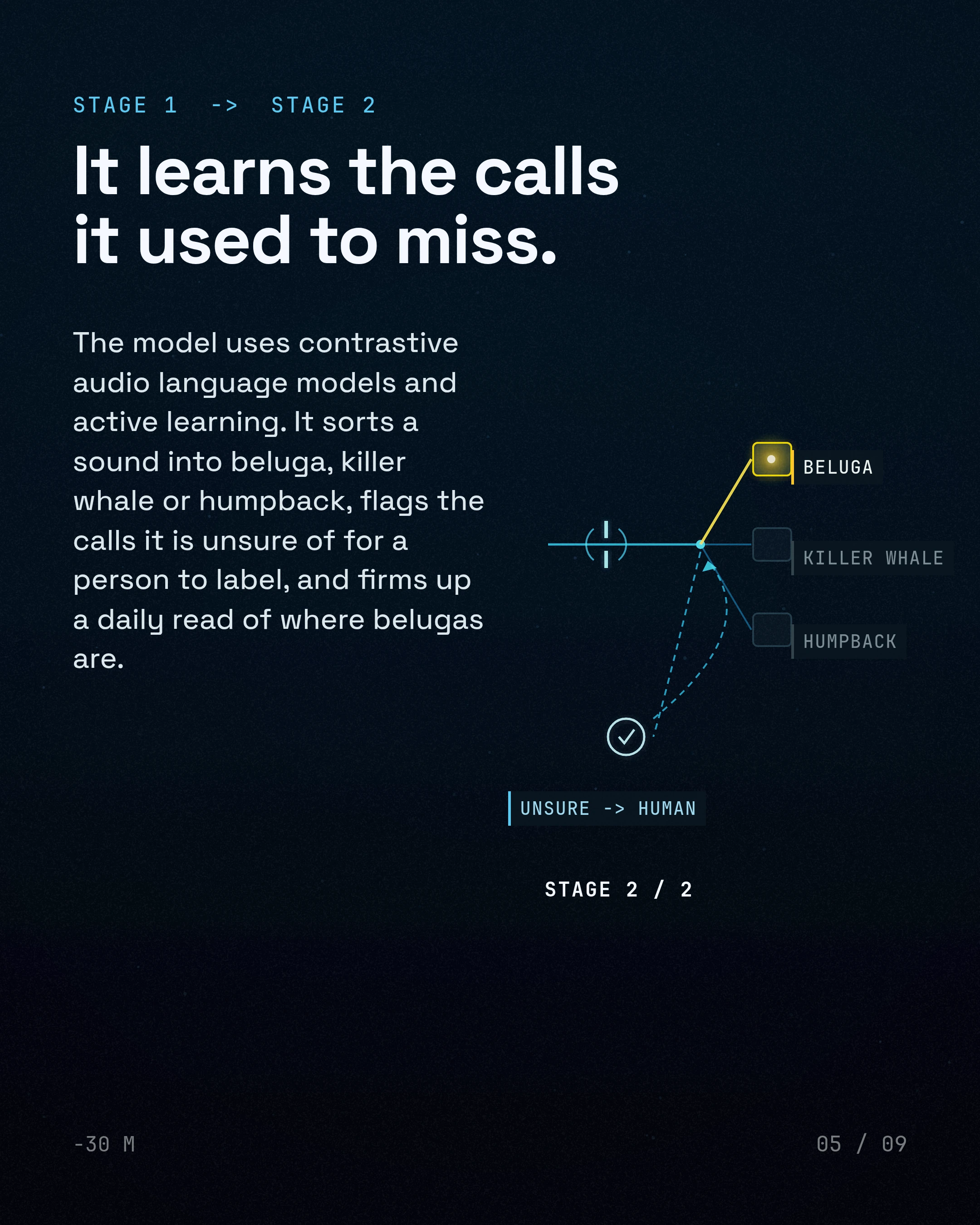
The model expands beyond belugas to a multi-species context that also includes killer whales and humpback whales.
Using contrastive audio-language models and active learning, the framework improved detection of rare species occurrences and strengthened confidence in daily beluga presence estimates across Cook Inlet regions.
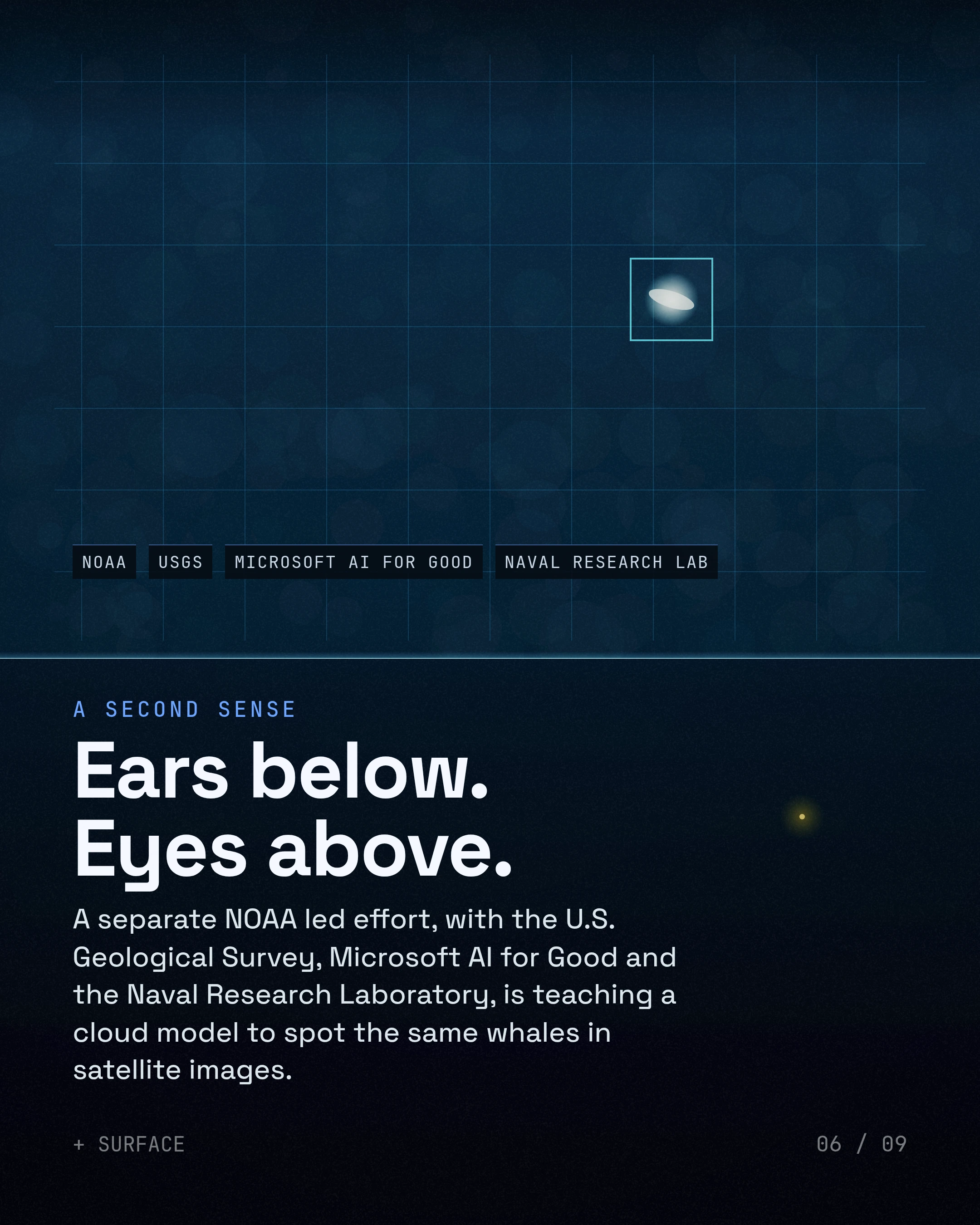
NOAA leads a separate collaborative effort with the U.S. Geological Survey, Microsoft AI for Good, the Naval Research Laboratory and other partners to detect Cook Inlet belugas in satellite imagery.
The satellite initiative aims to build a secure cloud-based application that uses machine learning to detect whales and other marine mammals in very high-resolution (VHR) satellite imagery.
The best current abundance estimate for the Cook Inlet beluga population is 331 whales, suggesting the population may be stabilizing and possibly increasing.
Beats
This article is on Alaska power and the grid · Alaska AI research and science. Each beat page keeps every decision and every article on that subject in one place.