Governed First, Alaska Native Health and AI
Data sovereignty is not a privacy setting.
The deck
SWIPE, SCROLL OR CLICK A SLIDE TO GO FULLSCREEN · 9 SLIDES
The story
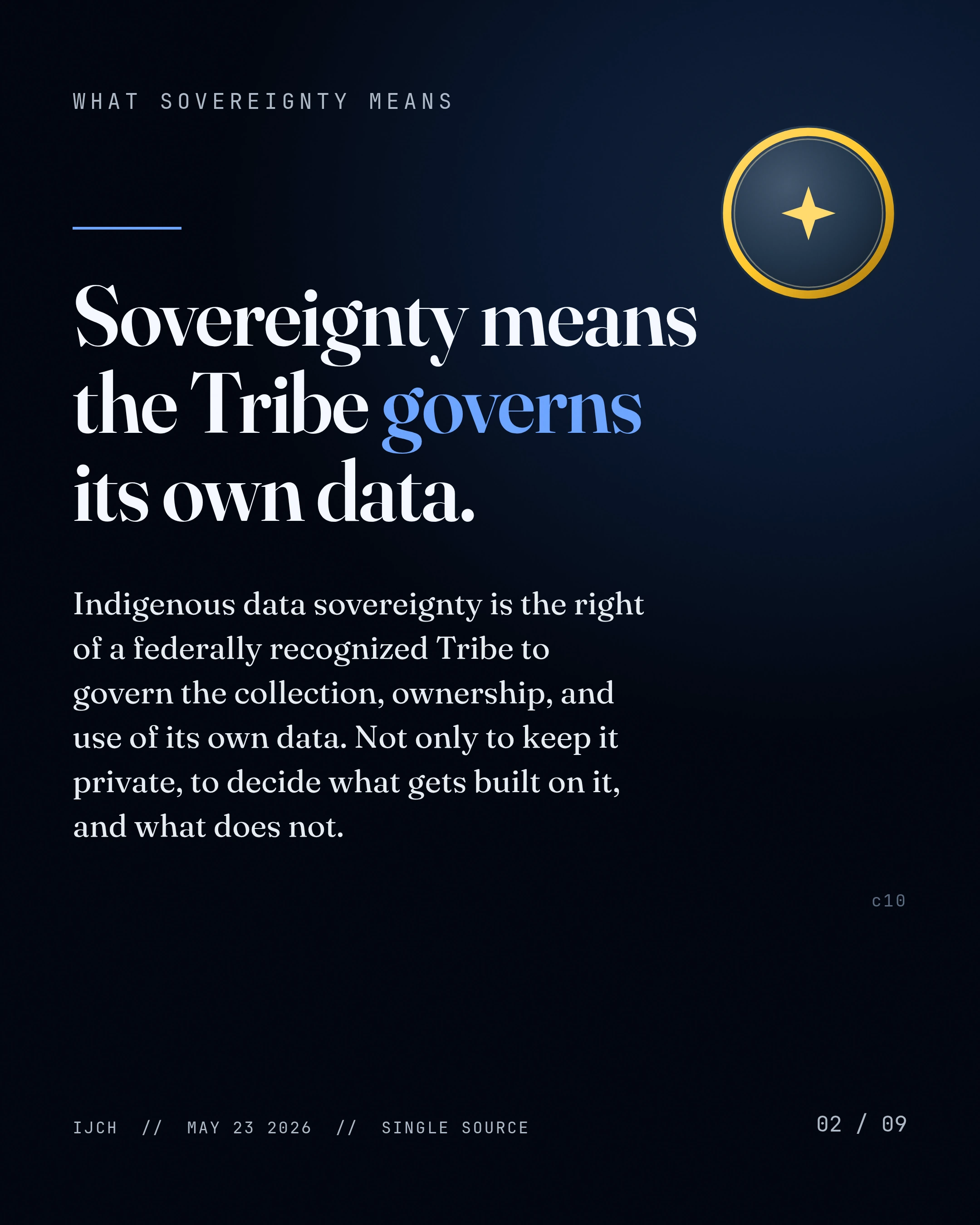
It is a Tribe's right to govern what gets collected, who owns it, and what gets built on top.
A peer-reviewed paper documents Alaska's tribal health system doing both, adopting clinical machine learning and governing it first, under the CARE and FAIR principles.
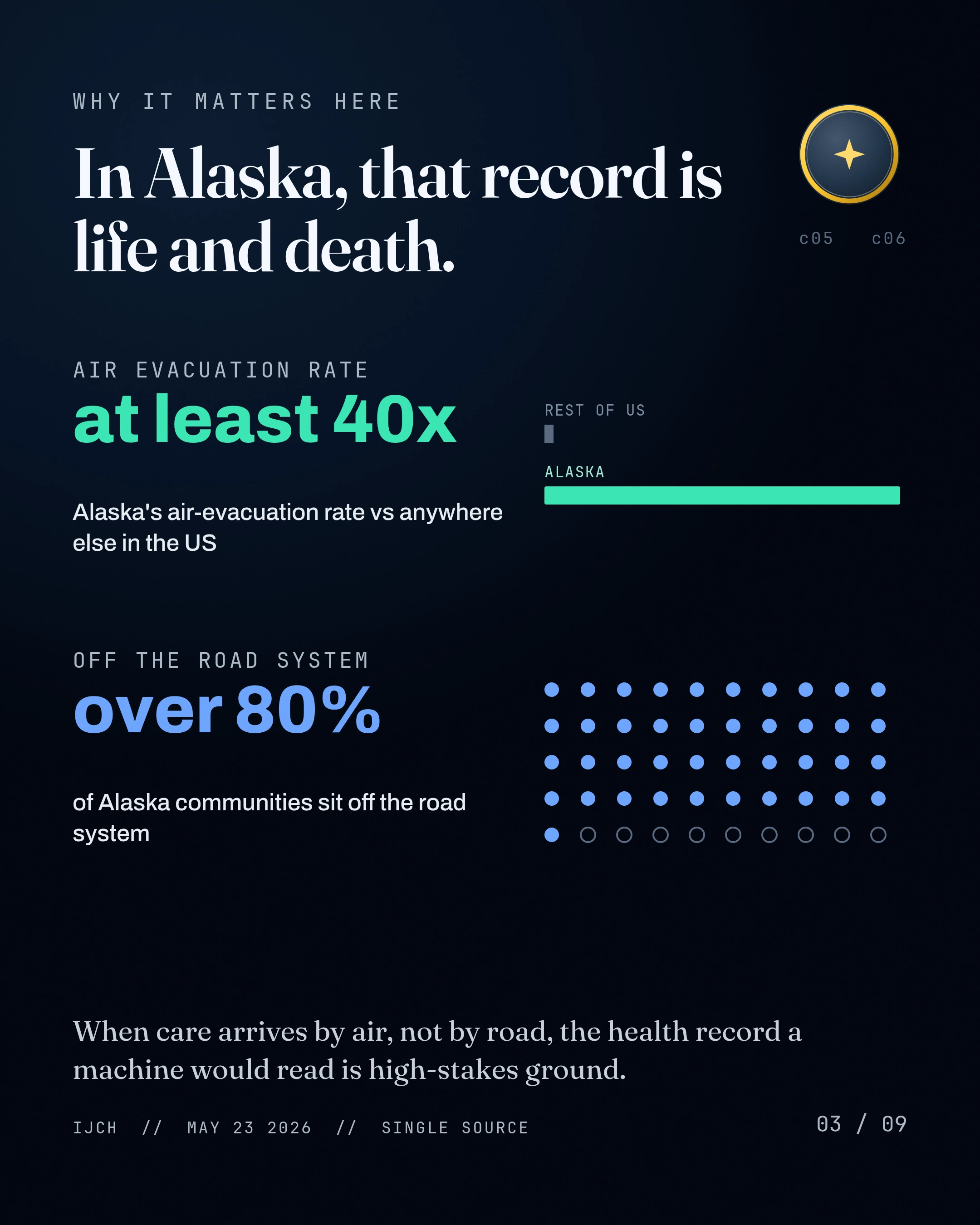
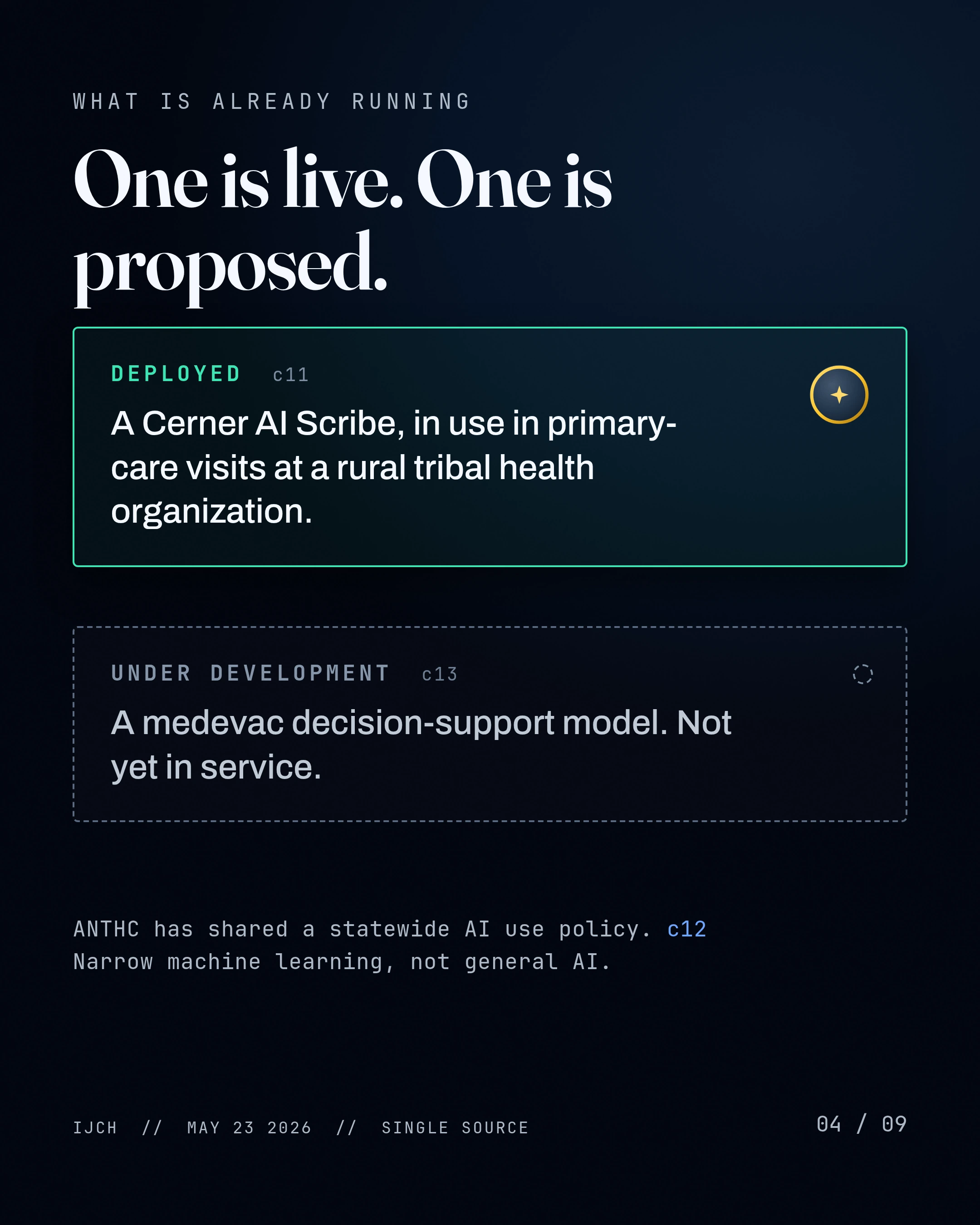
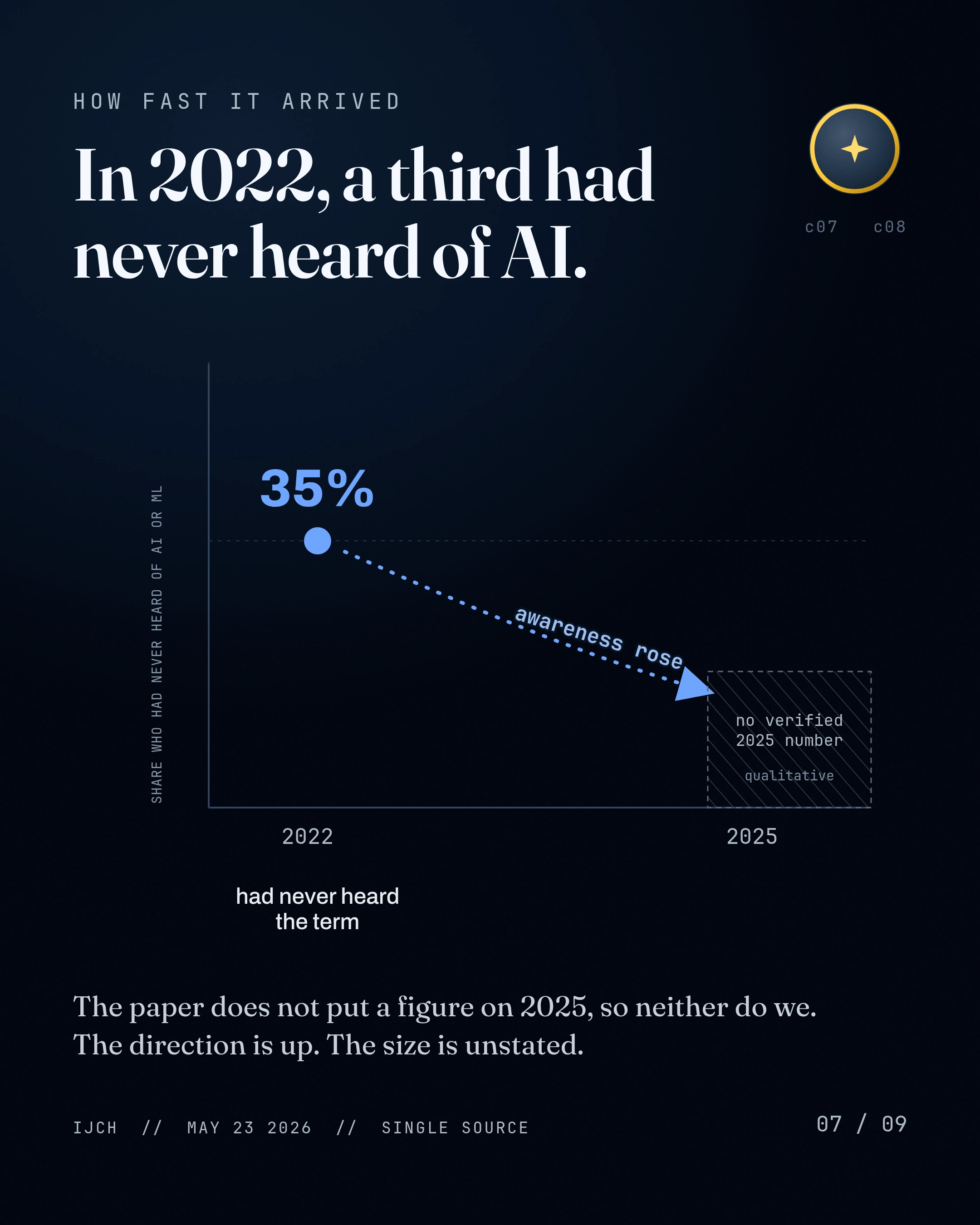
Air evac in Alaska runs at least 40 times higher than anywhere else in the US. Over 80% of communities sit off the road system. A Cerner AI Scribe already runs in rural primary care visits. A medevac decision-support model is still under development, not live. In 2022, 35% of people surveyed had never heard the term AI/ML. By the 2025 symposium, far fewer could say that.
So who decides what gets built on that data, the Tribe that owns it or the vendor that ships the model?
What we verified
15 CLAIMS, EACH RE-FETCHED FROM ITS SOURCE BEFORE THIS DECK SHIPPED
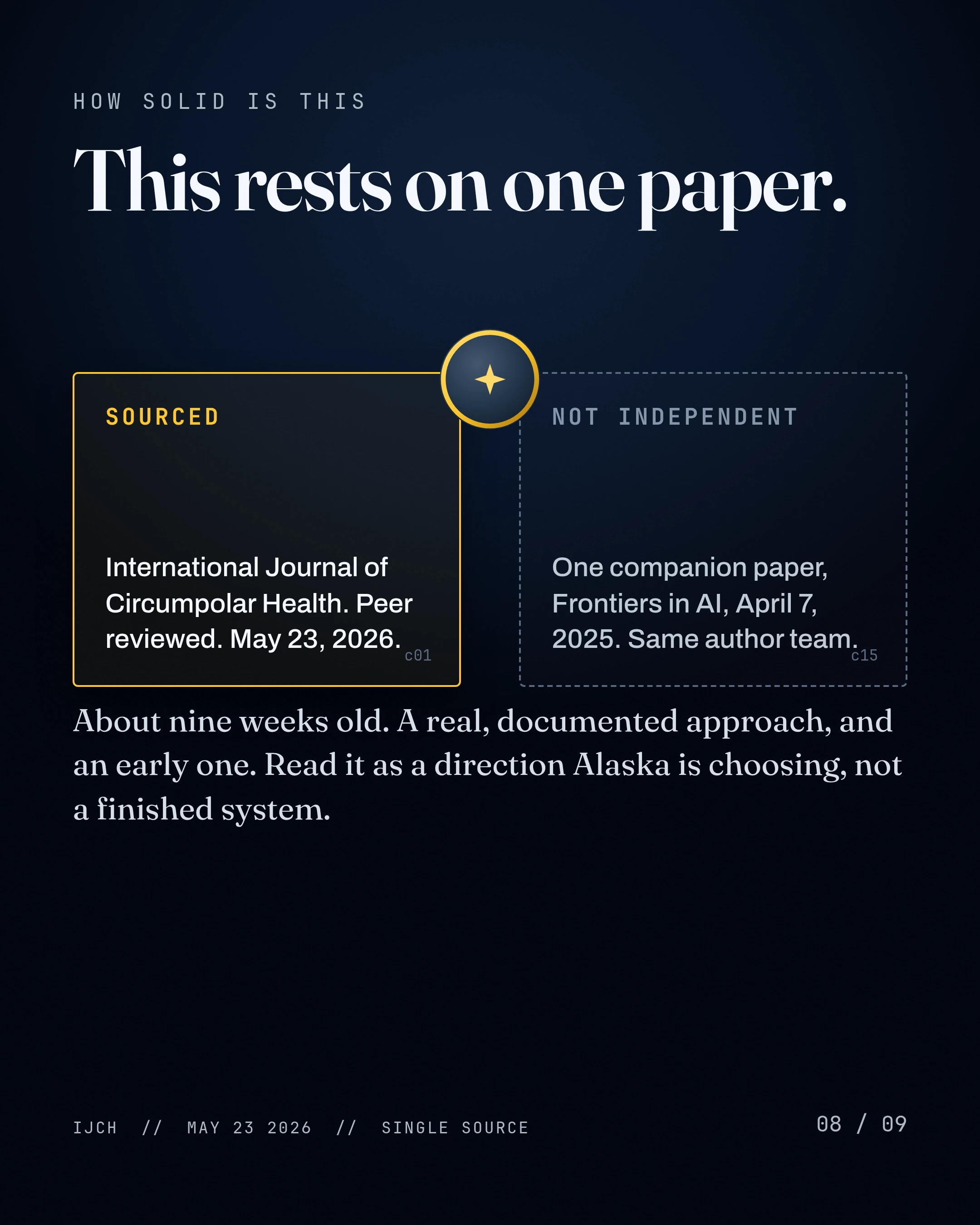
A symposium-perspectives paper on AI/ML in Alaska Native healthcare was published May 23, 2026 in the International Journal of Circumpolar Health (doi 10.1080/22423982.2026.2677426).
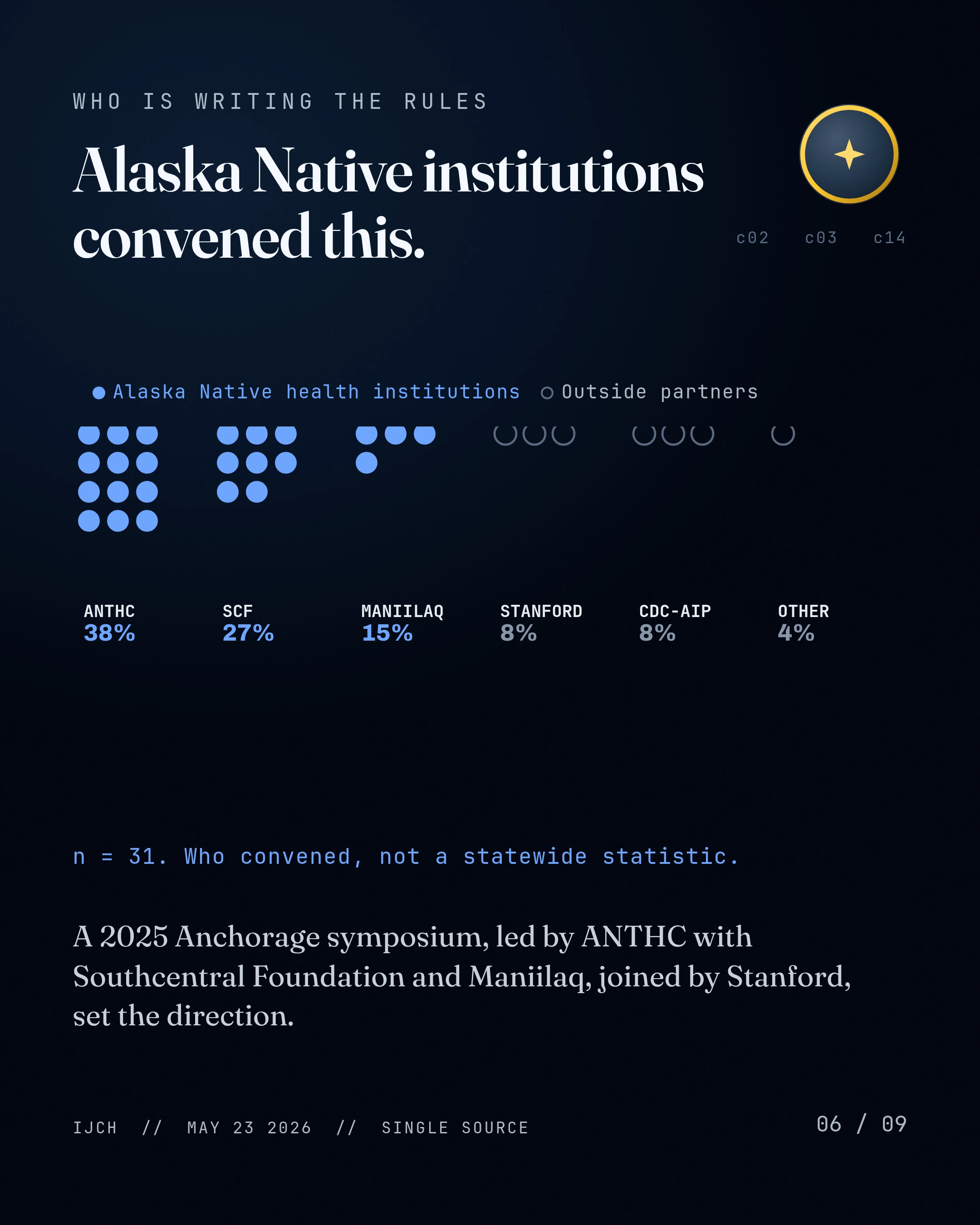
The 2025 Anchorage symposium had 31 participants.
Symposium participants by organization, ANTHC 38%, Southcentral Foundation 27%, Maniilaq Association 15%, Stanford 8%, CDC Arctic Investigation Program 8%, Other 4%.
Symposium participants by role, researchers 27%, IT/programming 24%, leadership 17%, clinicians 12%, compliance 5%, other 15%.
Alaska's air-evacuation rates are cited as at least 40 times higher than anywhere else in the US.
Over 80% of Alaska communities are not connected to the road system.
In the 2022 baseline, 35% of respondents said they had never heard the term AI/ML.
The paper reports that overall knowledge, use, and awareness of AI/ML increased substantially between the 2022 and 2025 symposia.
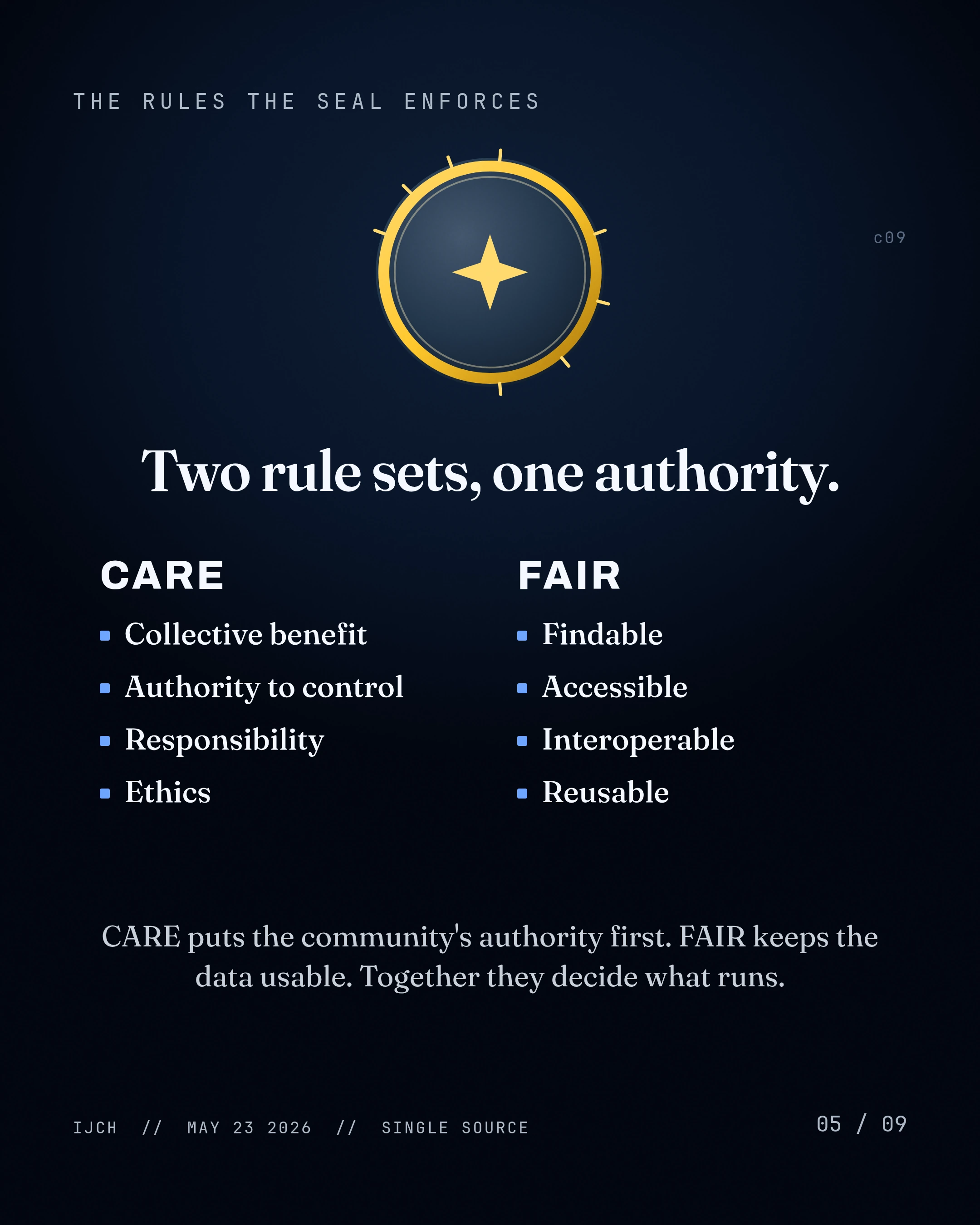
The governance approach references the CARE principles (Collective Benefit, Authority to Control, Responsibility, Ethics) and the FAIR principles (Findable, Accessible, Interoperable, Reusable).
The system operates under Indigenous data sovereignty, the right of a federally recognized Tribe to govern the collection, ownership, and use of its own data.
A rural tribal health organization has implemented a Cerner AI Scribe in primary care visits.
ANTHC shared a statewide organizational AI use policy.
A medevac decision-support model is under development (proposed, not yet deployed).
The paper's authors span Southcentral Foundation, Stanford University, the Alaska Native Tribal Health Consortium, and Maniilaq Association.
A companion community-engaged AI framework paper for the Alaska Tribal Health System was published April 7, 2025 in Frontiers in Artificial Intelligence.
Beats
This article is on Alaska land and permitting for AI · Alaska AI research and science · Alaska data sovereignty and AI · Alaska AI policy and legislation. Each beat page keeps every decision and every article on that subject in one place.