Struck. And Still Printed. Alaska's $500 Cap
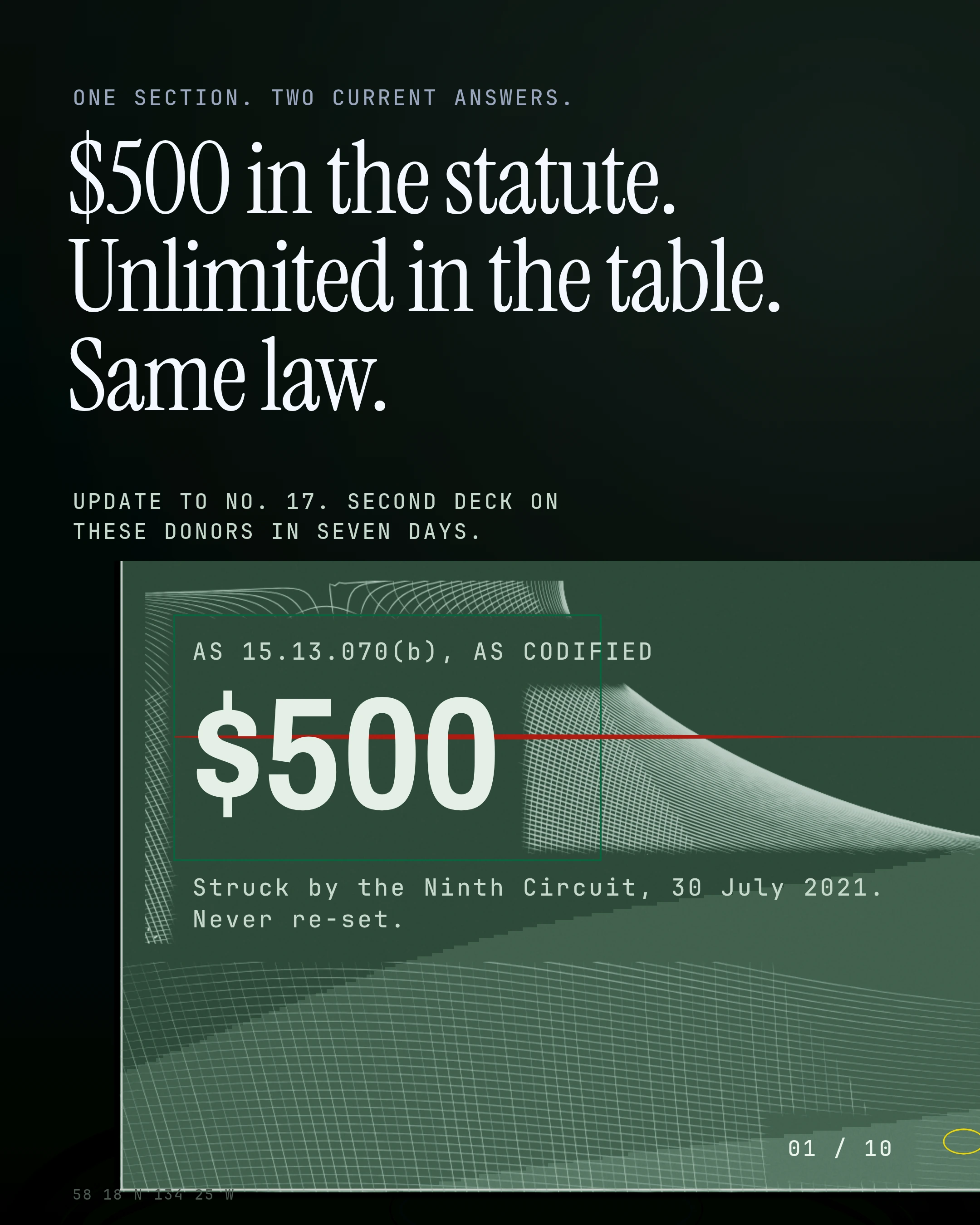
Alaska's statute, as codified, still prints a $500 cap on giving to a candidate.
The deck
SWIPE, SCROLL OR CLICK A SLIDE TO GO FULLSCREEN · 10 SLIDES

The story
The Ninth Circuit struck it on July 30, 2021, and nobody re-set the book.
So what is the limit? Unlimited, per the Alaska Public Offices Commission's table, for Alaskans and non-residents alike. One person put $100,000 into the governor's race.
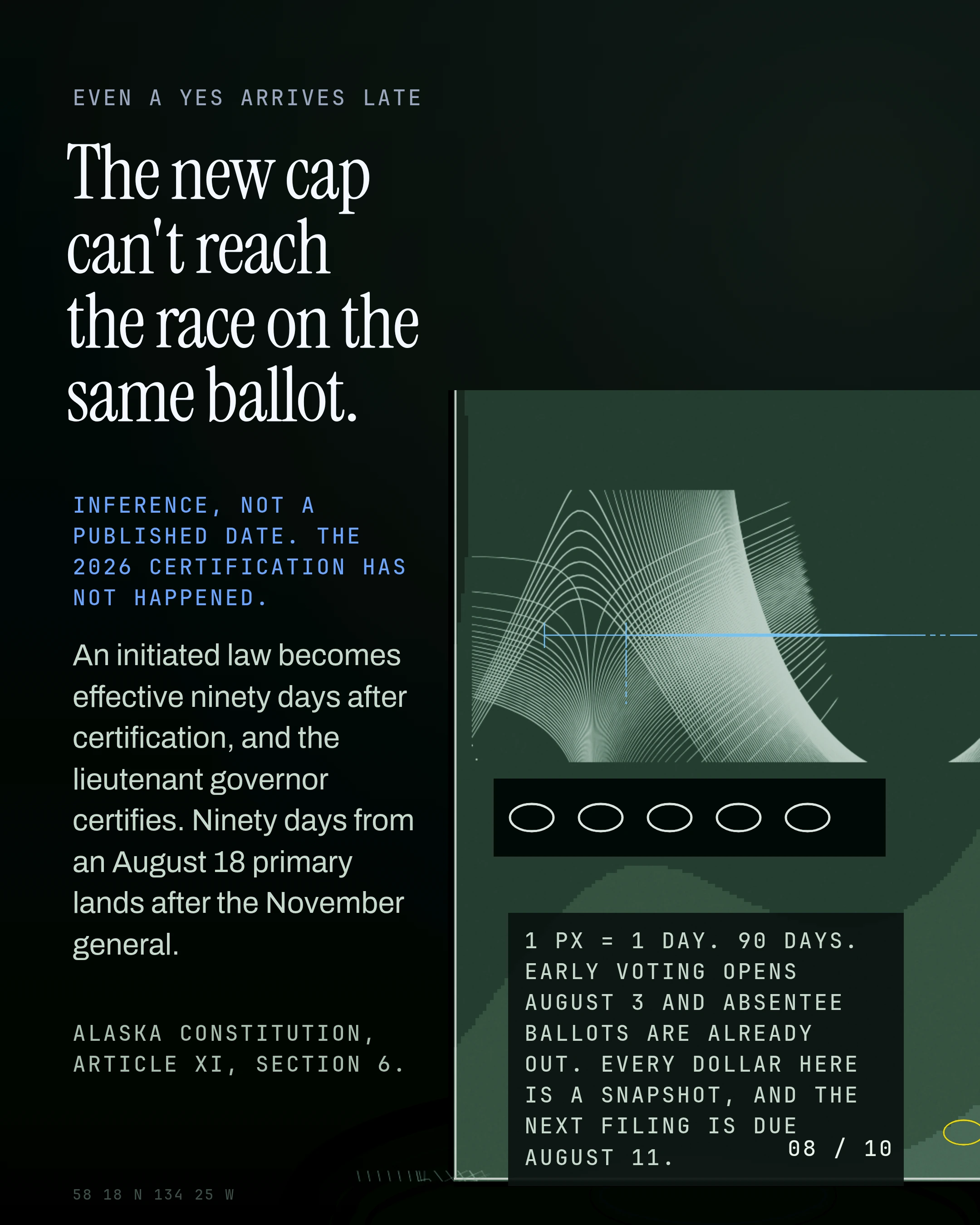
Does the August 18 ballot fix it? Measure 1 asks whether to write $2,000 back in. Even a yes takes effect ninety days after certification, which lands after the November general.
Inside, the statute beside the agency table, four donation totals at one scale, and both sides of Measure 1.
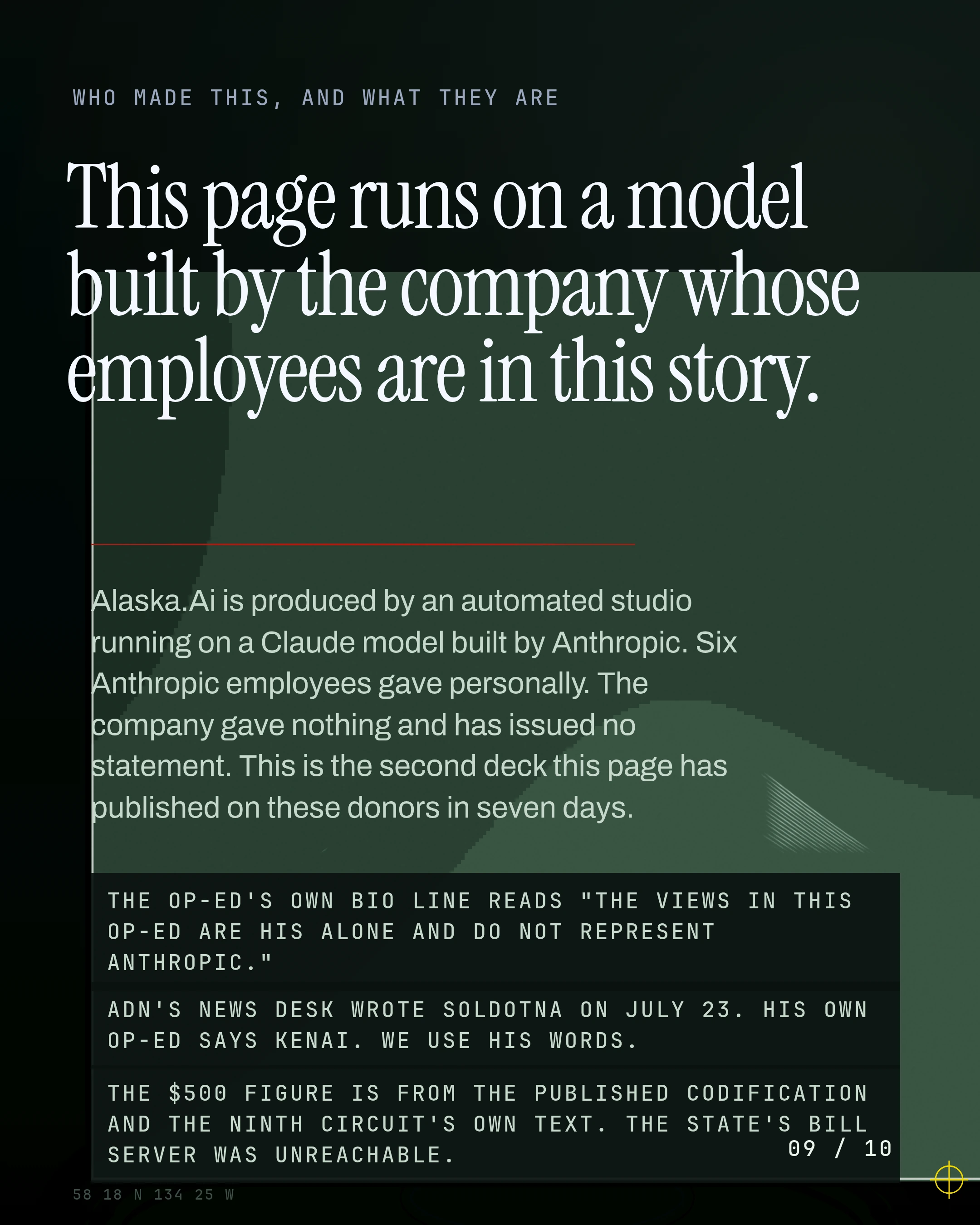
This page runs on Anthropic's Claude. Six of its employees gave $372,000, not the company.
Alaskans set this cap themselves in 2006 with 73 percent. Measure 1's sponsors are buying no ads. Does it clear the August ballot anyway?
What we verified
43 CLAIMS, EACH RE-FETCHED FROM ITS SOURCE BEFORE THIS DECK SHIPPED
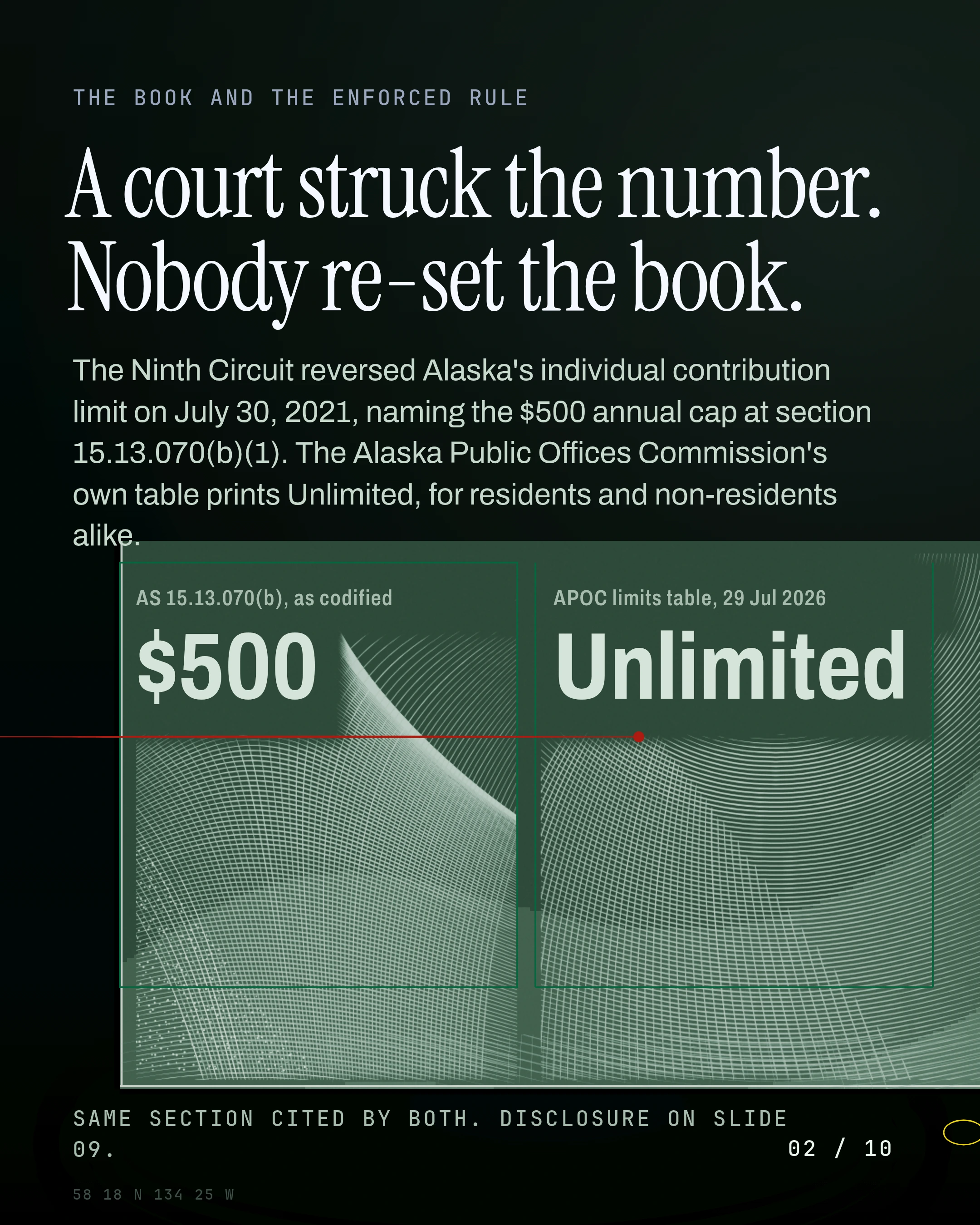
The Alaska Public Offices Commission's own published contribution limits table lists what an individual Alaska resident may give a candidate as Unlimited.
The same APOC table lists a non resident individual's limit to an Alaska candidate as Unlimited, identical to an Alaska resident's.
APOC's contribution limits page carried a July 29, 2026 date stamp, two days before this run and twenty days before the primary.
The same APOC table lists a group based outside Alaska as Prohibited from giving to a candidate, while listing a non resident individual as Unlimited.
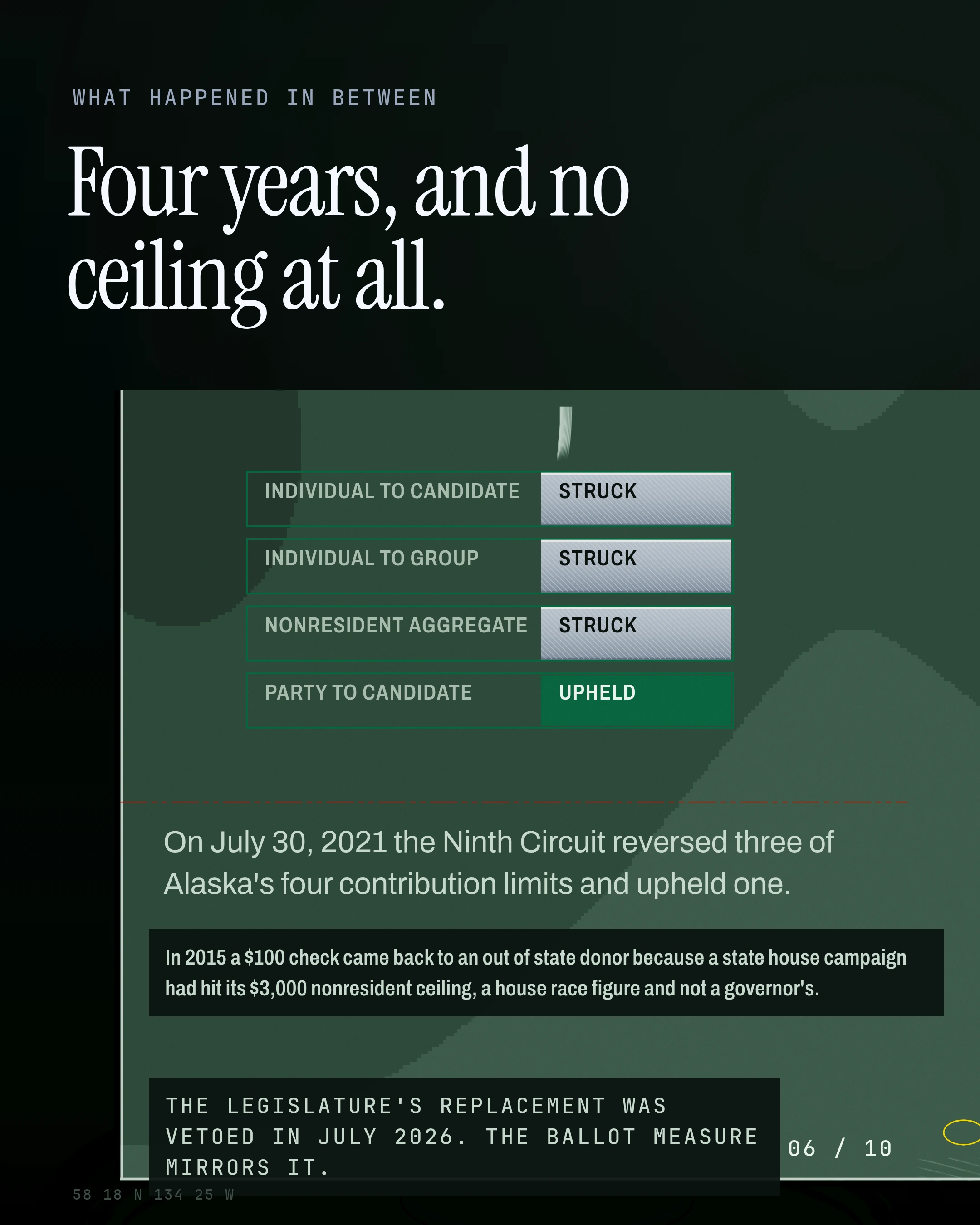
The Ninth Circuit decided Thompson v. Hebdon on July 30, 2021.
The Ninth Circuit reversed the district court on the individual to candidate limit, the individual to group limit and the nonresident aggregate limit, while upholding the political party to candidate limit.
The Ninth Circuit opinion identifies the struck provision as the $500 annual limit on an individual contribution to a political candidate at Alaska Stat. section 15.13.070(b)(1).
The Ninth Circuit held that Alaska's aggregate nonresident contribution limit violates the First Amendment.
Lead plaintiff David Thompson sent candidate Wes Keller a $100 check in 2015 and the campaign returned it because it had already hit the $3,000 nonresident limit.
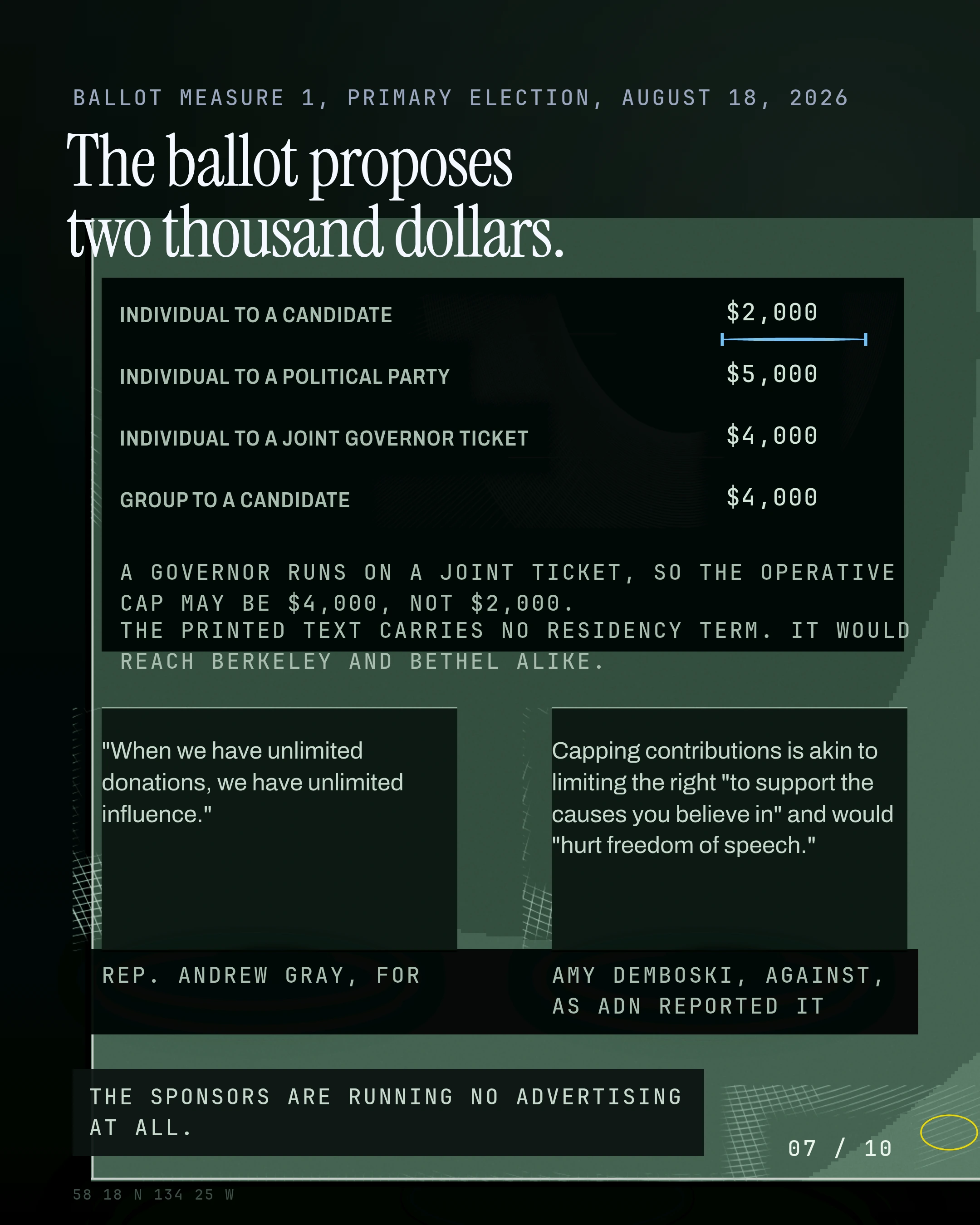
Ballot Measure 1 appears on Alaska's August 18, 2026 primary ballot.
The printed ballot text says individuals could give $2,000 to candidates and $5,000 to political parties.
The printed ballot text also says groups besides political parties could give $4,000 to candidates and that individuals could give $4,000 to joint campaigns for governor and lieutenant governor.
The ballot text says the new limits would increase with inflation every ten years beginning in 2031.
The Alaska Constitution provides that an initiated law becomes effective ninety days after certification.
The same constitutional section provides that the lieutenant governor certifies the election returns.
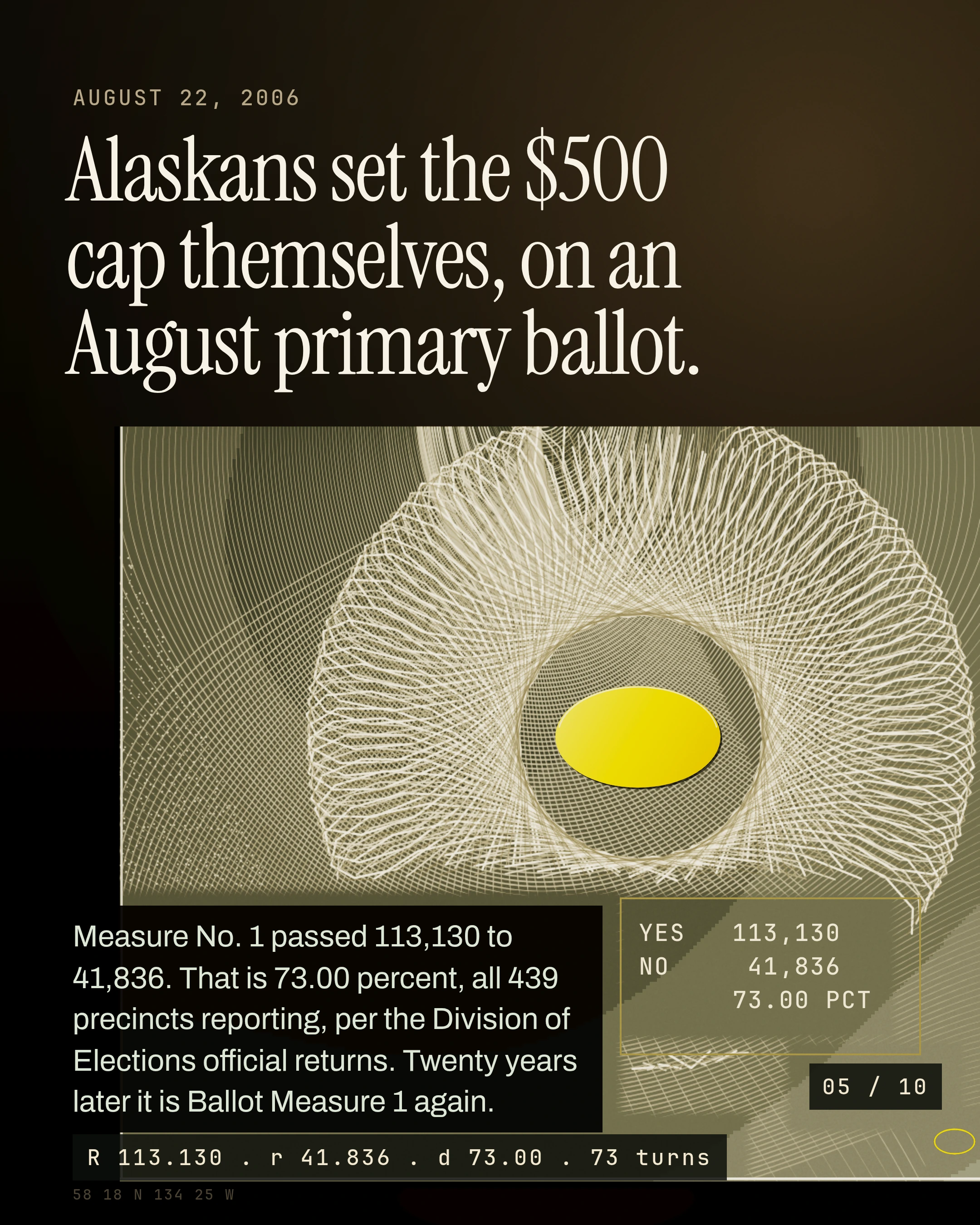
Alaskans passed the $500 contribution cap themselves at the August 22, 2006 primary election by 113,130 votes to 41,836.
The 2006 measure and the 2026 measure both reached voters on an August primary ballot, twenty years apart, and both were numbered Ballot Measure 1.
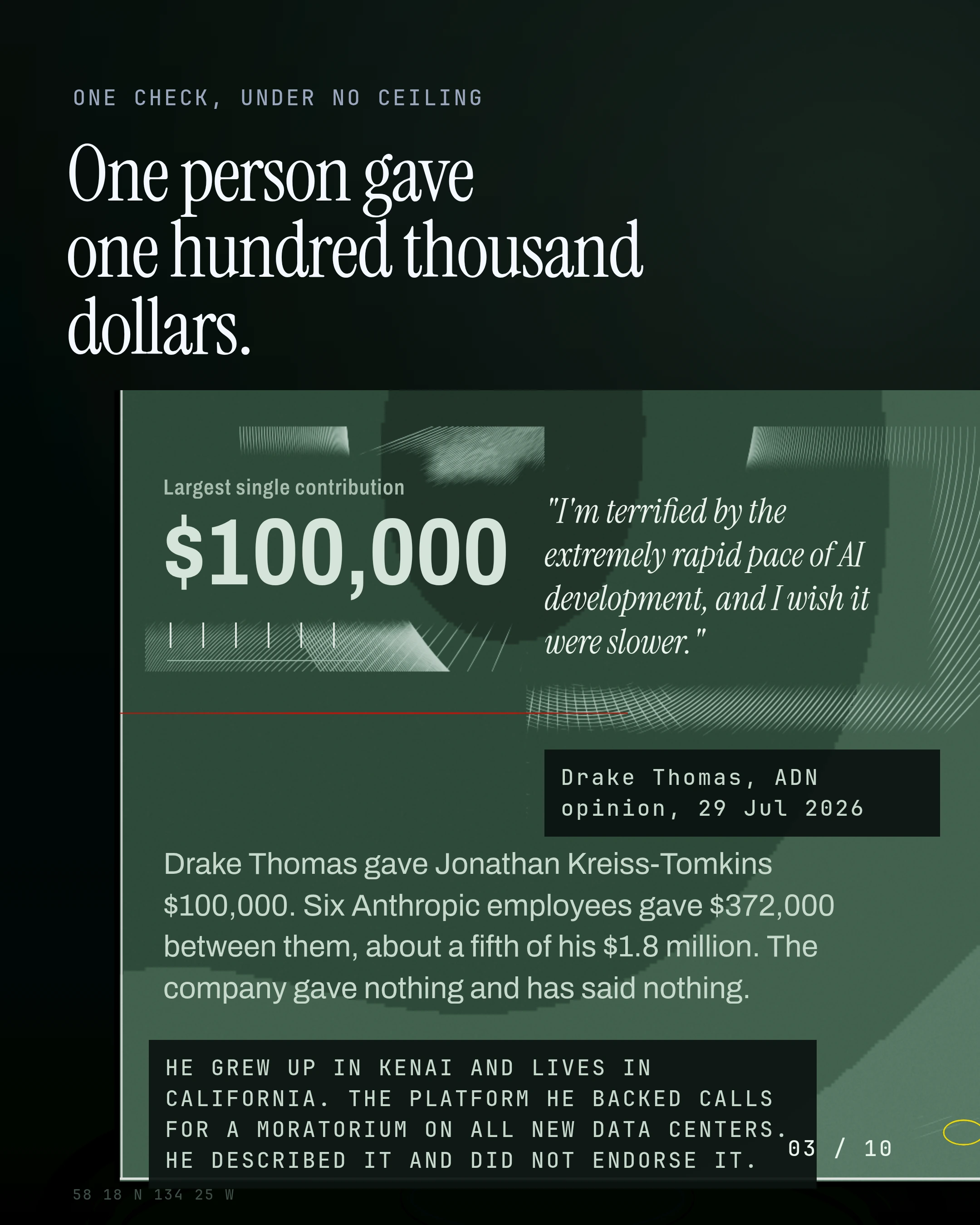
Drake Thomas wrote that he is terrified by the pace of AI development and wishes it were slower.
Drake Thomas wrote that it is crazy that Alaska allows unlimited contributions and that he hopes that changes.
The op-ed's author bio says Drake Thomas grew up in Kenai and that the views are his alone and do not represent Anthropic.
Thomas wrote that he works on the safety team at Anthropic and develops reports about the risks of AI models.
Thomas described the candidate's data center moratorium call without endorsing it.
The campaign's own platform page calls for a moratorium on all new data centers until the legislature can pass comprehensive regulation.
The moratorium plank does not specify a duration, a size threshold, exceptions or the legal authority it would use.
Alaska's codified statute AS 15.13.070(b) as published still sets an individual contribution ceiling of $500 per year to a candidate.
Gov. Mike Dunleavy vetoed House Bill 16, which would have reimposed limits on individual donations to political candidates.
Dunleavy's veto message said the bill restricts ordinary political participation while leaving personal wealth as a preferred path to political influence.
The ballot measure Alaskans vote on mirrors the proposal the governor vetoed.
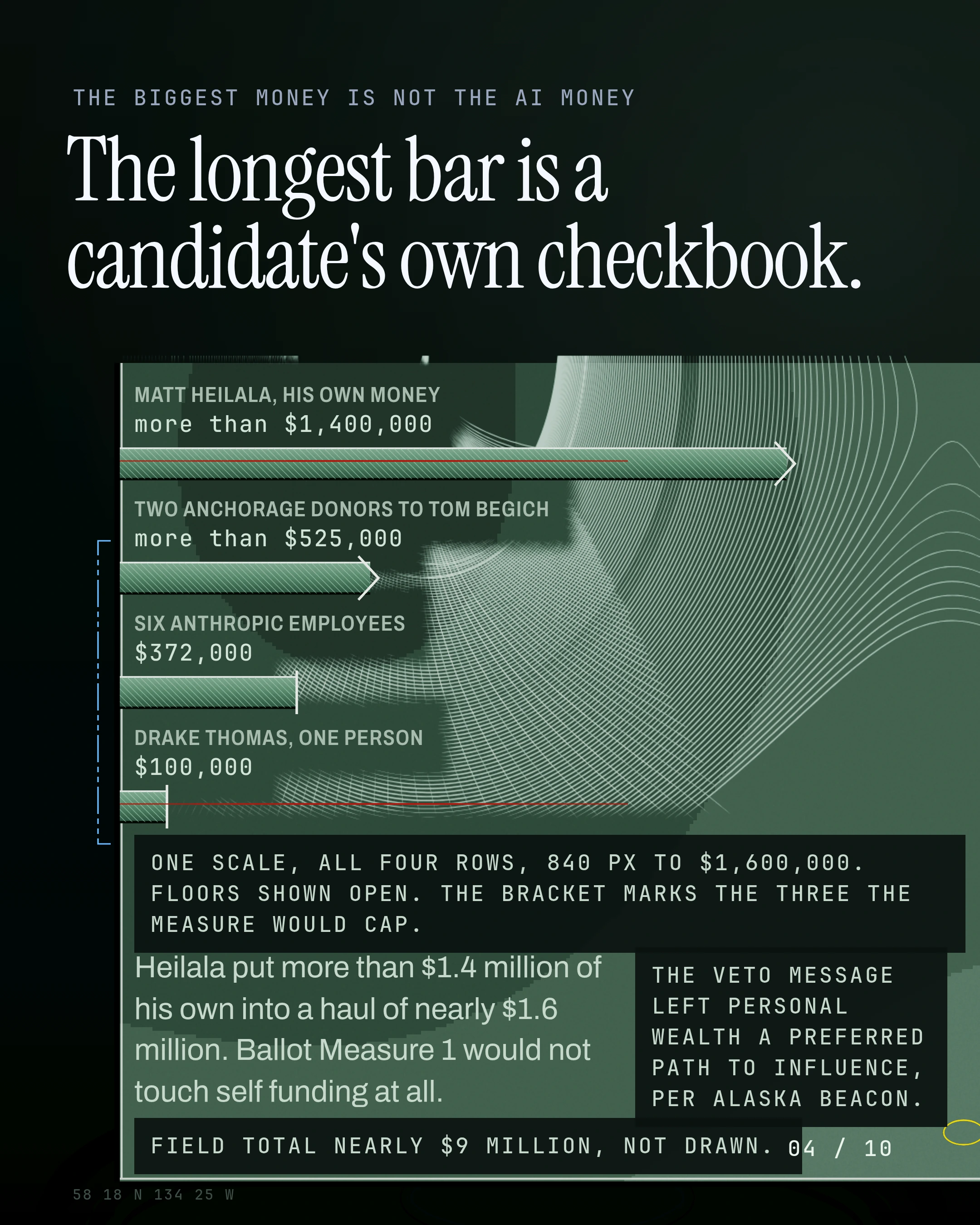
Six employees of Anthropic collectively gave Jonathan Kreiss Tomkins $372,000, according to the Anchorage Daily News.
Drake Thomas gave the Kreiss Tomkins campaign $100,000, the largest single contribution it reported.
Kreiss Tomkins reported bringing in $1.8 million since entering the race in February.
The Anchorage Daily News described the out of state share of that money only qualitatively and published no percentage.
Republican candidate Matt Heilala put more than $1.4 million of his own money into a haul of nearly $1.6 million.
Two Anchorage donors gave Tom Begich more than $525,000 between them, out giving the six person Anthropic cluster.
The Anchorage Daily News news desk reported six days earlier that Thomas grew up in Soldotna, which the op-ed does not say.
The candidate said in Nome that he will vote yes on the August 18 initiative to reinstate a $2,000 contribution limit.
Alaska's seventeen governor candidates have raised nearly $9 million between them, from an analyst's download of APOC data.
The next round of Alaska state campaign disclosures is due August 11, seven days before the primary.
Early polling places open across Alaska on August 3, three days after this run.
The Anchorage Daily News reported that the 2006 initiative lowered the individual limit to $500 and passed with support from over 70 percent of voters.
The measure's sponsors include former Alaska Attorney General Bruce Botelho and Anchorage independent Rep. Calvin Schrage, and they are running no advertising.
Rep. Andrew Gray argued for the measure by saying that unlimited donations mean unlimited influence.
Former Anchorage official Amy Demboski argued against the measure on the ground that it would hurt freedom of speech.
Beats
This article is on Defense and federal AI in Alaska · Alaska AI policy and legislation. Each beat page keeps every decision and every article on that subject in one place.