750 Funded. About 15 Running. One Hearing.
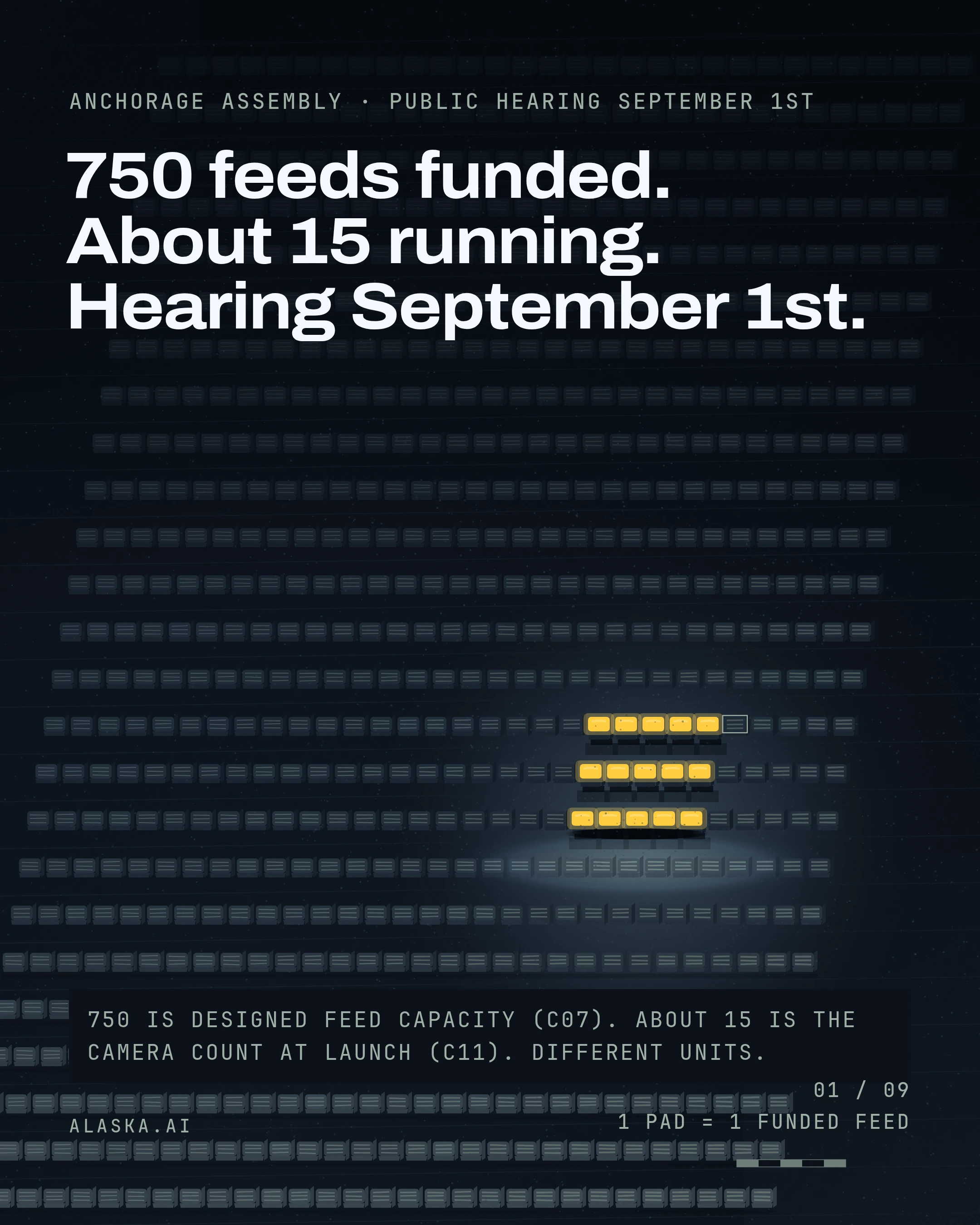
750 camera feeds is the ceiling Anchorage funded for its police crime center.
The deck
SWIPE, SCROLL OR CLICK A SLIDE TO GO FULLSCREEN · 9 SLIDES

The story
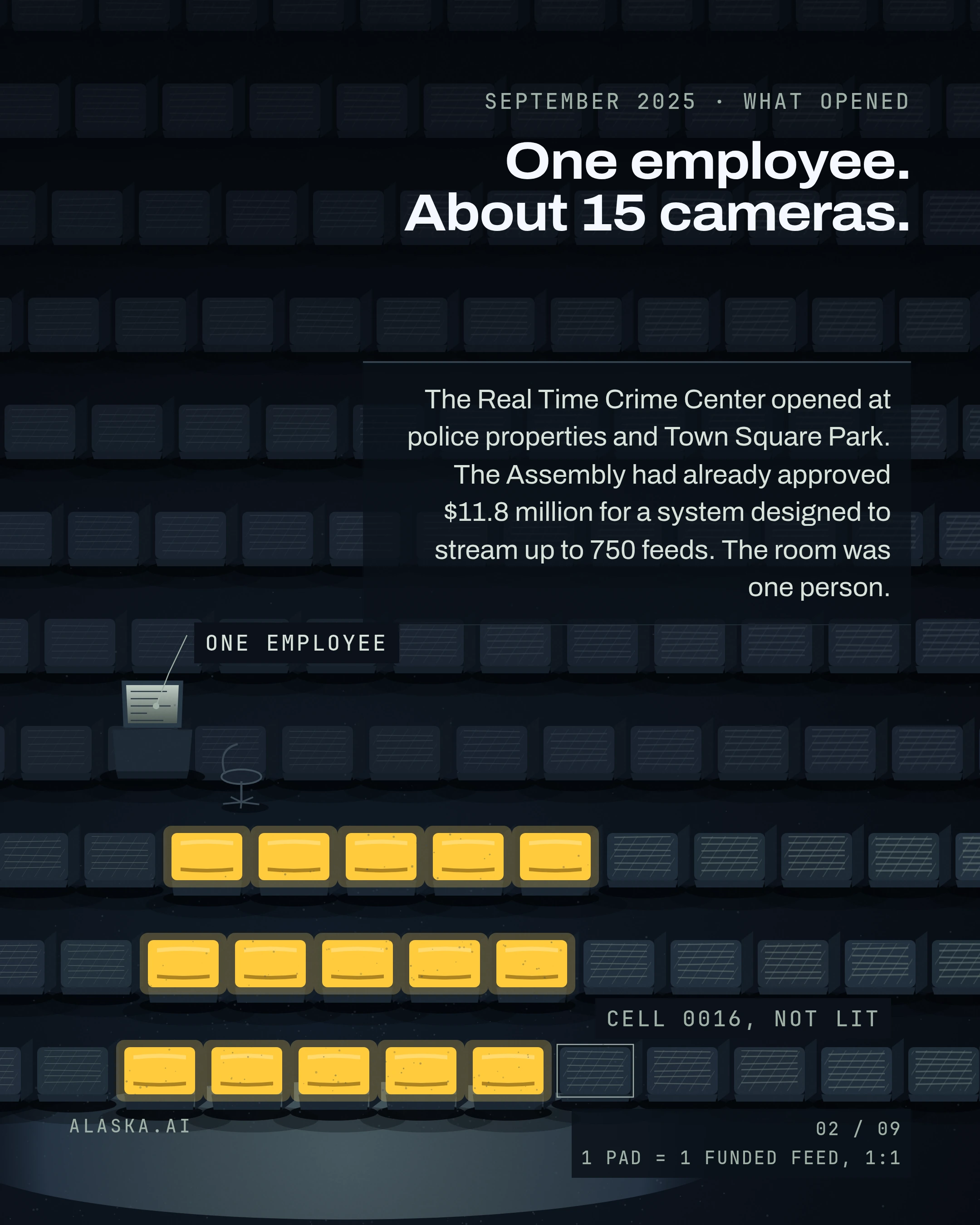
It opened last September with about 15 cameras and one employee.
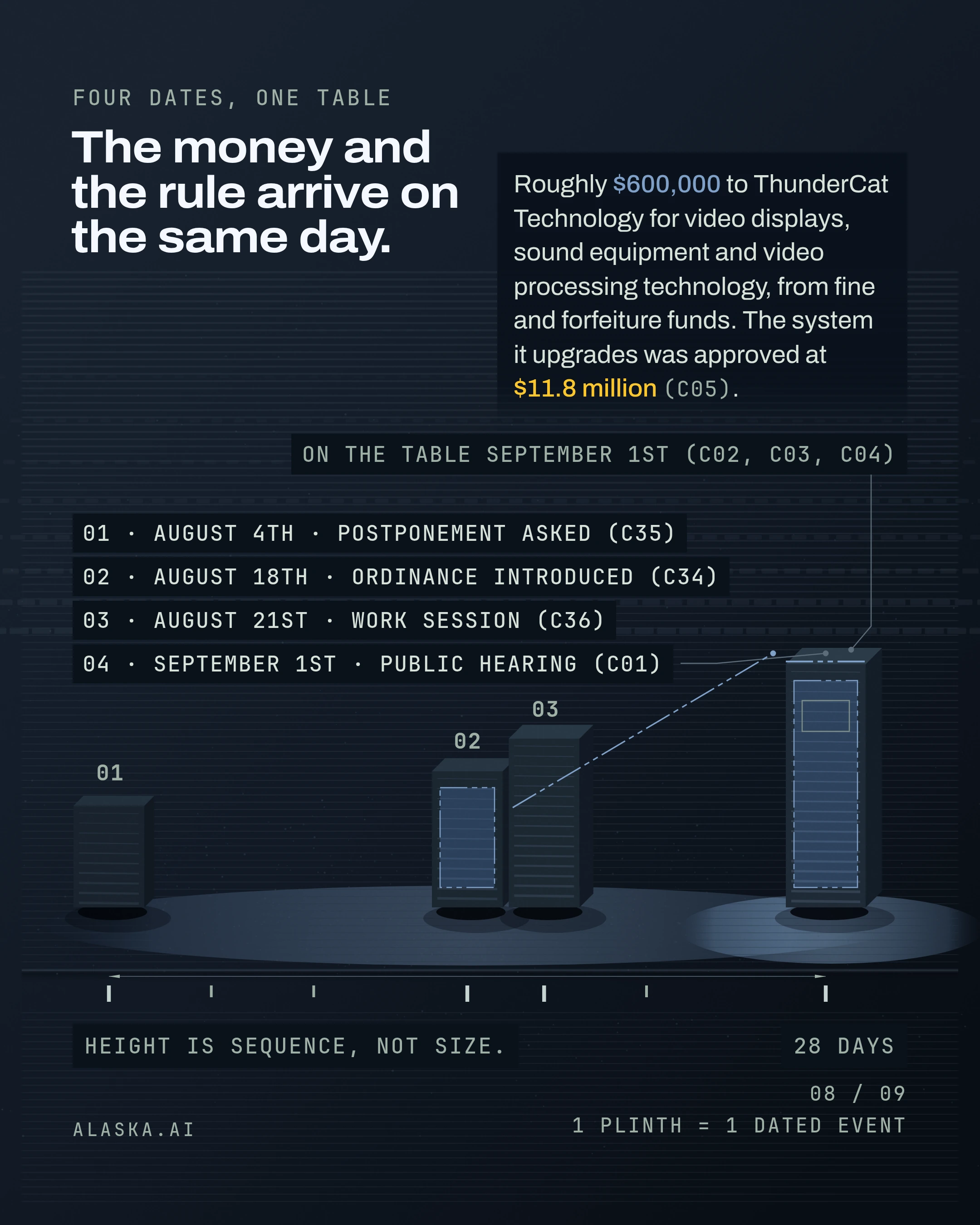
Seven days left. Three members introduced surveillance rules on August 18th. On September 1st they share a table with a roughly $600,000 equipment contract.
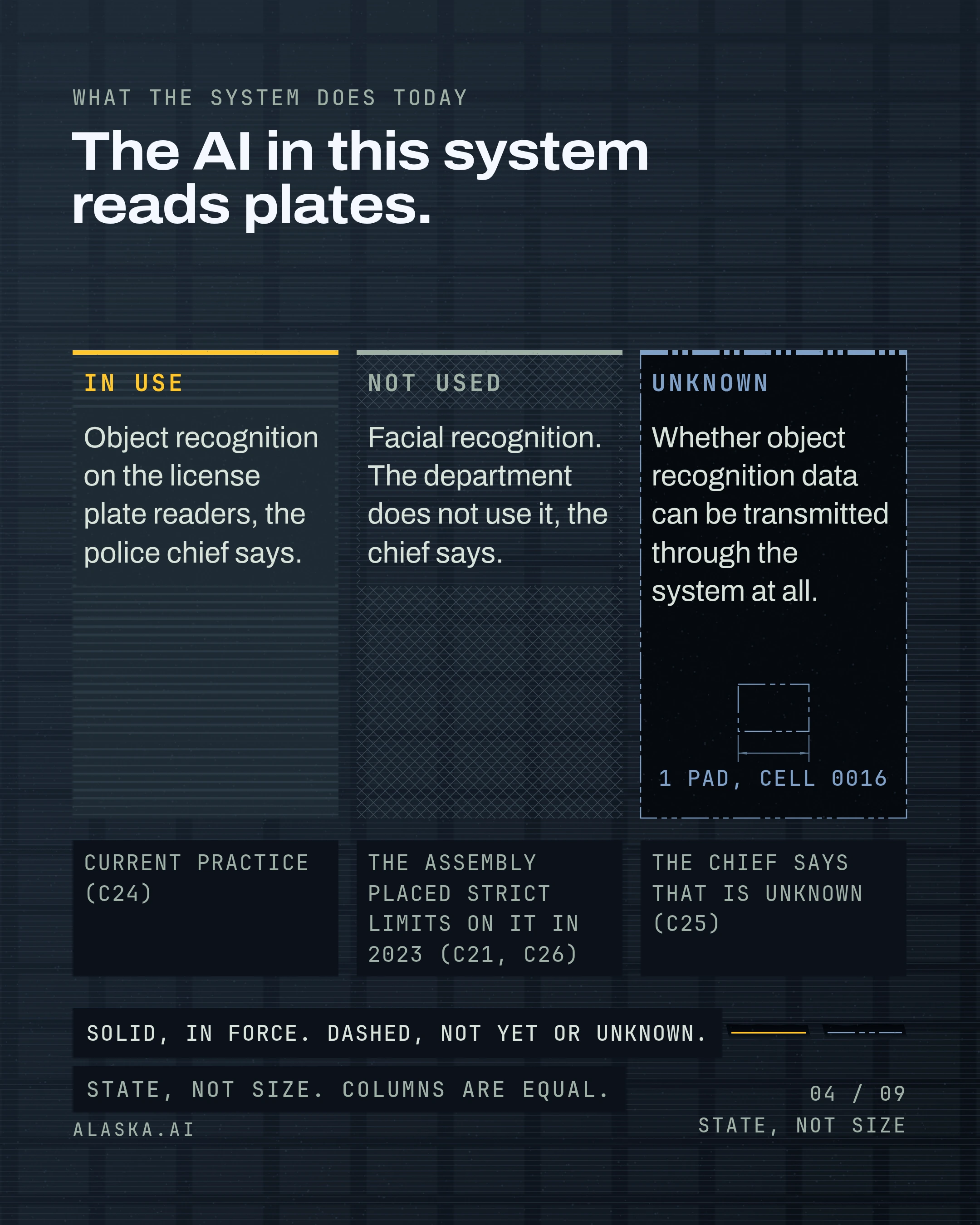
The AI in the center today reads plates. The chief says police don't use facial recognition. The rule would require Assembly approval before AI powered tracking or identification is added.
Inside, the launch state, the four proposed rules and the retention clocks that are practice and not code.
A rule is cheap to write while the machine is small. If the money passes and the rules don't, what should happen to the feeds nobody has switched on?
What we verified
36 CLAIMS, EACH RE-FETCHED FROM ITS SOURCE BEFORE THIS DECK SHIPPED
Assembly member Sydney Scout describes the Real Time Crime Center as a $12 million commitment made by the Assembly last September.
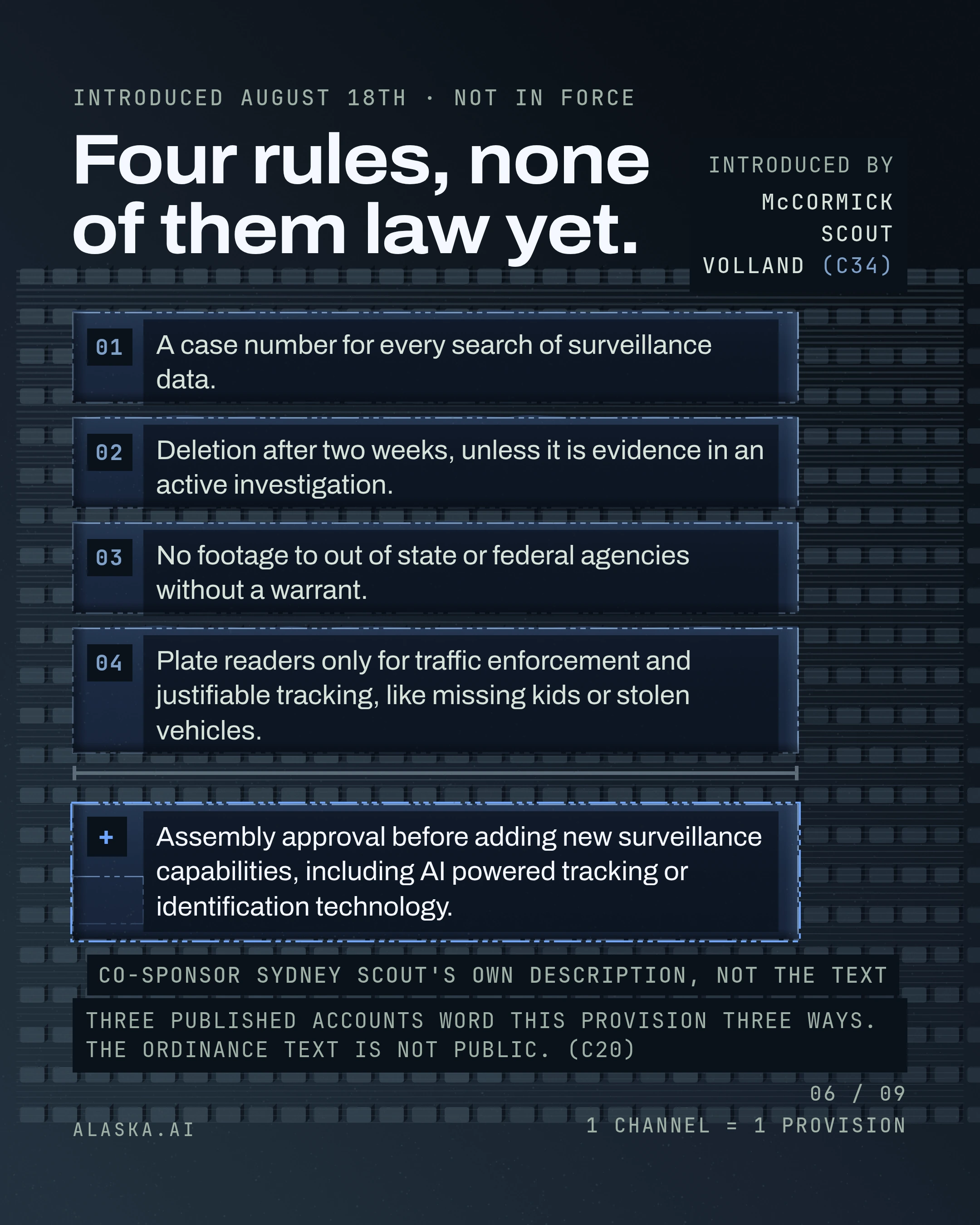
Co-sponsor Sydney Scout writes that under the ordinance Assembly approval is required before adding new surveillance capabilities including AI powered tracking or identification technology.
Co-sponsor Sydney Scout states that Anchorage already has a ban on facial recognition technology.
A public hearing on the Real Time Crime Center items is scheduled for the Anchorage Assembly's September 1st meeting.
The Anchorage Assembly is considering a roughly $600,000 contract with ThunderCat Technology to buy new equipment for the Anchorage Police Department's Real Time Crime Center on Elmore Road.
The money for the ThunderCat contract comes from federal and state fine and forfeiture funds.
The proposed upgrade would add video displays, sound equipment and video processing technology to the crime center.
The Anchorage Assembly approved $11.8 million last year for the Real Time Crime Center system.
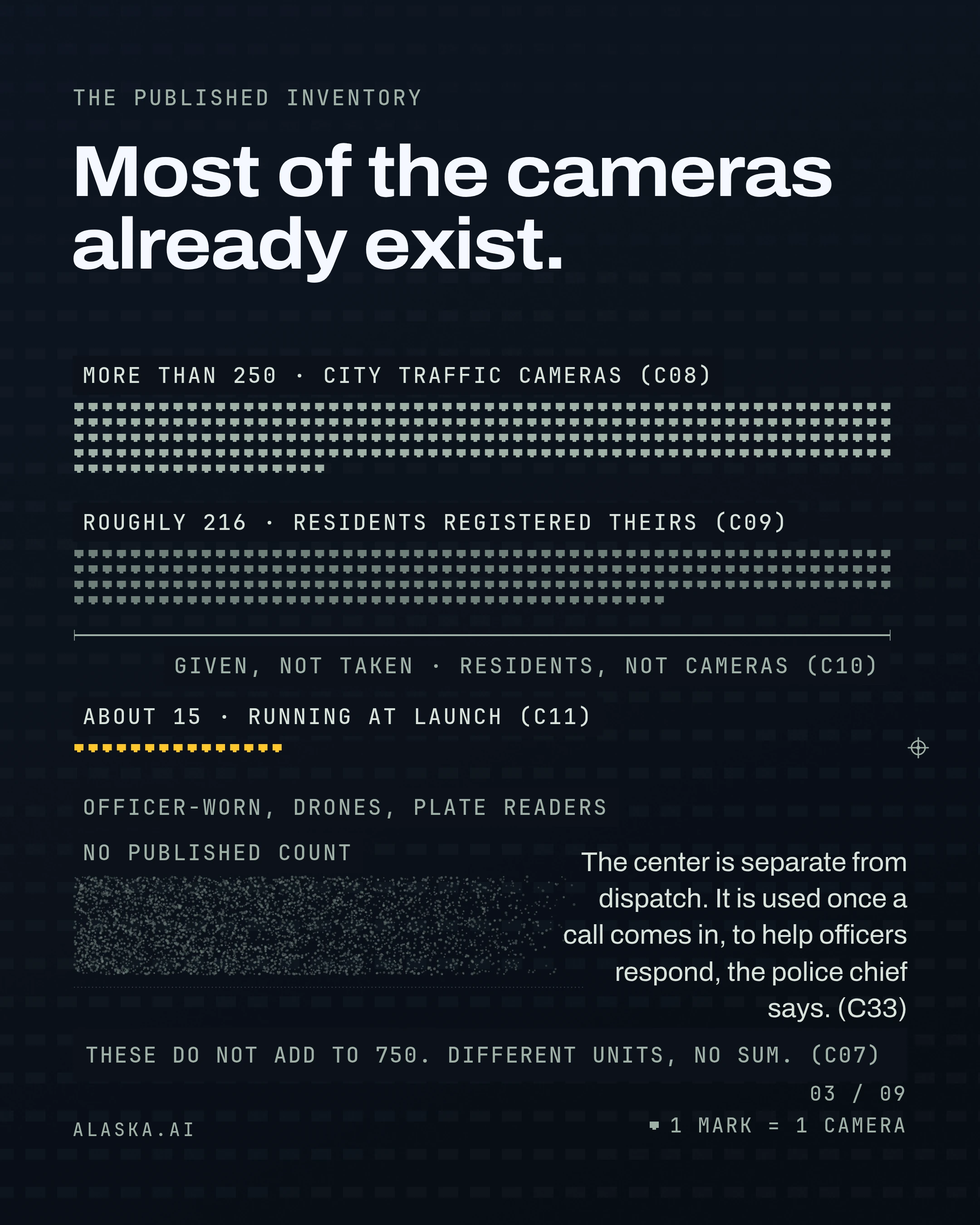
The system is designed to stream up to 750 camera feeds along with automatic license plate readers and drone footage.
The camera network the crime center can draw on includes more than 250 city traffic cameras as well as officer worn cameras.
Roughly 216 residents have registered their home security cameras with the police department so far.
Residents and businesses register their own cameras with the police department voluntarily.
When the Real Time Crime Center launched in September 2025 it ran with one employee and about 15 cameras at police properties and Town Square Park.
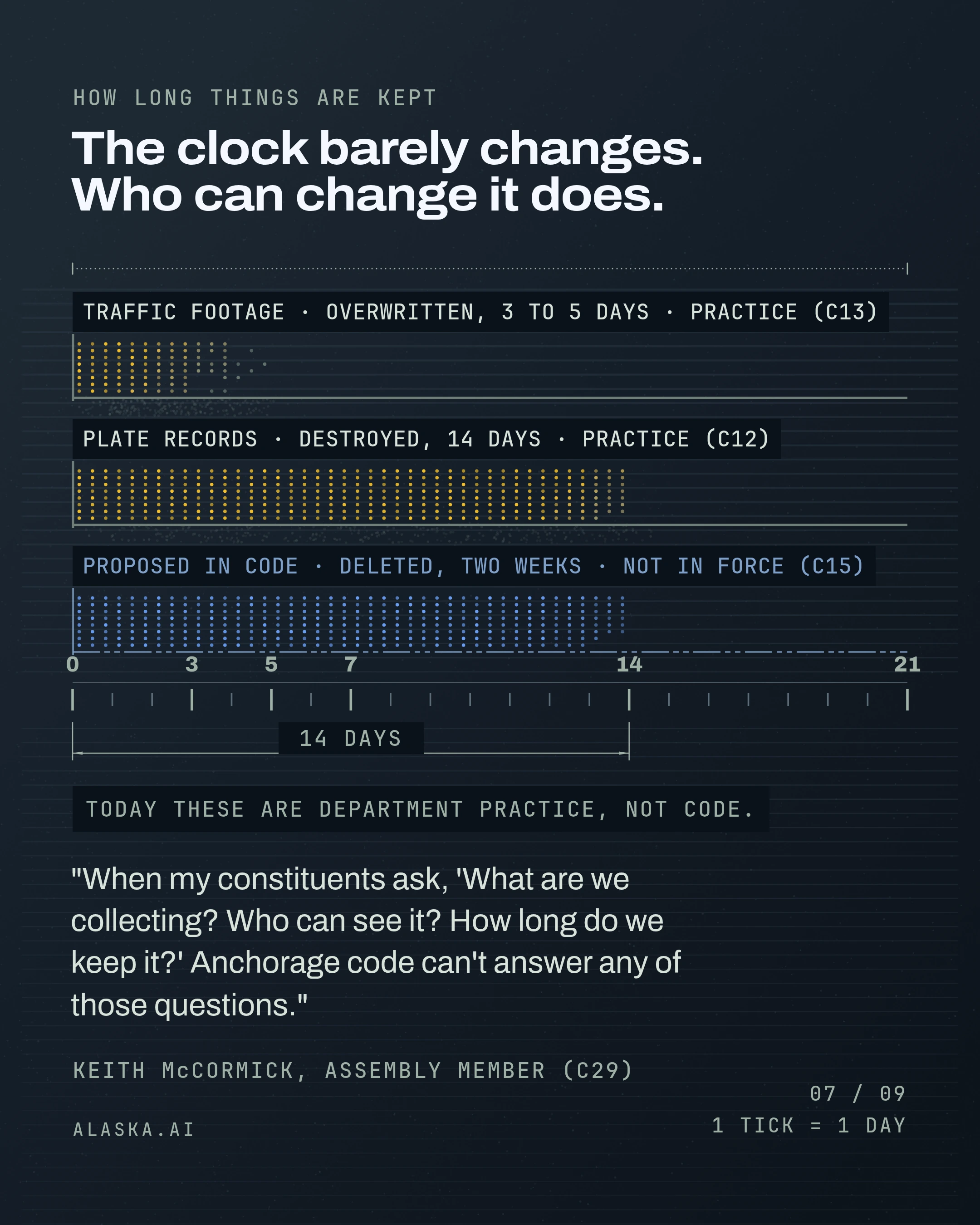
Patrol car license plate records collected through the Real Time Crime Center are destroyed after 14 days unless attached to a criminal case.
Traffic camera footage is overwritten every three to five days and is not stored unless it is evidence attached to a criminal case.
The proposed ordinance would require a case number for each surveillance data search.
The proposed ordinance would require the city to erase individuals' data after two weeks unless police are using it as evidence in an active investigation.
The proposed ordinance would prevent the city from sharing footage with out of state or federal agencies without a warrant.
Alaska Public Media reports the ordinance would require that the crime center's use of AI be approved by the Assembly.
The Anchorage Daily News reports the ordinance would prevent the police department from adding artificial intelligence technology with human feature recognition capabilities without Assembly permission.
The three published accounts describe the ordinance's AI provision in three different ways and the ordinance text itself was not publicly reachable to settle the wording.
In 2023 the Anchorage Assembly placed strict limits on the city's use of facial recognition technology for surveillance.
Alaska's News Source reports the Assembly voted to bar the use of facial recognition in 2023.
Police Chief Sean Case said the Anchorage Police Department does use object recognition for its license plate readers.
Chief Sean Case said the police department has some capability to use object recognition with the camera feeds it takes in and that it is unknown whether transmitting that data through the system is possible.
Chief Sean Case said the police department does not use facial recognition technology.
Chief Sean Case said some of those technologies come with the equipment the department has and that before using any of them the department will come to the Assembly body generally through the Public Health and Safety Committee.
Chief Sean Case said the technology package is a very significant move for the municipality and that the department is not going to outrun its coverage on it.
Assembly member Keith McCormick said Anchorage code can't answer his constituents' questions about what is collected, who can see it and how long it is kept.
Assembly member Sydney Scout said Alaskans have a right to privacy that shall not be infringed and that the sponsors are trying to enshrine existing rights into the new system.
Assembly member Sydney Scout said the proposed license plate reader policy would allow use only for traffic enforcement and justifiable tracking reasons like missing kids or stolen vehicles.
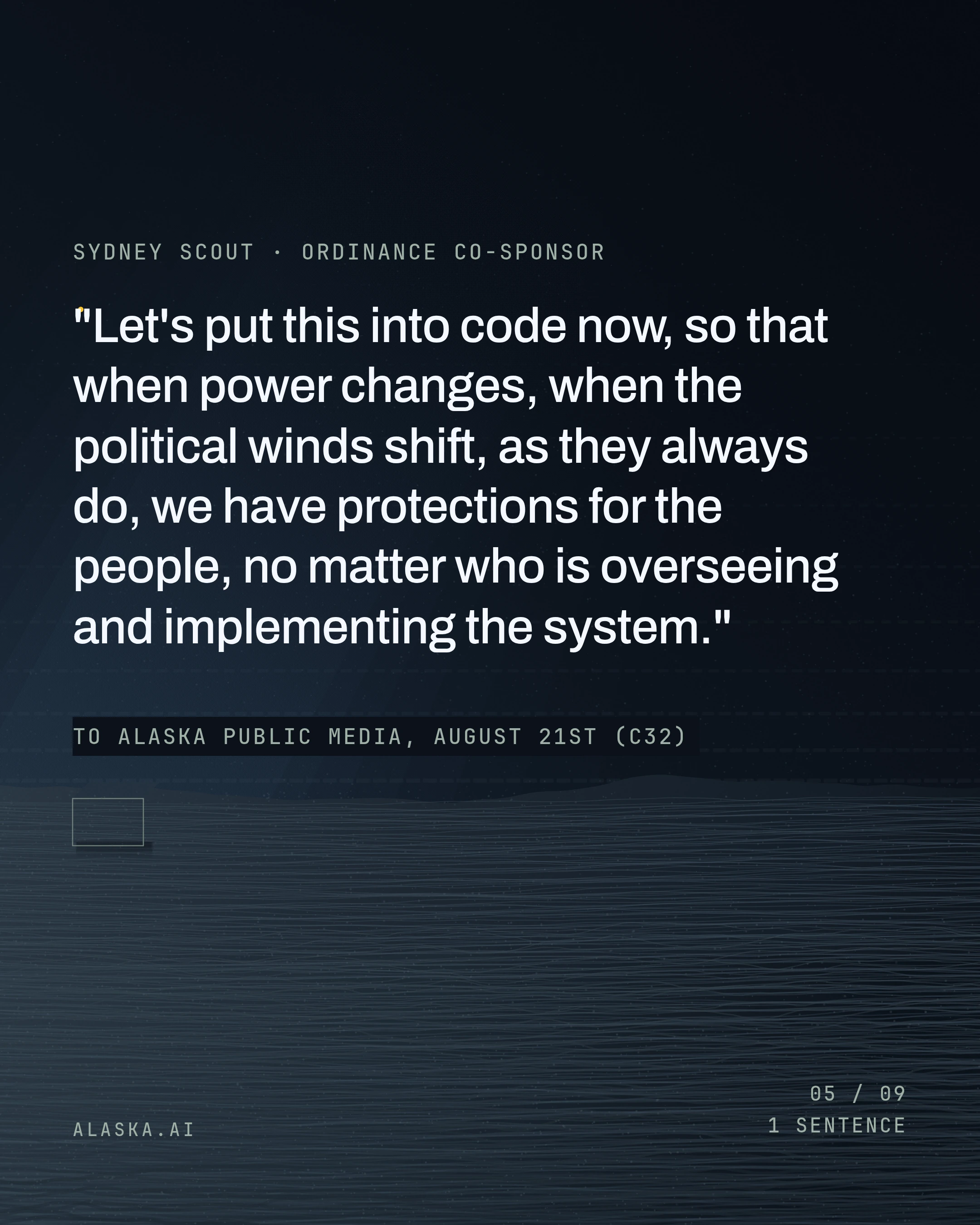
Assembly member Sydney Scout said the sponsors want the protections in code now so that they hold when the political winds shift and no matter who oversees the system.
Chief Sean Case said the Real Time Crime Center is a separate entity from dispatch and that its resources are used after a call comes in to help officers respond.
Keith McCormick, Sydney Scout and Vice Chair Daniel Volland introduced the surveillance ordinance at the Assembly's meeting on Tuesday, August 18th.
Keith McCormick raised his concerns at an August 4th Assembly meeting and asked that approval of the contract be postponed, a request Sydney Scout agreed with.
The Assembly held a work session on the Real Time Crime Center on Friday, August 21st.
Beats
This article is on Alaska AI policy and legislation. Each beat page keeps every decision and every article on that subject in one place.