Not how big. What it plugs into. Petersburg's draft rules
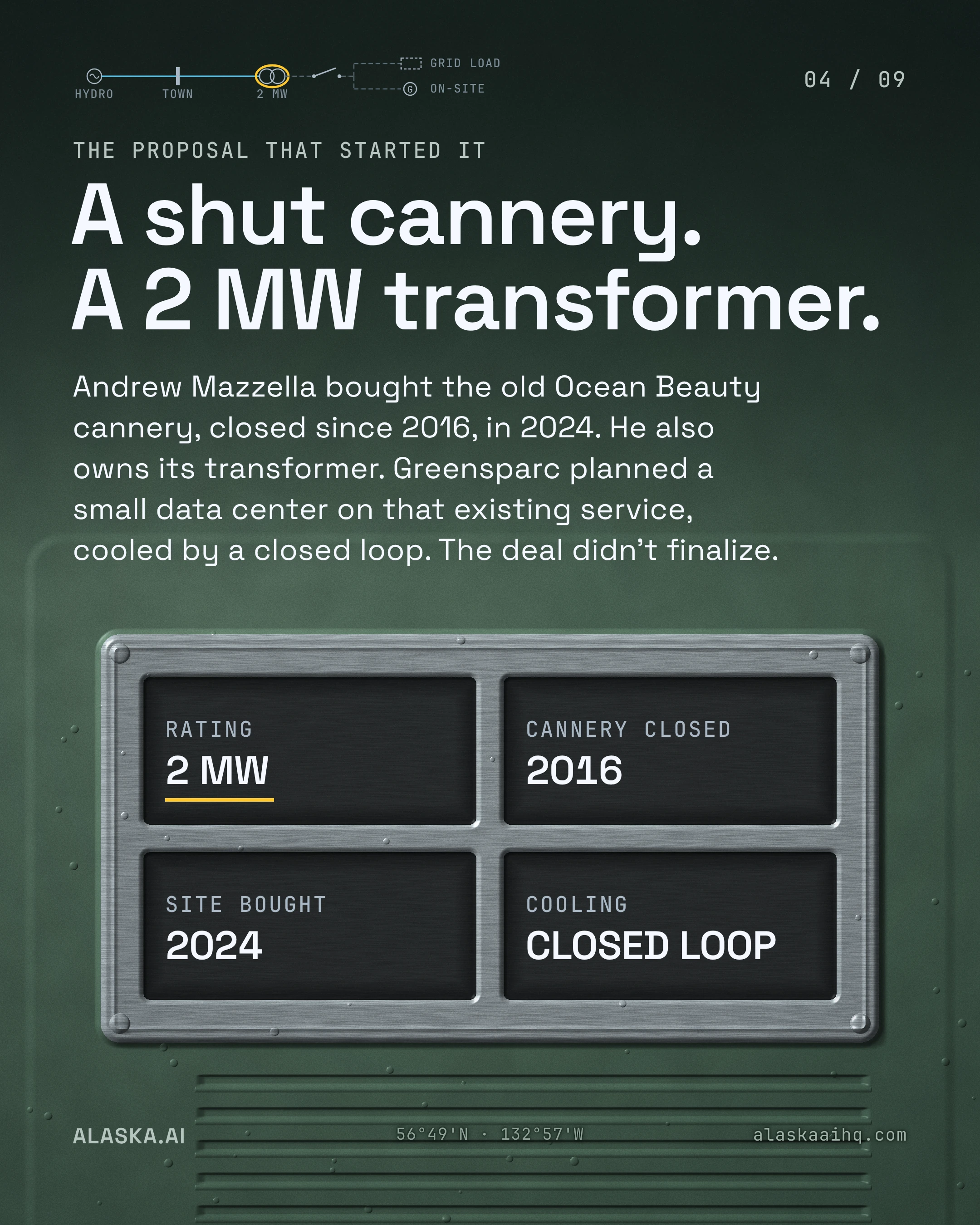
On Petersburg's downtown waterfront, the Ocean Beauty cannery has been shut since 2016. Its buyer also owns its 2-megawatt transformer.
The deck
SWIPE, SCROLL OR CLICK A SLIDE TO GO FULLSCREEN · 9 SLIDES

The story
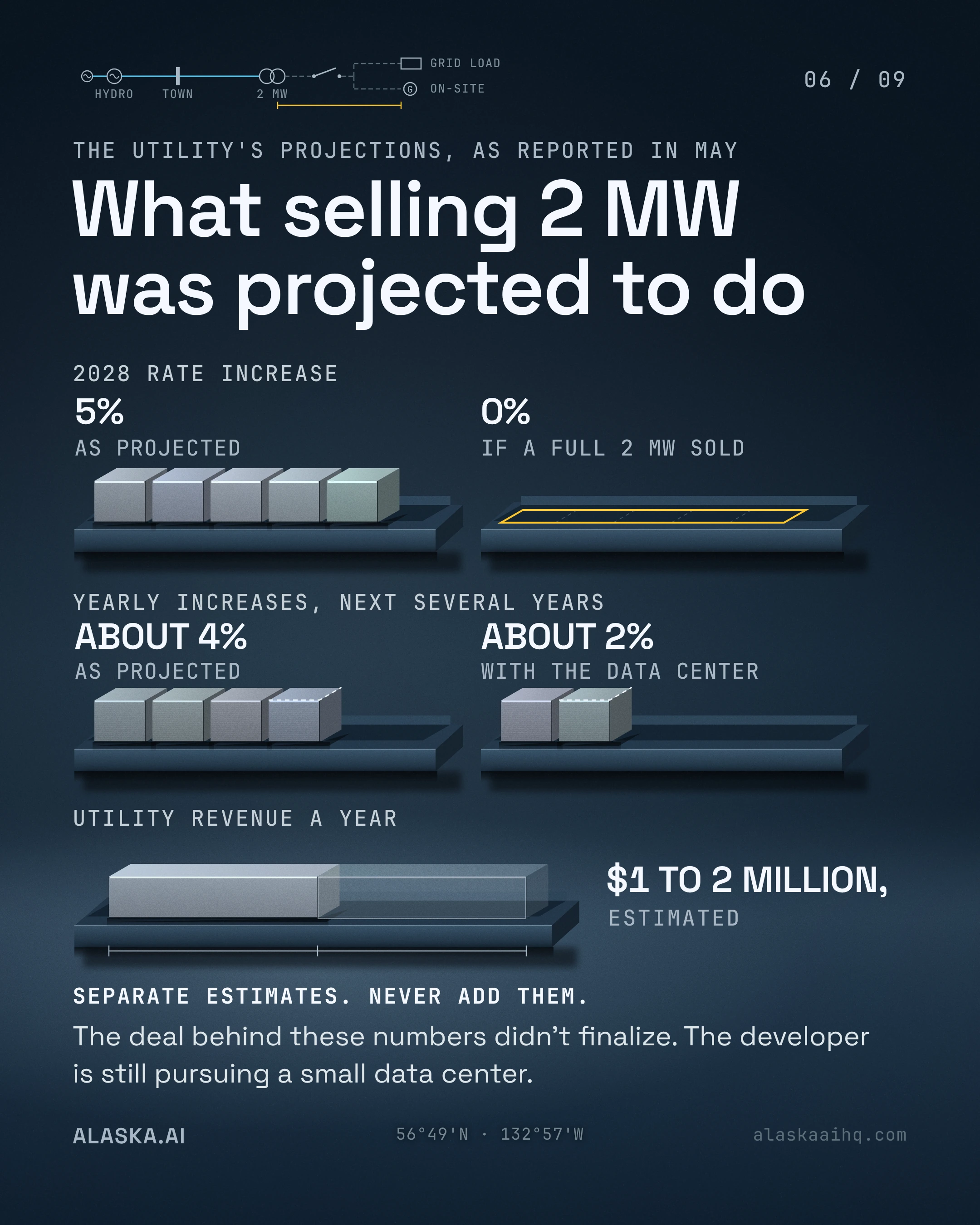
The utility projected selling all 2 MW to a data center would cut 2028's 5 percent rate increase to 0. The Greensparc data center deal didn't finalize. The owner is still pursuing a small one.
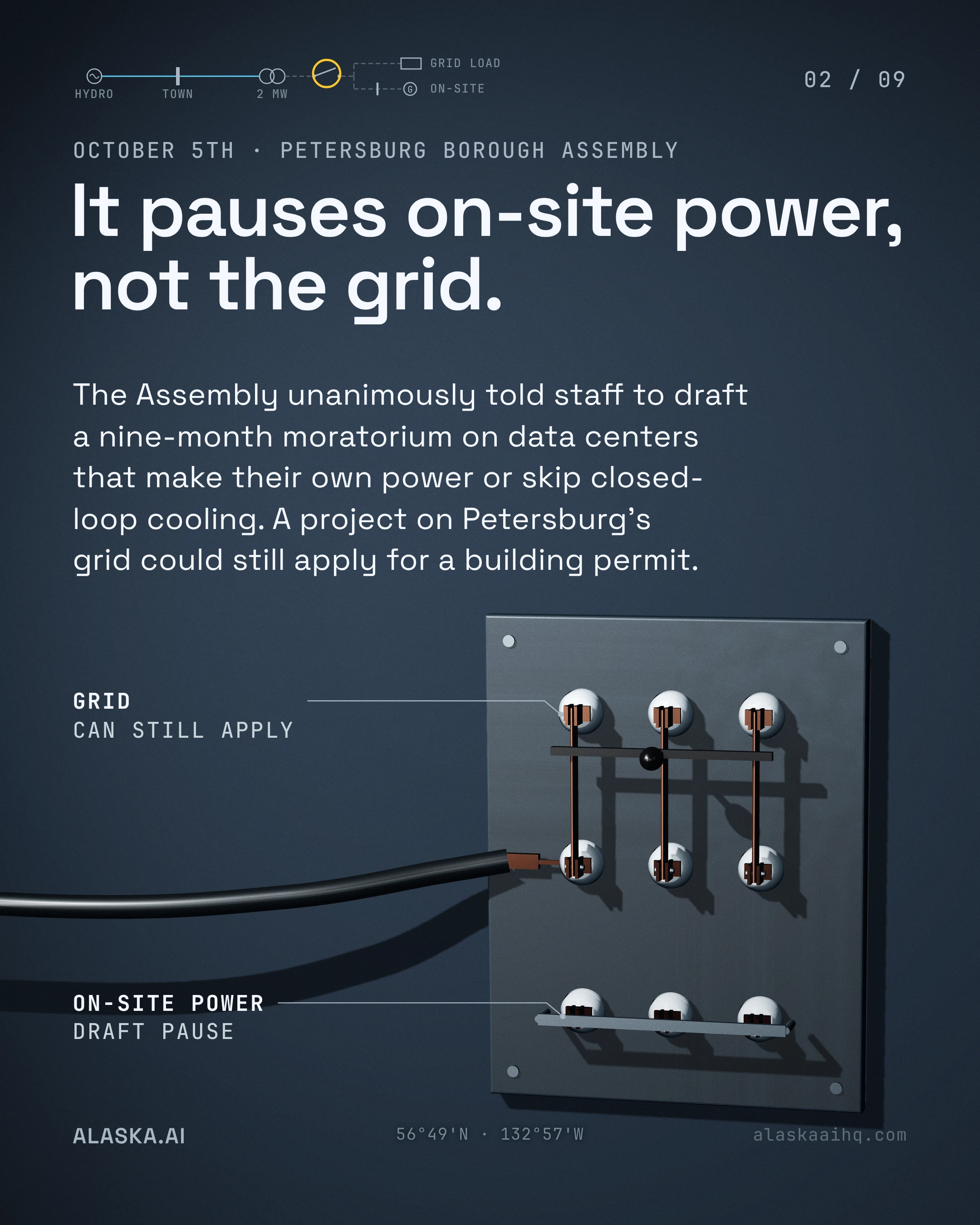
On October 5th the Assembly unanimously told staff to draft a nine-month moratorium on data centers that make their own power or skip closed-loop cooling. Its sponsor called the off-grid diesel case "probably far-fetched." Grid-tied projects could still apply.
Swipe for the draft drawn as a switch, the cannery nameplate, the May rate math and both votes.
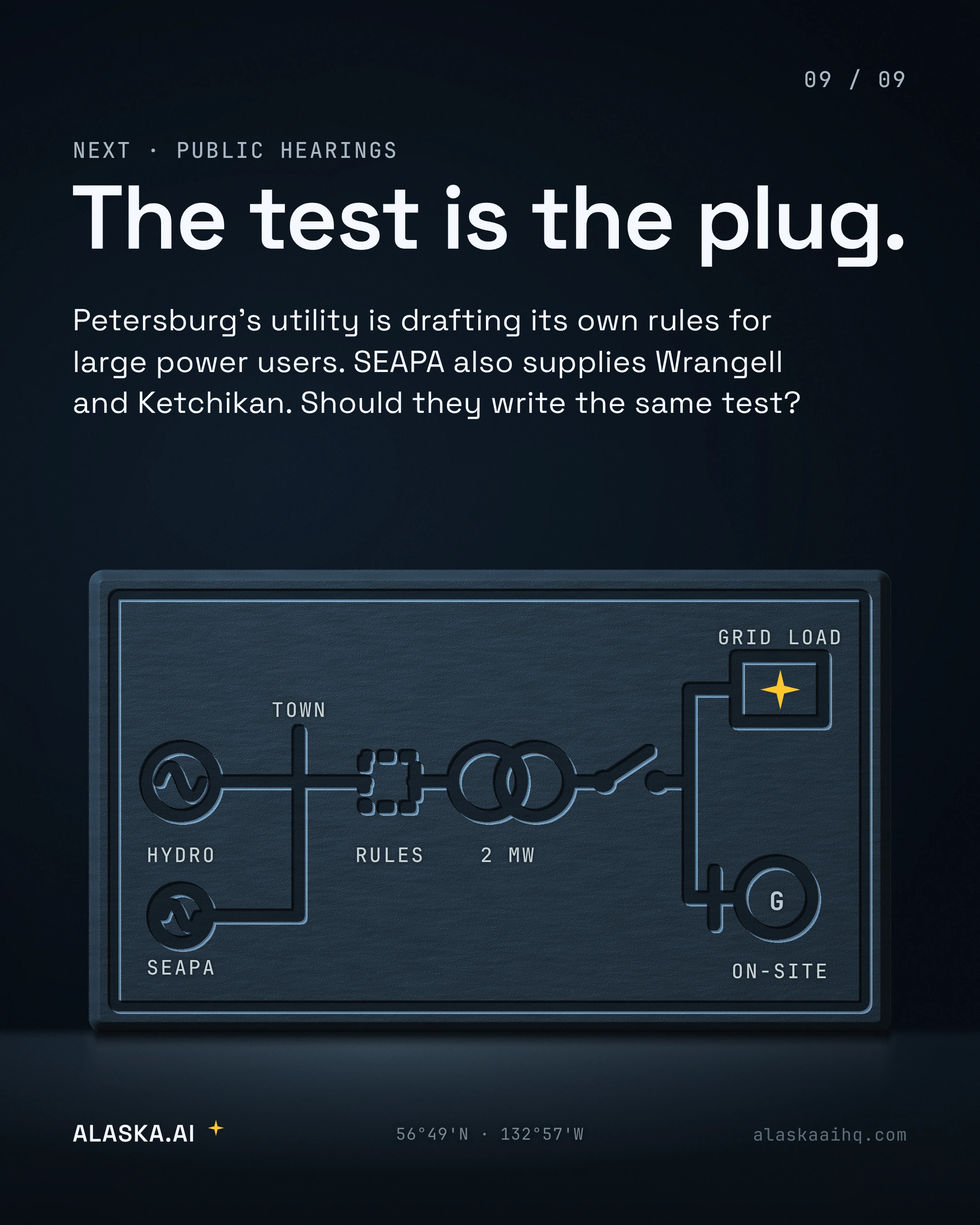
Petersburg's supplier also powers Wrangell and Ketchikan. Should each town decide what a data center may plug into, or should the three decide together?
What we verified
56 CLAIMS, EACH RE-FETCHED FROM ITS SOURCE BEFORE THIS DECK SHIPPED
Petersburg resident Becky Knight urged the Assembly in a May 4th statement to enact a moratorium on cell towers and data centers until their impacts were analyzed.
AEA estimates the Cook Inlet PowerLink transmission project will cost 413 million dollars.
AEA has secured 269 million dollars for Cook Inlet PowerLink.
About 142 million dollars of Cook Inlet PowerLink's cost is still to be identified.
Cook Inlet PowerLink would include a submarine cable of about 40 miles between the Beluga area and the Kenai Peninsula.
Cook Inlet PowerLink's initial 100 megawatt system would accommodate future expansion to 200 megawatts.
Cook Inlet PowerLink targets a 2031 in-service date, with federally funded completion required by August 2032.
Responses to AEA's submarine cable prequalification and request for information are due December 15th, after a virtual conference on November 4th.
AEA will receive about 32.8 million dollars through the Department of Energy's Grid Resilience State and Tribal Formula Grant Program.
Alaska's grid resilience allocation is the third largest among states, behind California and Texas.
The grid resilience allocation was 12.8 million dollars more than AEA anticipated.
Securing all of the grid resilience funds requires a 1.8 million dollar state match.
The Department of Energy announced the Beluga to Healy transmission project would combine up to 150 million dollars in Defense Production Act funding with 268 million dollars in non-federal funding.
EPA proposed on October 29th to approve Alaska's application for primary enforcement authority over Class VI carbon sequestration injection wells.
Approval would let the Alaska Oil and Gas Conservation Commission issue and enforce Class VI permits.
Comments on EPA's Alaska Class VI proposal must be received by December 14th.
Alaska applied to EPA for Class VI primacy on May 22nd.
The Petersburg Borough Assembly took up two data center items at its regular meeting on October 5th.
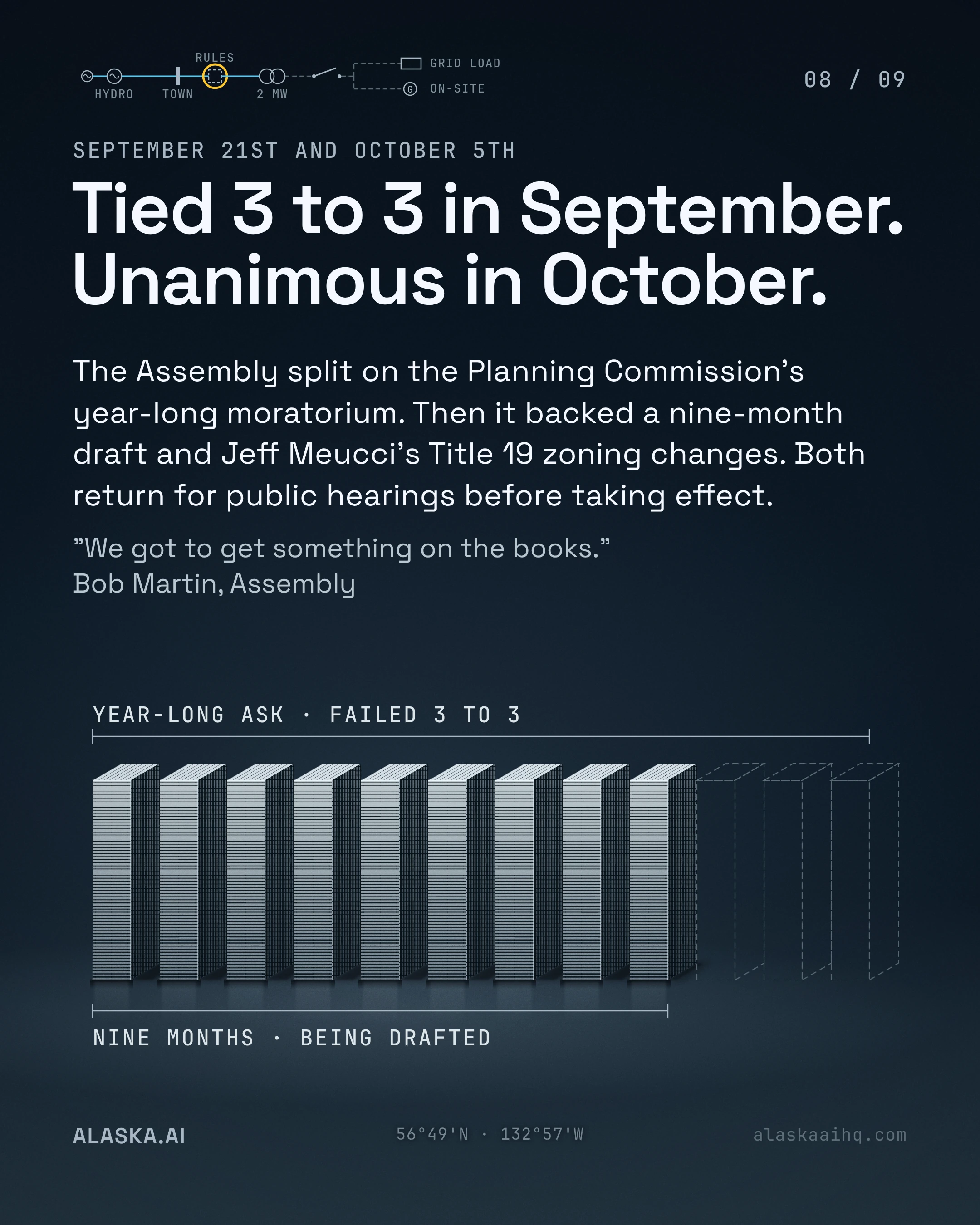
The Assembly directed the Borough Manager and staff to draft an ordinance for a nine-month moratorium on certain data center projects.
Vice Mayor Jeigh Stanton Gregor proposed the moratorium.
The proposed moratorium would restrict data centers that use on-site power generation.
The proposed moratorium would also cover data center facilities that don't use a closed-loop cooling system.
Under the moratorium proposal, developers could still apply for a building permit if their project would be on Petersburg's grid.
The Assembly approved Stanton Gregor's moratorium direction unanimously.
Assembly Member Jeff Meucci brought the second data center proposal.
The Assembly directed the manager to draft changes to the borough's zoning code, Title 19, to regulate data centers.
The Assembly approved Meucci's zoning proposal unanimously.
Both measures must return to the Assembly for consideration and public hearings before either can take effect.
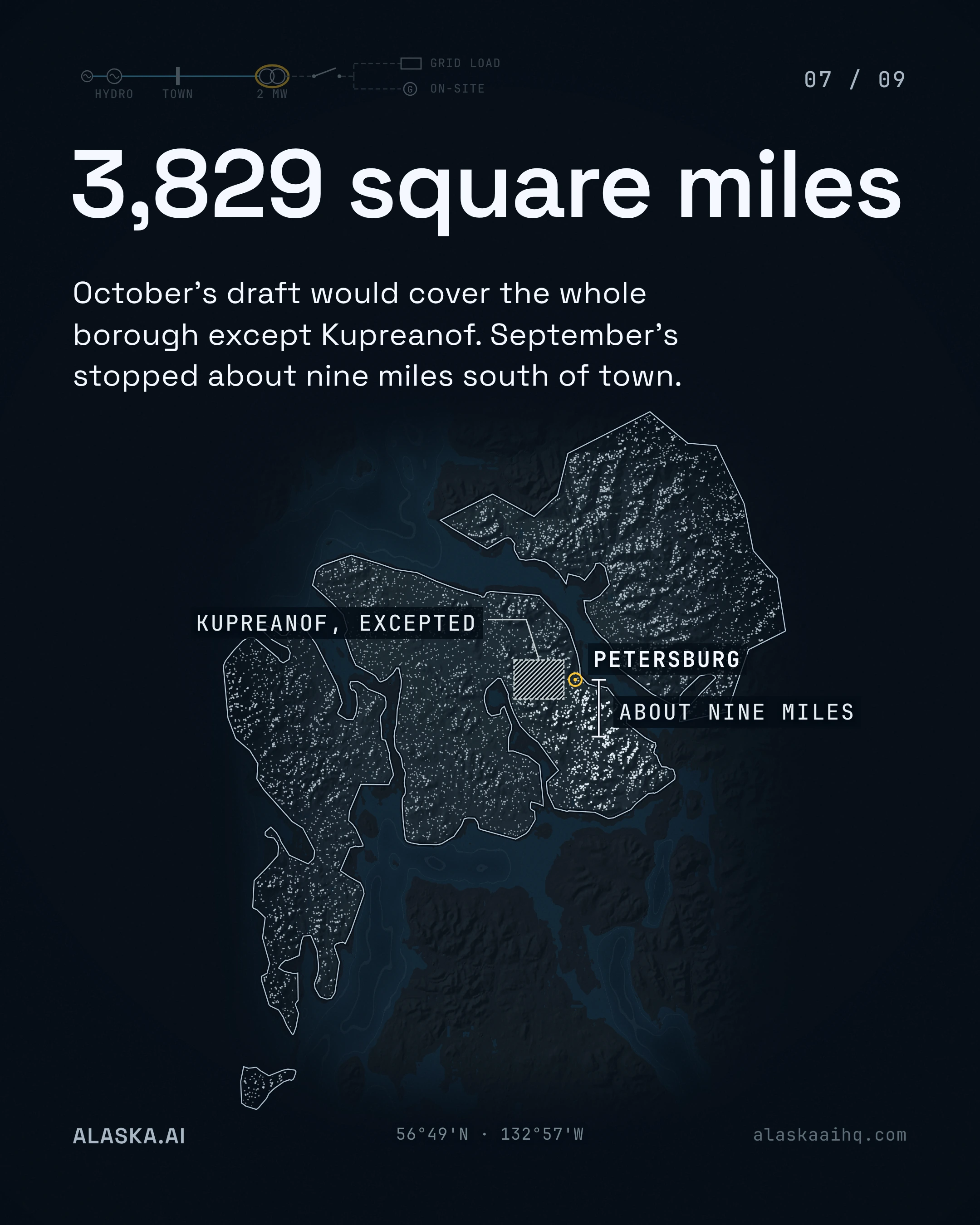
The moratorium as proposed would apply across the entire borough except the City of Kupreanof.
Petersburg Borough incorporated 3,829 square miles when it became a borough in 2013.
The September moratorium proposal had been limited to the borough's municipal service area, which ends roughly nine miles south of town.
In September the Petersburg Planning Commission asked the Assembly for a year-long moratorium on data center applications or permits.
The Assembly considered the Planning Commission's moratorium request on September 21st.
The Assembly's vote on the year-long moratorium request ended in a 3 to 3 tie, so it failed.
Stanton Gregor called the possibility of a data center running on diesel-generated power and bypassing the grid probably far-fetched but worth noting.
Assembly Member Bob Martin said of the data center ordinance that 'we got to get something on the books.'
Petersburg's municipal utility department is drafting an ordinance to regulate large power users such as data centers.
Greensparc is a Silicon Valley-based company that builds small-scale data center facilities in communities with unused, stranded power and renewable energy.
Developer Andrew Mazzella owns the defunct Ocean Beauty Seafoods property on Petersburg's downtown waterfront.
Mazzella bought the former Ocean Beauty properties in 2024.
Mazzella also owns the 2-megawatt transformer that powered the cannery.
The Ocean Beauty cannery ceased operations in 2016.
Mazzella is penalized thousands of dollars a month by the borough utility department for not using the transformer's power.
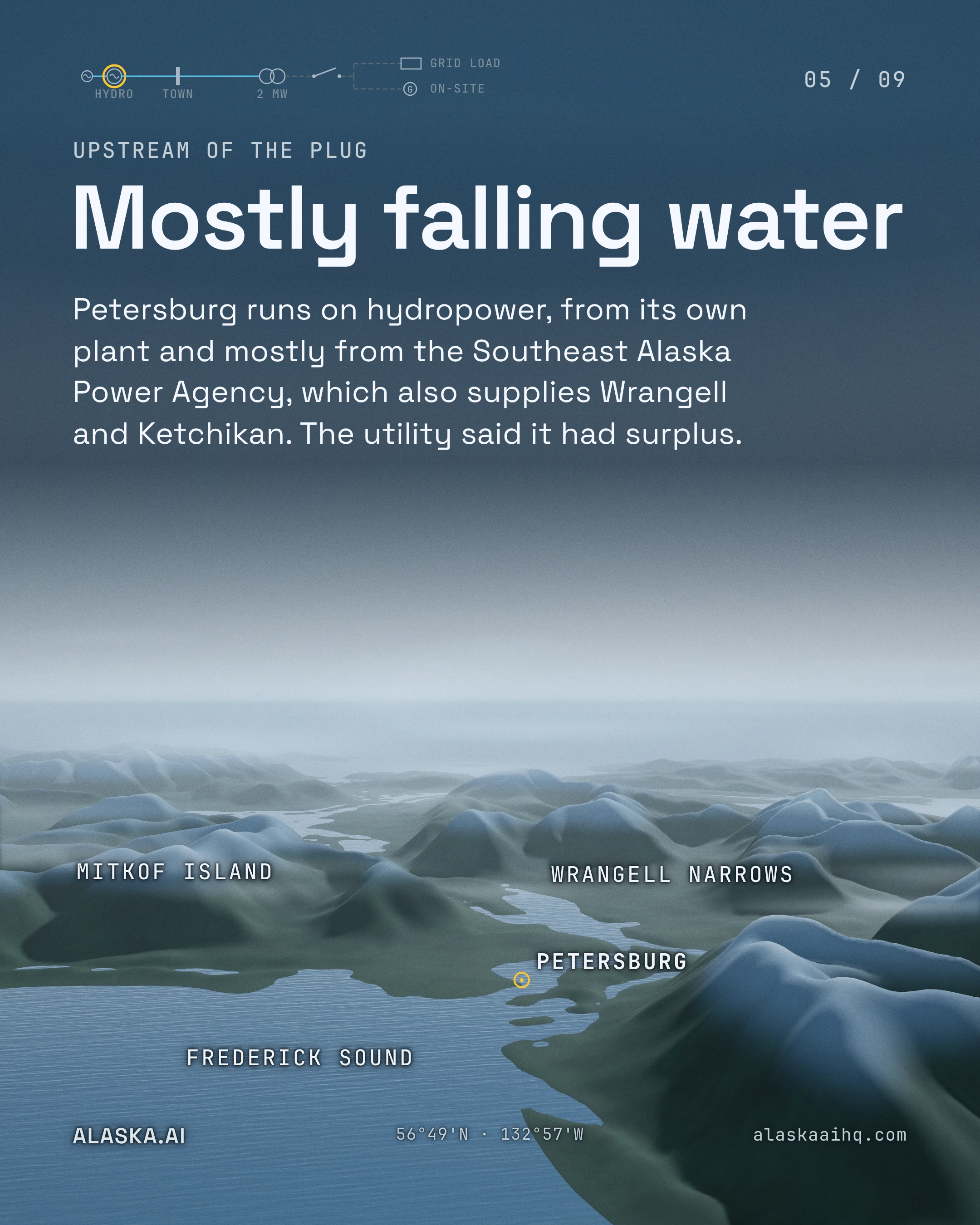
Petersburg runs on hydropower.
Petersburg has its own hydro plant south of town but buys most of its power from the Southeast Alaska Power Agency.
The Southeast Alaska Power Agency supplies power to Petersburg, Wrangell and Ketchikan.
Petersburg's utility projected a 5 percent rate increase for 2028.
The utility's chart showed the 2028 projected increase falling to 0 percent if a full 2 megawatts were sold to a data center.
Petersburg's utility department estimated the data center would generate 1 to 2 million dollars in revenue a year.
Petersburg utility rates were projected to rise about 4 percent a year for several years, and the data center would lower that to about 2 percent.
The Greensparc proposal would use the former cannery's existing power service, and the utility said it had enough surplus power to support it.
Greensparc describes its cooling as a closed-loop system that works like a car radiator.
Greensparc CEO Sam Enoka said 'We're not drawing any water, and we're not putting any emissions out.'
The developer's business deal with Greensparc did not finalize, KFSK reported in late September.
Mazzella Alaska confirmed it is still pursuing a small-scale data center aligned with its initially announced plan.
A data center was proposed in Wrangell as part of a larger port development.
Beats
This article is on Alaska data centers · Alaska power and the grid · Alaska land and permitting for AI. Each beat page keeps every decision and every article on that subject in one place.