Cook Inlet gas storage, the RCA's no, and AI's gigawatt
On July 10, state regulators rejected Alaska's plan to store a single winter of Cook Inlet gas.
The deck
SWIPE, SCROLL OR CLICK A SLIDE TO GO FULLSCREEN · 9 SLIDES


The story
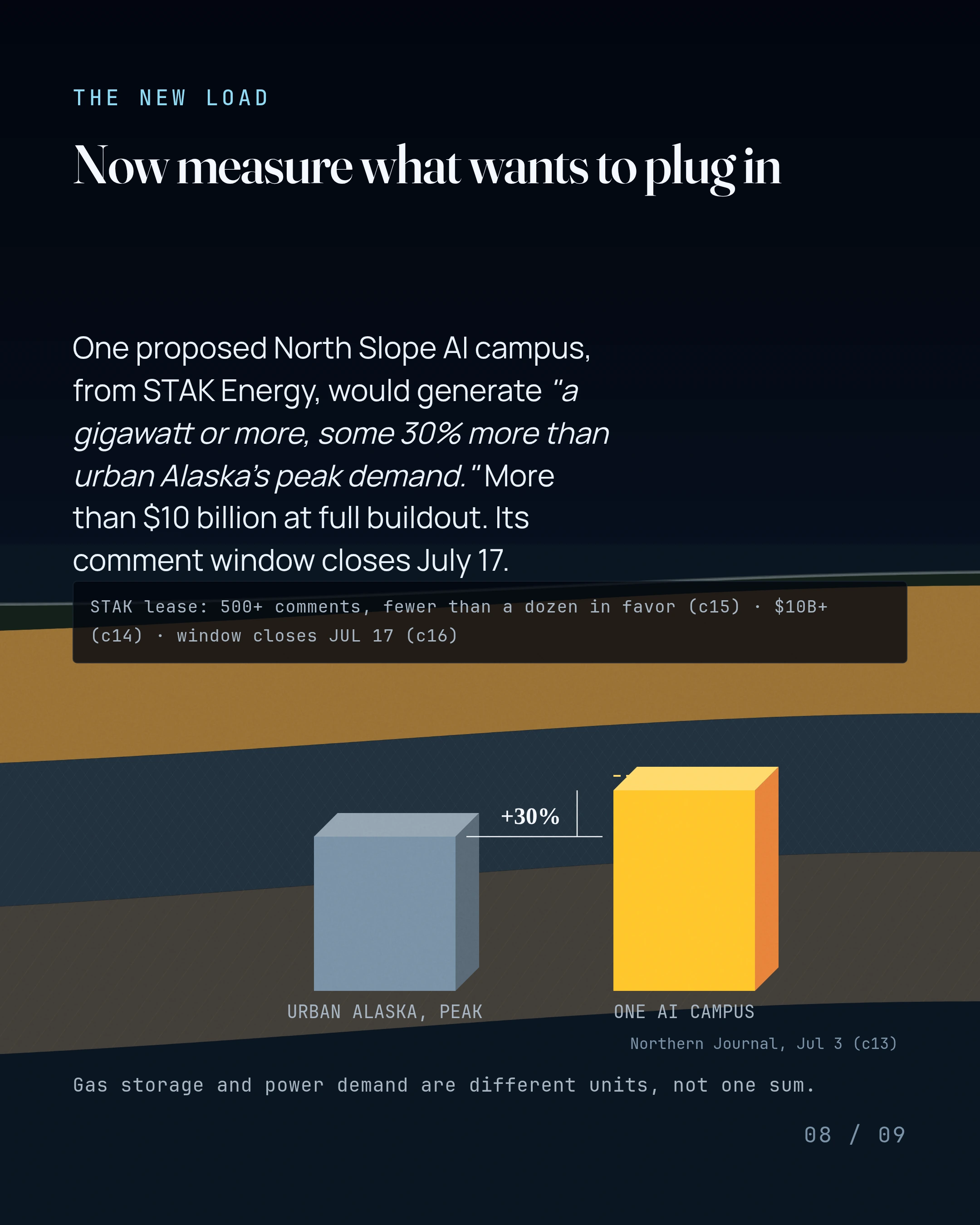
The same month, a North Slope AI project asked to draw a gigawatt or more, some 30% above urban Alaska's peak demand. One system can't bank half a year of heat. The other wants power at a scale the grid has never served.
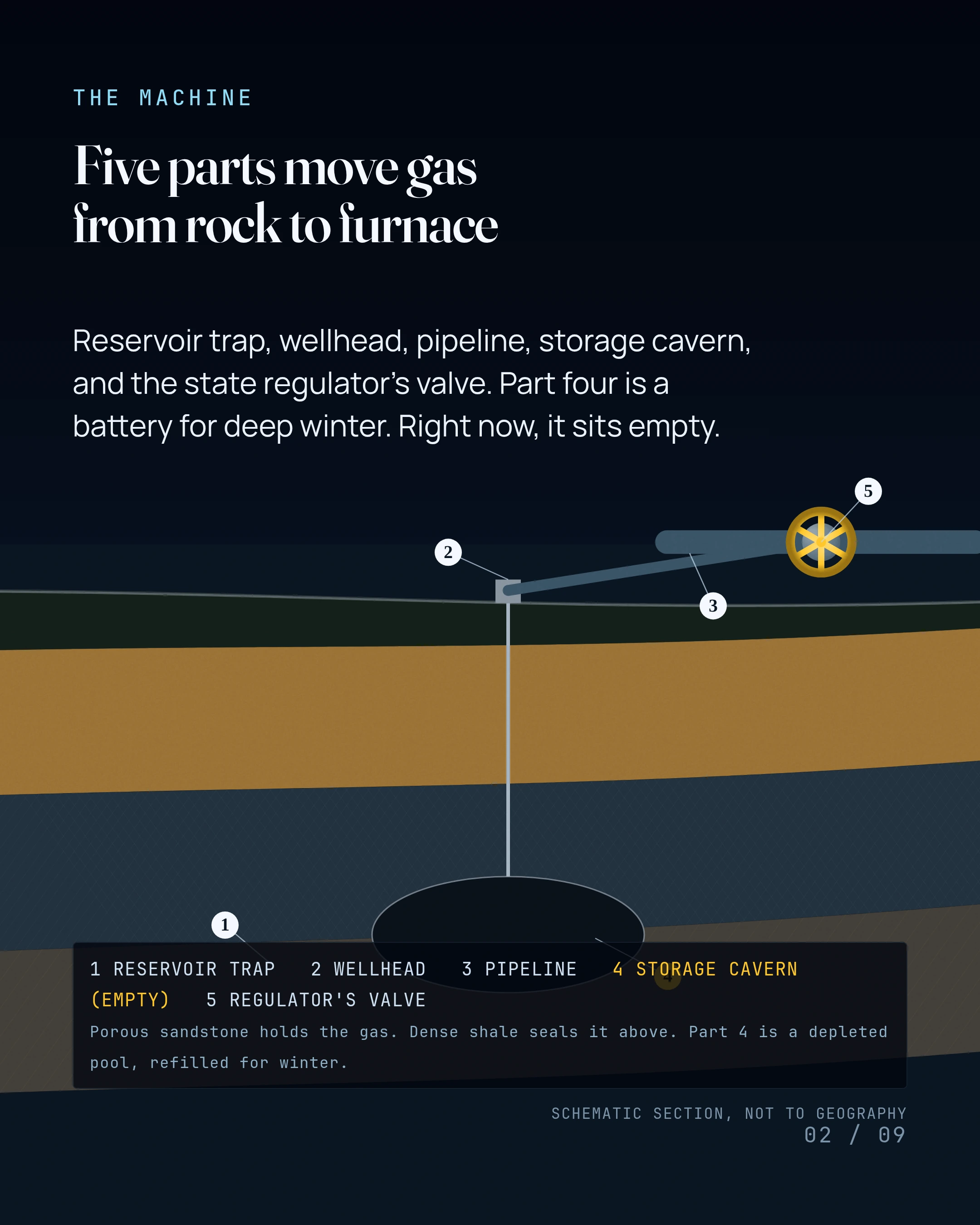
The deck walks through the gas system part by part, the $240M storage fix the RCA just denied, and how that new load compares, without treating gas storage and power demand as one number.
Should the state clear gigawatt-scale AI load while it still can't secure one winter of heat for the homes it already serves?
What we verified
16 CLAIMS, EACH RE-FETCHED FROM ITS SOURCE BEFORE THIS DECK SHIPPED
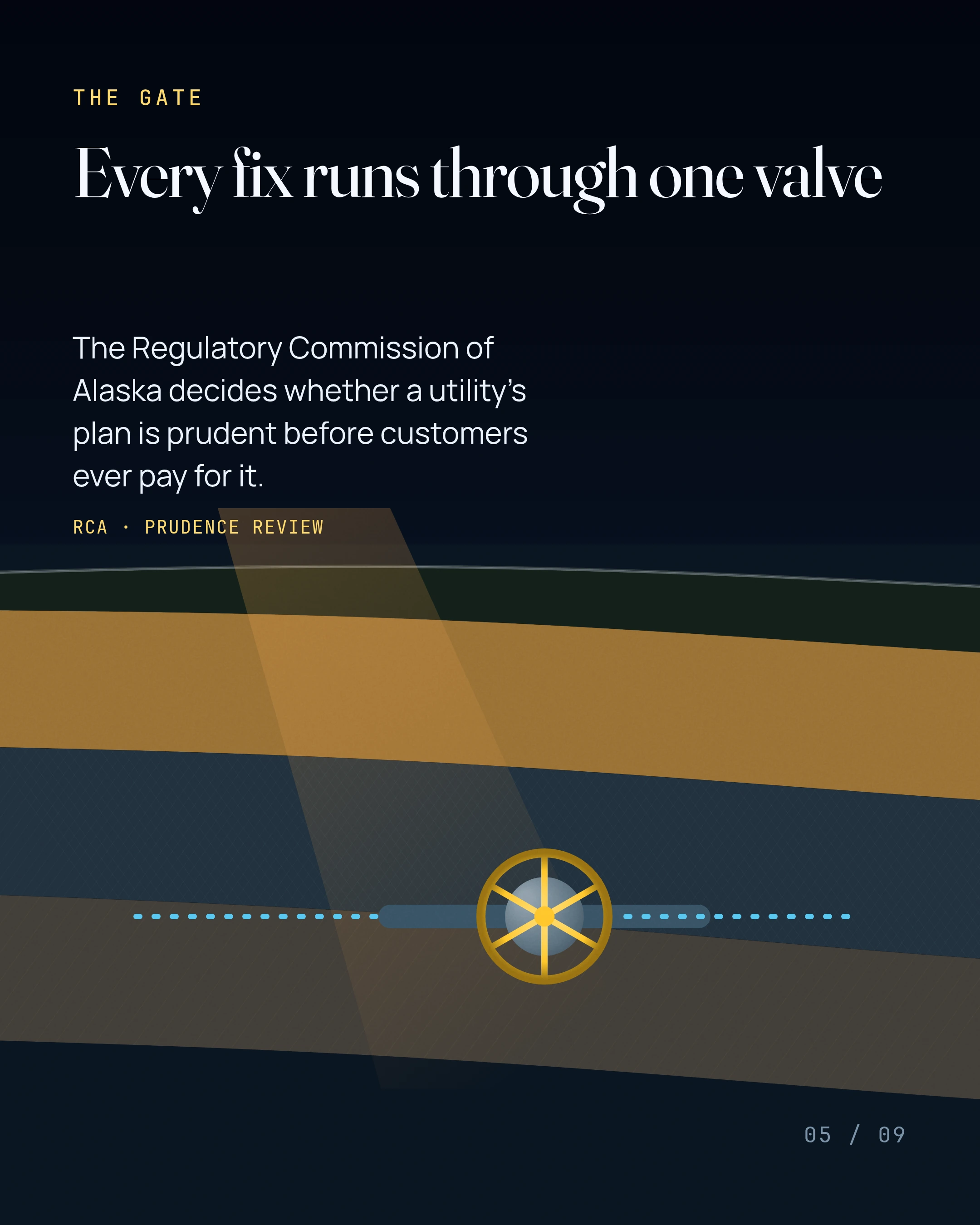
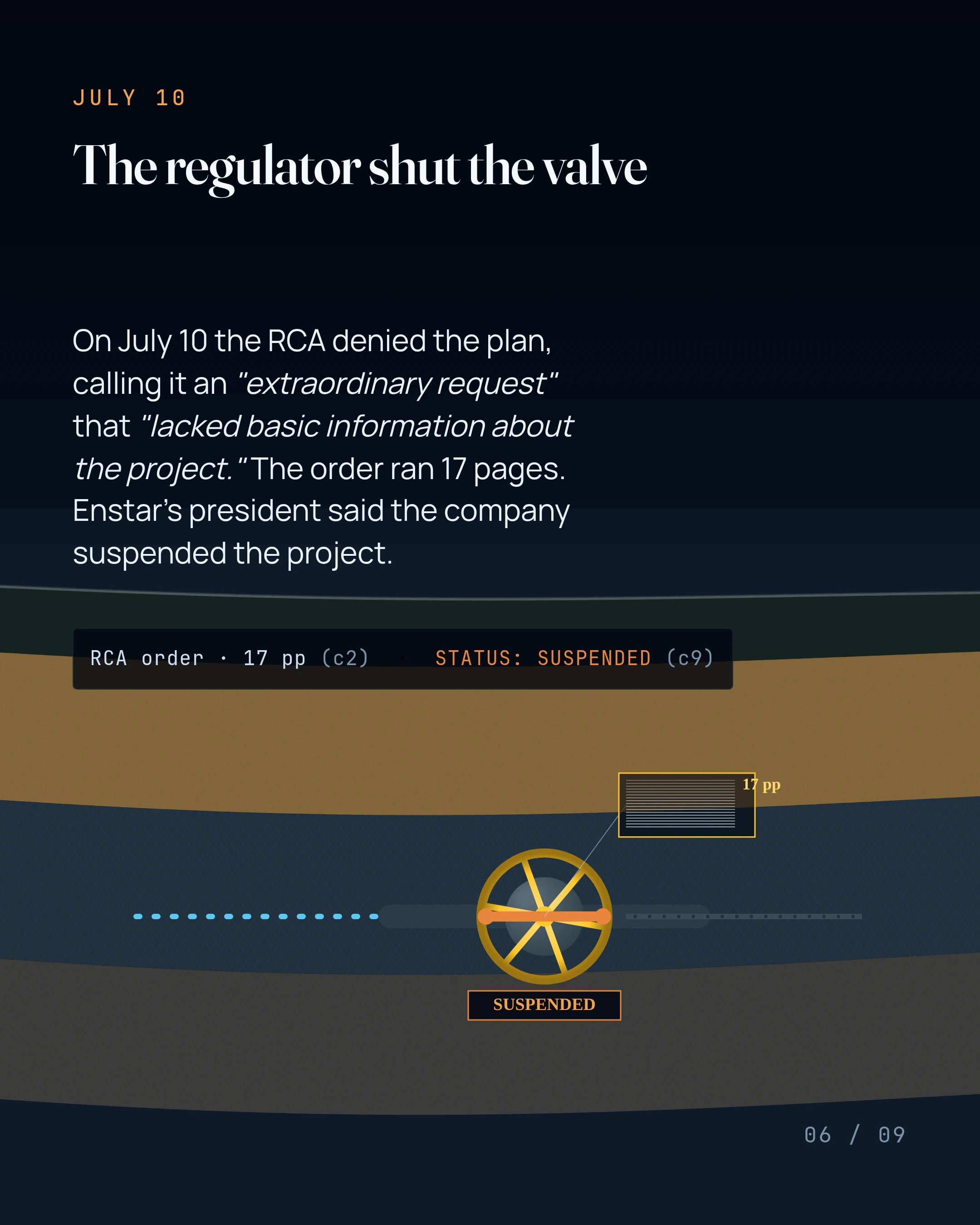
The Regulatory Commission of Alaska rejected Enstar's request for an advance determination that its gas-storage project plans were prudent, citing missing information (an 'extraordinary request' that 'lacked basic information about the project').
Statewide, Alaska residential electricity rates run roughly 40% higher than the national average (former state senator's op-ed).
In many rural Alaska communities, energy costs are more than twice those in more urban parts of Alaska (op-ed).
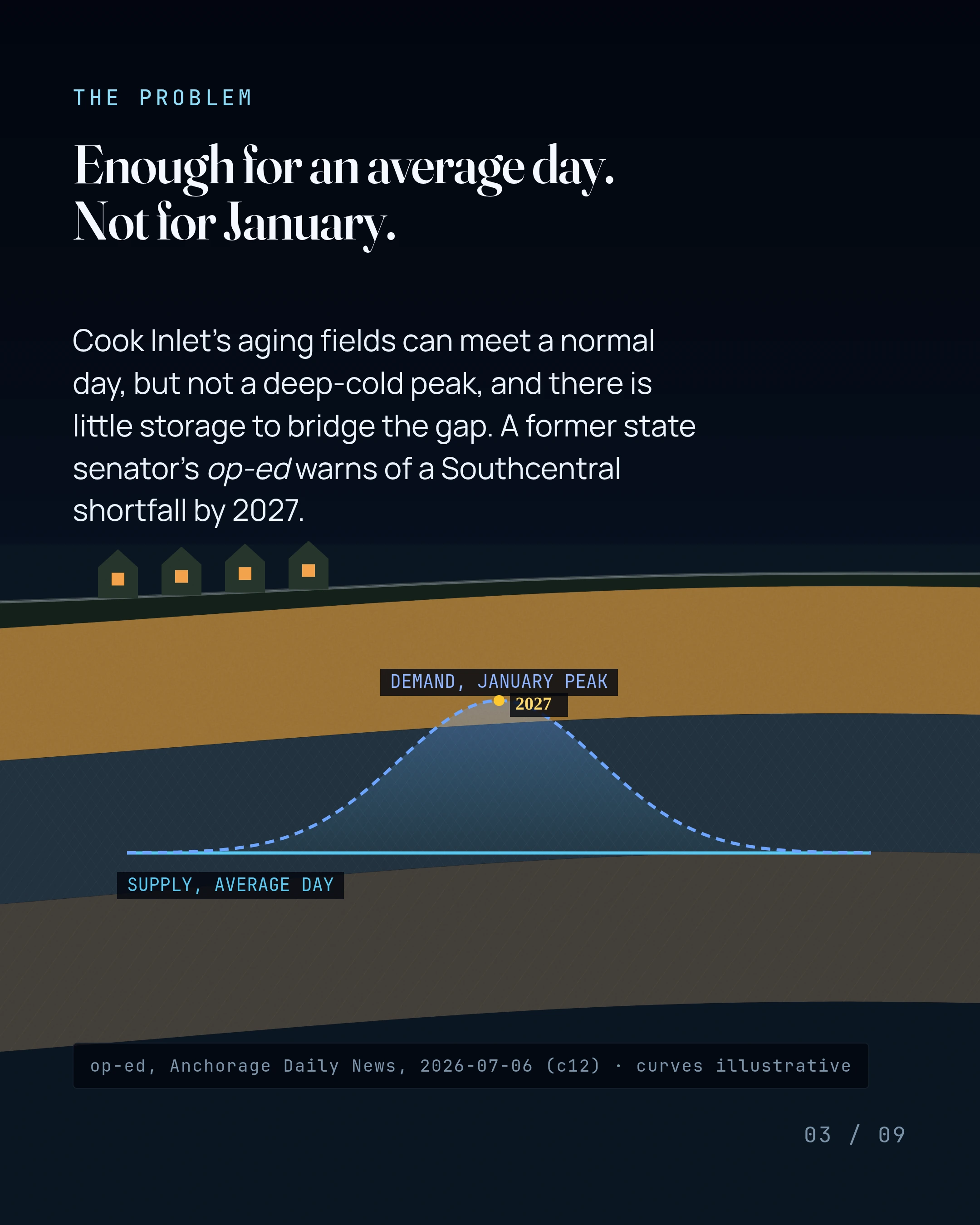
Southcentral Alaska faces a projected Cook Inlet natural gas shortfall by 2027 (op-ed).
STAK Energy's proposed North Slope AI data-center campus generators could produce a gigawatt or more of power, some 30% more than urban Alaska's peak demand.
STAK Energy's North Slope project would cost more than $10 billion at full buildout (an earlier $500 million reference appears in the same article).
More than 500 public comments were received on the STAK North Slope lease before the preliminary deadline; fewer than a dozen endorsed the project.
The STAK ADL 422741 public comment window was extended to 4:30 p.m. July 17, 2026, citing comment volume and public interest.
The RCA order denying the plan was 17 pages long.
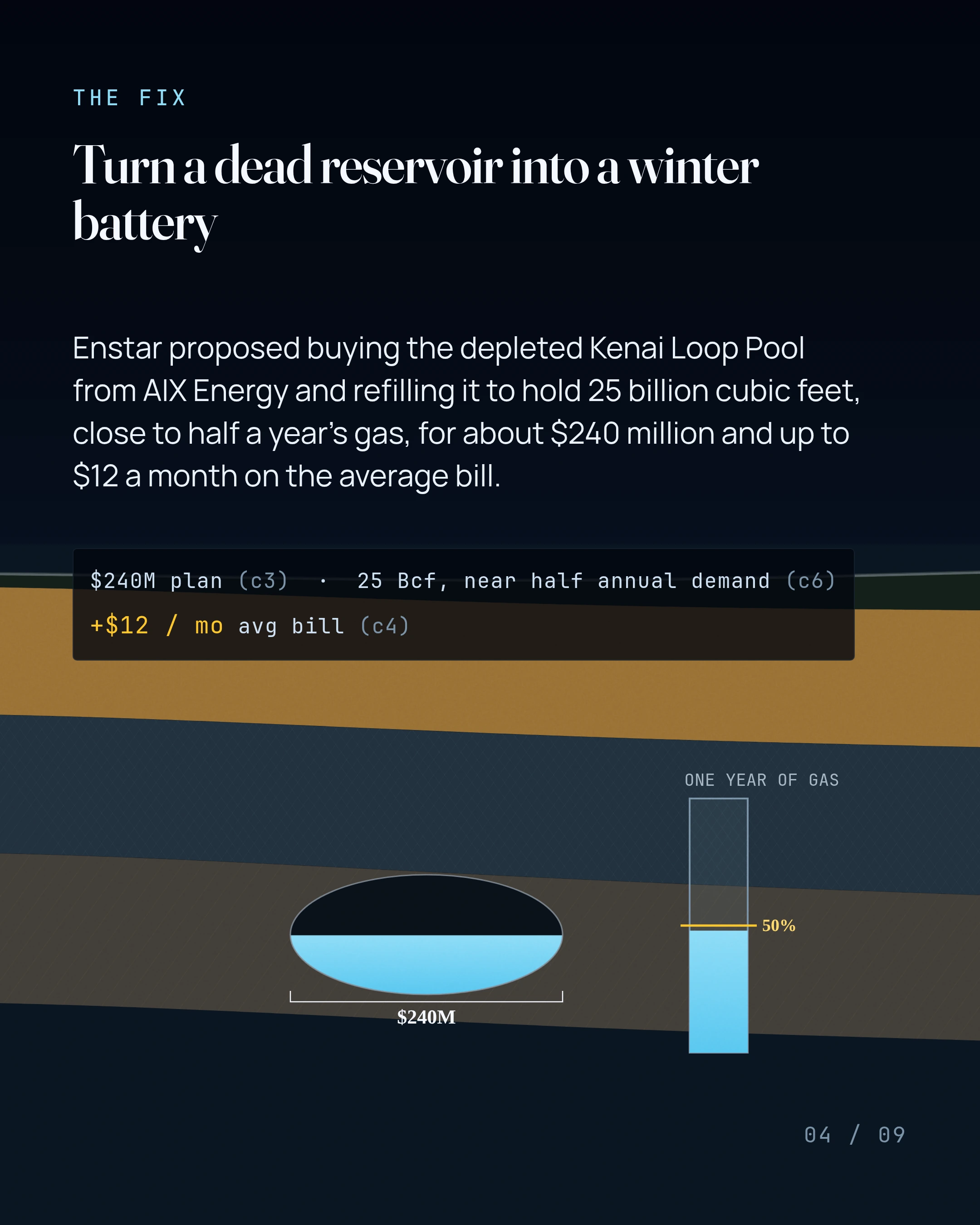
Enstar's proposed Cook Inlet gas storage facility would cost $240 million.
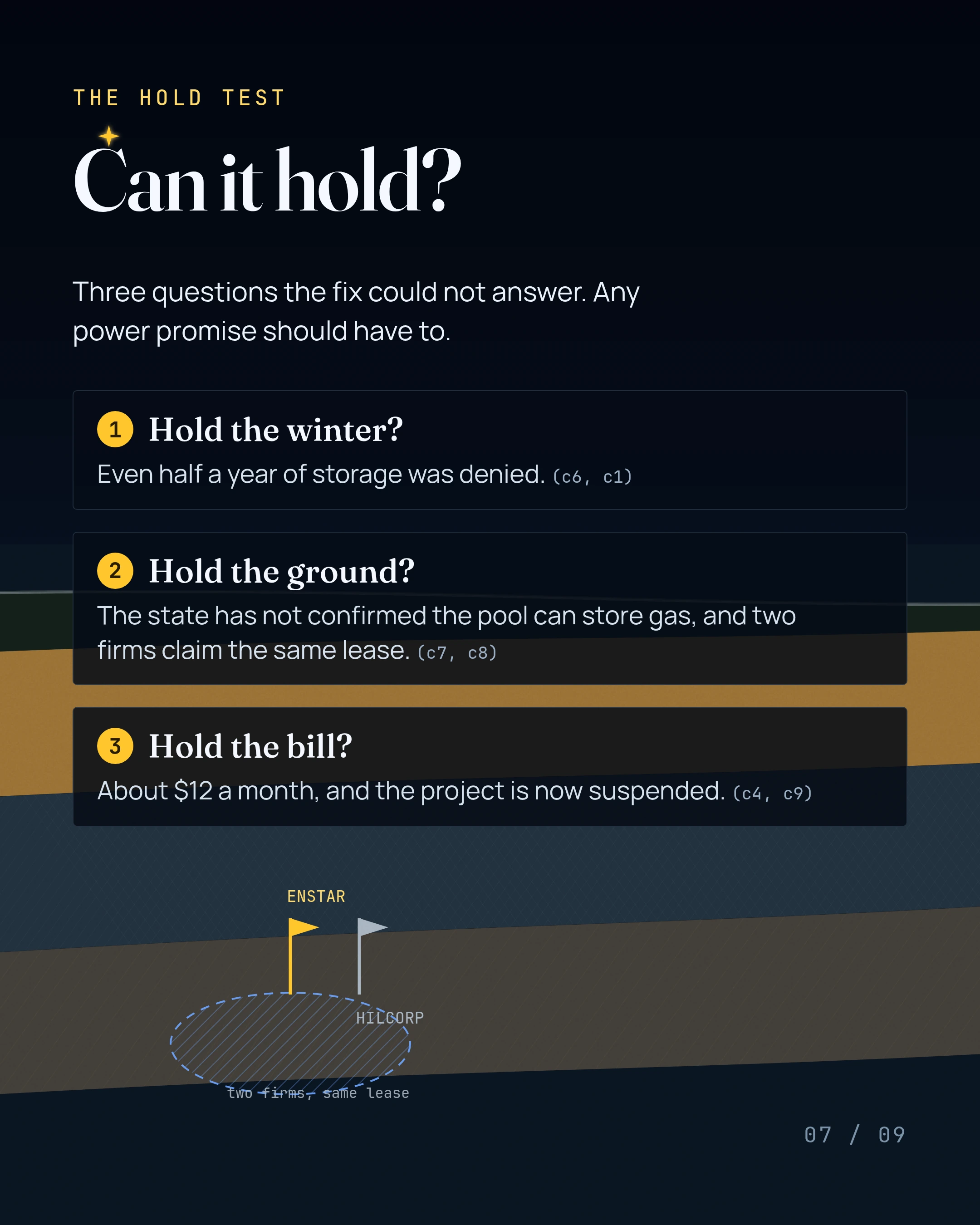
The project would add up to $12 a month to the average customer's bill.
Enstar proposed buying the Kenai Loop Pool, a depleted gas reservoir, from AIX Energy for use as storage.
The facility would initially hold 25 billion cubic feet of gas, close to half the utility's annual demand.
The Alaska DNR has not yet completed its determination that the Kenai Loop Pool is technically capable of serving as a natural gas storage facility.
Enstar and Hilcorp Cook Inlet have competing applications with the Alaska DNR for gas storage facility leases at the Kenai Loop Pool.
Without the commission's approval, Enstar president John Sims said the company has suspended its plans to move ahead with the project.
Beats
This article is on Alaska data centers · Alaska power and the grid · Alaska land and permitting for AI · Alaska AI policy and legislation. Each beat page keeps every decision and every article on that subject in one place.